St. Sulpicius Severus, Friend and Biographer of St. Martin of Tours
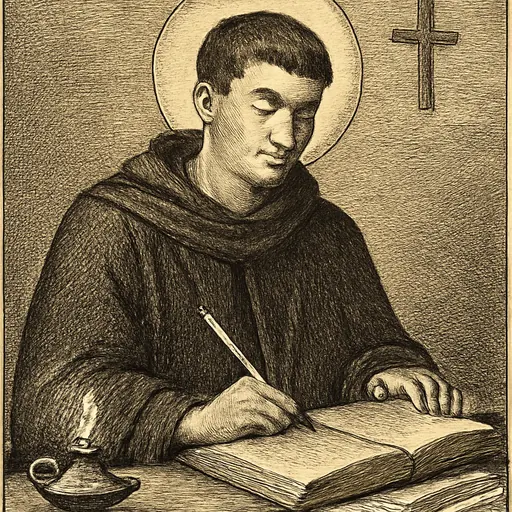
St. Sulpicius Severus (about 360–420) was a lawyer from Aquitaine who, after his young wife died, gave up his career to live as a monk and became the friend and biographer of St. Martin of Tours. His Life of St. Martin, written while Martin was still alive, made Martin the best-loved saint of the West. Vatican News lists his feast on January 29.
Who was St. Sulpicius Severus?
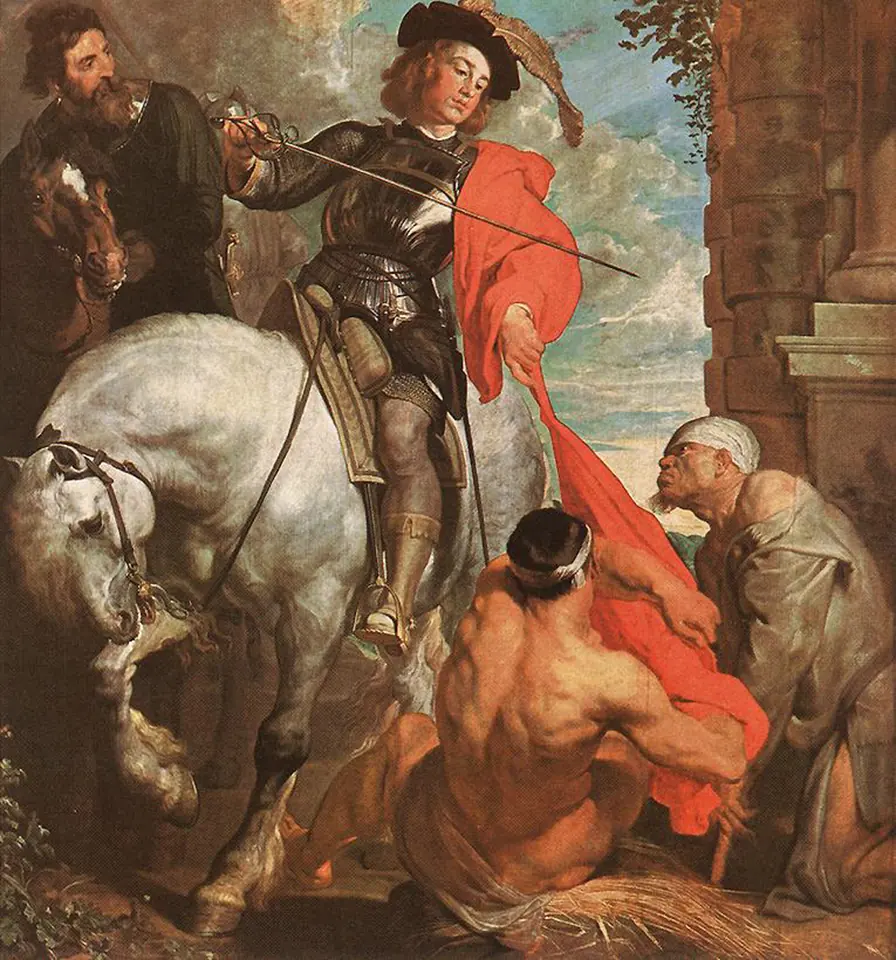
St. Sulpicius Severus was a Christian writer from Aquitaine, in southwestern Gaul, who lived from about 360 to about 420. He is the man who gave the Church the Life of St. Martin. Almost everything we love about St. Martin of Tours, the cloak cut in half at the gate of Amiens, the dream of Christ wearing it, the old bishop's humility, we know because Sulpicius sought Martin out, listened to him and wrote it down.
He was a lawyer who left the courts to pray, a widower who became a monk, and a friend who could not stop grieving when Martin died. The Church in Gaul remembered him with affection, and Vatican News lists him among the saints of January 29.
The life of St. Sulpicius Severus
A brilliant young lawyer
Sulpicius was born around 360 to a noble family in Aquitaine. The Catholic Encyclopedia tells us that he studied law and became known as an eloquent advocate. He married the daughter of a rich consular family, and everything seemed to promise him a great career.
Then his young wife died. Shortly after 390 he gave up his career and followed his friend St. Paulinus of Nola into a life of prayer and retirement. His father was angry; his mother-in-law encouraged him. Vatican News notes that he handed his property over to the Church while keeping its use for his life, as many devout landowners did in those years.
Meeting St. Martin
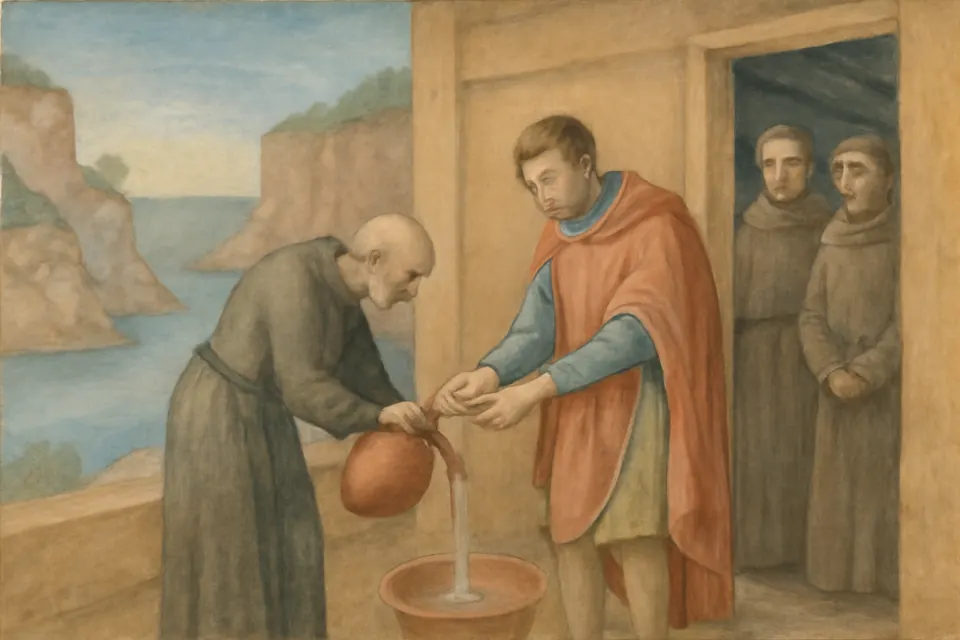
Sulpicius had heard so much of the bishop of Tours that he traveled to see him, and that visit changed his life. In chapter 25 of the Life of St. Martin, he tells us what happened:
And at this time it is scarcely credible with what humility and with what kindness he received me ... He went so far as in person to present me with water to wash my hands, and at eventide he himself washed my feet; nor had I sufficient courage to resist or oppose his doing so.
Martin spoke to him about leaving the burdens of the world to follow Jesus freely, and held up Paulinus as a model. Sulpicius became his disciple and gathered what he could from Martin himself and from those who had lived with him.
The writer
Sulpicius wrote the Life of St. Martin while Martin was still alive and published it after Martin's death in 397. He begged his friend Desiderius to keep it private, worried about his "unpolished style," and wrote a line every Christian writer can take to heart:
the kingdom of God consists not of eloquence, but faith.
He also wrote three letters on Martin's last days, two Dialogues full of stories of Martin and of the desert monks of Egypt, and the Chronicle, a history from Creation to about the year 400. The Catholic Encyclopedia calls the Chronicle a source of first importance for the Priscillianist and Arian controversies; its elegant Latin earned him the nickname "the Christian Sallust."
His grief and his vision
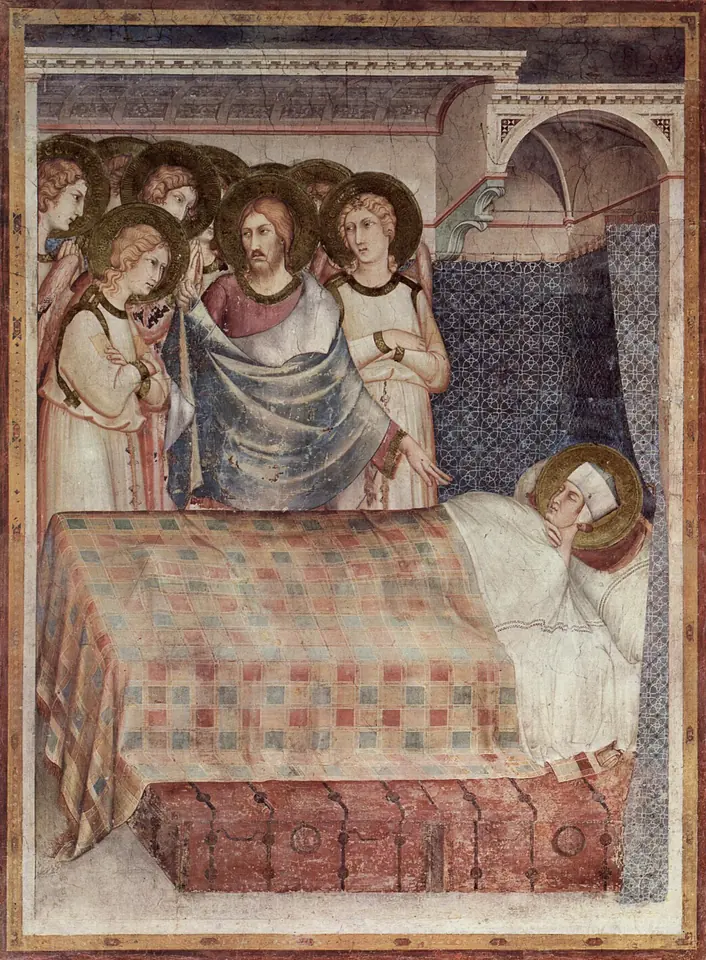
In his second letter Sulpicius tells of a morning when he lay down weary and saw Martin in a light sleep, dressed in white, his face like fire, holding out the little book Sulpicius had written about him and blessing him. Martin rose into the sky and vanished. Moments later a servant came in with the news that two monks had arrived from Tours: Martin was dead.
He wrote that his tears were still flowing as he wrote, and he ended with a hope we can share:
hope remains, one last and solitary hope, that, what I cannot obtain of myself, I may, at any rate, be thought worthy of, through the prayers of Martin in my behalf.
His last years
Sulpicius became a priest, according to the fifth-century writer Gennadius, though we know nothing of his priestly work. Gennadius also says that late in life he was drawn for a time toward the Pelagian error and, when he saw his mistake, kept silence for the rest of his life as penance for his imprudent words. He died around 420 to 425.
Miracles and holiness
No miracles are attributed to Sulpicius himself. The wonders in his books are Martin's, and he tells them with love; the Catholic Encyclopedia notes that the Life and Dialogues abound in miraculous events. Modern readers should know that the miracle stories of Martin rest on Sulpicius's testimony and on what Martin and his monks told him. His vision of Martin on the day of his death is his own reported account.
Symbols of St. Sulpicius Severus in art
Sulpicius almost never appears alone in art. Look for him in cycles of the life of St. Martin.
- Pen and book: the Life of St. Martin, which Martin holds out to him in his vision.
- Plain dress: the lay ascetic and later monk, not a bishop.
- St. Martin beside him: Sulpicius visiting Martin, or Martin appearing to him in glory.
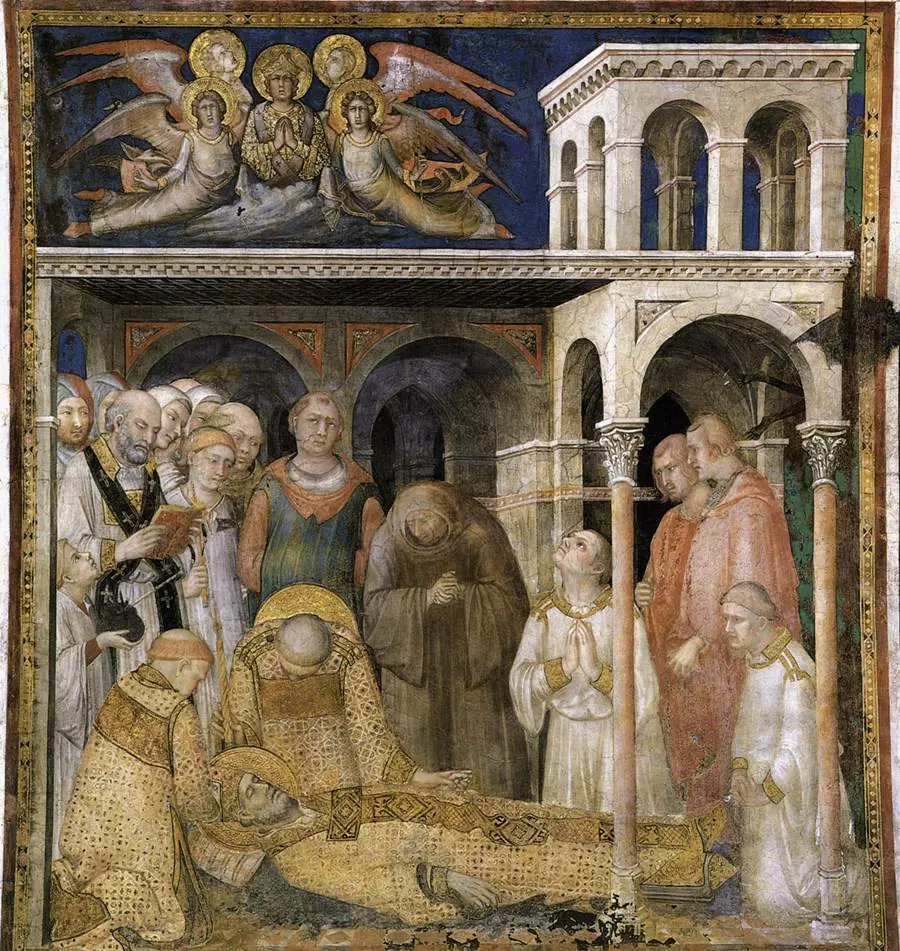
The frescoes of Simone Martini in Assisi are, in a sense, his illustrations: the dream of the cloak, Martin's miracles, and his death all come from Sulpicius's pages.
Feast day
We remember St. Sulpicius Severus on January 29, the date Vatican News gives. His honor has always been local, and his burial place is not known. See more saints of the season on our feast days page.
Praying with St. Sulpicius Severus
There is no traditional prayer to St. Sulpicius in common use. His letters give us words to pray with instead, the words of Martin that Sulpicius recorded at his deathbed:
O Lord, if I am still necessary to your people, I do not shrink from toil: your will be done.
Let us ask St. Sulpicius to pray for writers and historians, for widowers and all who grieve, and for anyone who wants to tell the story of a holy life faithfully.
Frequently asked questions
Who was St. Sulpicius Severus?
A Christian writer from Aquitaine, a successful lawyer who became a monk around 390 after the death of his wife. He was a disciple and friend of St. Martin of Tours and a close friend of St. Paulinus of Nola. He wrote the Life of St. Martin, the Dialogues and a Chronicle of sacred history.
What did Sulpicius Severus write?
His certain works are the Life of St. Martin, three letters about Martin's last days and death, the Dialogues (more stories of Martin and of the monks of Egypt), and the Chronicle, a history from the creation of the world to about the year 400.
When is the feast of St. Sulpicius Severus?
Vatican News gives January 29. His cult is local, and he is not on the General Roman Calendar.
Is Sulpicius Severus a saint?
He has long been honored locally as a saint, and Vatican News lists him among the saints of January 29. He was never formally canonized; like most saints of the early centuries, his honor comes from the old local cult. The Catholic Encyclopedia of 1912 describes him simply as an ecclesiastical writer.
Keep exploring
Sources
- Catholic Encyclopedia (1912): Sulpicius Severus. His birth, marriage, conversion after 390, ordination and late Pelagian episode reported by Gennadius, and the list of his genuine works
- Sulpitius Severus, On the Life of St. Martin (NPNF translation, New Advent). The preface on faith and eloquence and chapter 25, his visit to Martin, quoted on this page
- Sulpitius Severus, Letters (NPNF translation, New Advent). His vision of Martin on the morning the news of Martin's death arrived, and Martin's last words, quoted on this page
- St. Sulpitius Severus, Vatican News (Saint of the Day, January 29). His feast on January 29 and his giving his property to the Church