Blessed Veronica of Milan (Veronica of Binasco), Augustinian Mystic
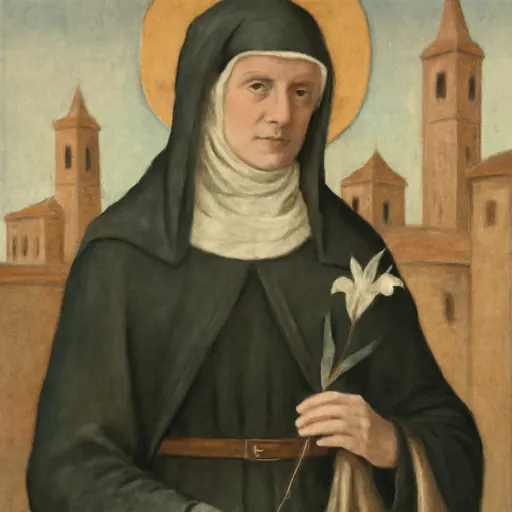
Blessed Veronica of Milan (about 1445–1497), also called Veronica of Binasco, was a peasant girl who could not read and became a lay sister in the Augustinian convent of Santa Marta in Milan, begging bread for her community. She had visions of the life of Christ but never let them interrupt her work. We keep her feast on January 13.
Who was Blessed Veronica of Milan?
Blessed Veronica of Milan was a peasant woman from Binasco, a village on the road from Milan to Pavia, who became a lay sister in the Augustinian convent of Santa Marta in Milan in the 1400s. She never learned to read. For three decades her work was to walk the streets of the city with a bag, begging bread for her poor community, and she did it gladly. The nuns knew her as a woman of constant prayer and visions who never let her raptures get in the way of the next job. We keep her feast on January 13.
She is also called Veronica of Binasco, after her birthplace, and her family name was Negroni. She is not the Veronica of the veil, and she is not the Capuchin mystic St. Veronica Giuliani.
The life of Veronica of Binasco
A farm girl who could not read
Veronica was born about 1445 to a poor farming family in Binasco. Her mother could not afford even a little schooling for her. Butler's Lives of the Saints says she "toiled hard in the house and the field, and accomplished cheerfully every menial task." As she grew, the jokes and songs of the other farmhands began to mean nothing to her, and sometimes, reaping and hoeing, she would hide her face and weep.
She wanted to enter a convent, and she thought a nun must know her letters. So she got up secretly at night to teach herself to read. Her old life tells what happened next. Our Lady appeared to her and told her that other things were needed, but not this, and showed her three mystical letters that would teach her more than books:
- The first stood for purity of intention: to do each day's duties for God alone, not to be seen.
- The second stood for refusing to murmur or criticize: to mind her own affairs, never to judge her neighbor, and to pray for those who plainly went wrong.
- The third stood for daily meditation on the Passion: to forget her own pains in those of her Lord.

The beggar of Santa Marta
After three years of waiting she was received, at about twenty-two, as a lay sister by the Augustinian nuns of Santa Marta in Milan. The community was very poor, and Veronica's work was to go through the city begging for its daily food. She also begged for the poor and the sick she met on her rounds.
Three years after she received the habit, she began to suffer constant pains that she kept to herself. She never asked to be spared any work or any prayer. When the sisters urged her to accept some relief in her sickness, Butler records, her answer was always the same: "I must work while I can, while I have time."

Visions, and a message for the Pope
Veronica's old biographer, the Dominican Isidoro Isolani, who wrote her life in 1518, describes constant ecstasies in which she saw the whole life of Jesus, scene by scene. Her ecstasies often came with tears. The sisters believed she had the gift of prophecy and could read souls.
After one of her visions she traveled to Rome with a message for Pope Alexander VI, who received her. What she told him is not recorded in the sources we have read.
She died at Santa Marta on January 13, 1497, after an illness of six months, on the day she had foretold. She was fifty-two and in the thirtieth year of her religious life. For five days the people of Milan came to see her before her burial.

The miracles of Blessed Veronica of Milan
- Traditional: the appearance of the Virgin Mary and the three mystical letters, from her early life.
- Traditional: her many visions of the life of Christ and her gift of prophecy, including the foretelling of the day of her death.
- Reported: miracles at her tomb after her death, which led Pope Leo X in 1517 to allow her feast to be kept at Santa Marta. The sources we read do not describe them one by one.
How Veronica became "Blessed"
Veronica was never beatified by the modern process, which did not yet exist. In 1517 Pope Leo X allowed the nuns of Santa Marta to celebrate her feast. In 1672 Pope Clement X extended that permission to the whole Augustinian Order. Pope Benedict XIV later placed her name in the Roman Martyrology on January 13. Older English books, Butler's among them, call her St. Veronica of Milan.
In the Napoleonic period, when the convents of Milan were suppressed, her remains were moved home to Binasco, to the parish church of Sts. John the Baptist and Stephen.
Symbols of Blessed Veronica of Milan in art
You can recognize Blessed Veronica by these signs:
- The black Augustinian habit with a white wimple and leather belt, the dress of the nuns of Santa Marta;
- The begging bag, for her daily work for the convent and the poor;
- A book, or the Virgin appearing to her, for the three mystical letters she learned in place of reading;
- The crown of thorns, for her meditation on the Passion, as in Navez's painting;
- The lily, for her purity.
In Binasco, inlaid choir stalls in the parish church show her meeting Pope Alexander VI.
Feast day and prayer
We keep the feast of Blessed Veronica of Milan on January 13, the day of her death. See the feast day calendar.
We know of no traditional English prayer to her that we can quote. Butler closes her life with a question that is a prayer in itself: "Dare we, then, waste ours?" Let us ask Blessed Veronica to pray for all who do humble work no one sees, for those who cannot read or study as they would like, and for the poor who live on what others give. Blessed Veronica of Milan, pray for us.
Frequently asked questions
Who was Blessed Veronica of Milan?
Veronica Negroni, born about 1445 at Binasco near Milan to a poor farming family. At about twenty-two she was received as a lay sister by the Augustinian nuns of Santa Marta in Milan, where she begged in the streets for the community's food for thirty years. She died on January 13, 1497, on the day she had foretold.
Is Veronica of Milan the same as St. Veronica?
No. St. Veronica is the woman of Jerusalem who, by tradition, wiped the face of Jesus on the way to Calvary. St. Veronica Giuliani was a Capuchin abbess of the 1700s. Blessed Veronica of Milan, or of Binasco, was a fifteenth-century Augustinian lay sister.
What were the three letters the Virgin Mary taught Veronica?
According to her old life, when she rose at night trying to teach herself to read, Our Lady told her this was not needed and showed her three mystical letters instead. The first stood for purity of intention, the second for refusing to murmur against or judge others, and the third for daily meditation on the Passion.
Where is Blessed Veronica of Milan buried?
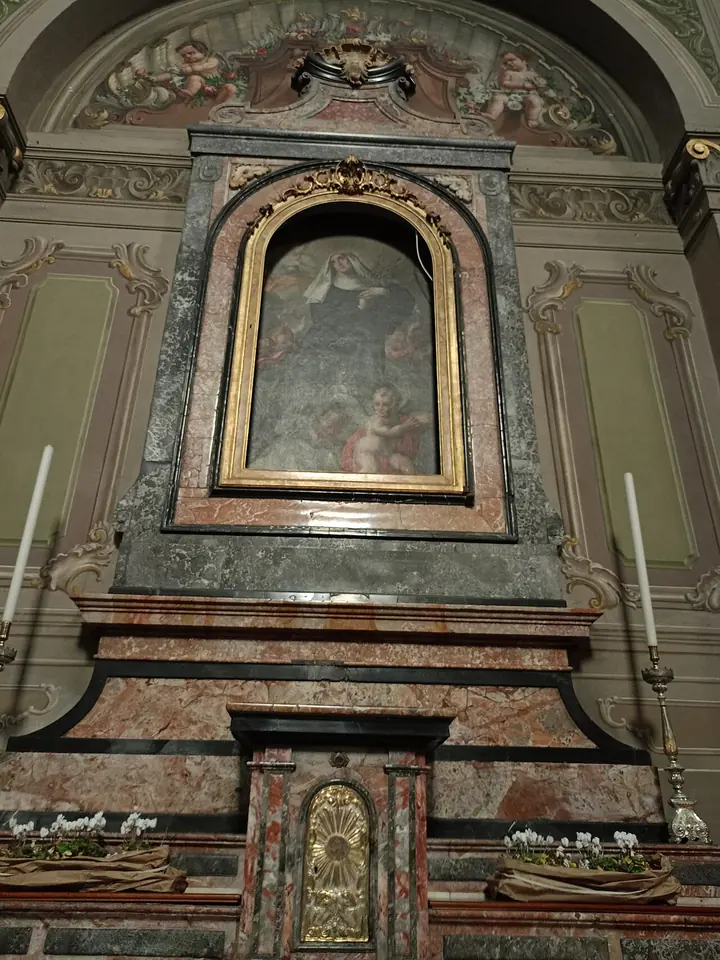
Her remains were moved from Santa Marta in Milan to the parish church of Binasco, her home town, in the Napoleonic period. Her altar is in the church of Sts. John the Baptist and Stephen there.
Keep exploring
Sources
- Alban Butler, Lives of the Saints (Benziger Brothers, 1894): January 13, St. Veronica of Milan. The three mystical letters, her work and begging, her secret pains, her death on the foretold day at fifty-two, and her words "I must work while I can, while I have time"
- Augustinians of Malta: Blessed Veronica Negroni from Binasco, 13th January. Her surname, the meeting with Pope Alexander VI, the grants of Leo X (1517) and Clement X (1672), the transfer of her remains to Binasco, and the bibliography, including Isidoro Isolani's life of 1518 printed in the Acta Sanctorum