St. Dallán Forgaill
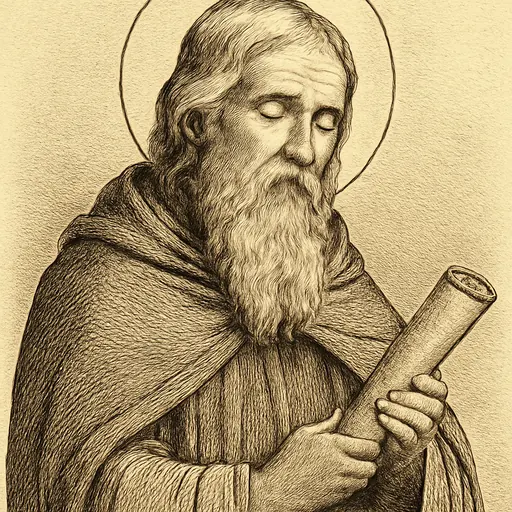
St. Dallán Forgaill was a sixth-century Irish poet, born Eochaid, who lost his sight from study and was called Dallán, "the little blind one." He wrote the Amra Choluim Chille, the great elegy for St. Columba, and tradition also credits him with the poem behind the hymn "Be Thou My Vision." He was buried on Inishkeel in Donegal, and his feast is January 29.
Who was St. Dallán Forgaill?
St. Dallán Forgaill was a poet of sixth-century Ireland, the man who sang the praises of St. Columba after his death. His baptismal name was Eochaid. He lost his sight, and people called him Dallán, "the little blind one." His Amra Choluim Chille, the elegy for Columba, is one of the oldest and most important poems of early Christian Ireland, and tradition also gives him the Old Irish prayer behind the hymn "Be Thou My Vision." He is buried on the island of Inishkeel in County Donegal, and we keep his feast on January 29. Many English sources spell his name simply Dallan Forgaill.
Little about his life is certain. The University of Glasgow's Saints in Scottish Place-Names puts it plainly: "Little is known about Dallán, but there is much legendary material." What follows comes mostly from the prefaces to his poems and from John Colgan, the seventeenth-century Franciscan who gathered the lives of the Irish saints.
A poet's family
Colgan, as quoted by J. O'Beirne Crowe in his 1871 edition of the Amra, says Dallán's father was Colla, son of Erc, of the race of Colla Uais, an ancient king of Ireland, and that his mother was Forchella, from whom he took the name Forgaill. His first cousin was St. Máedóc of Ferns; the Irish life of Máedóc calls them the sons of two brothers. The martyrologies say he came from Maigen, perhaps Moynehall in County Cavan, close to Kildallan, "Dallán's church."
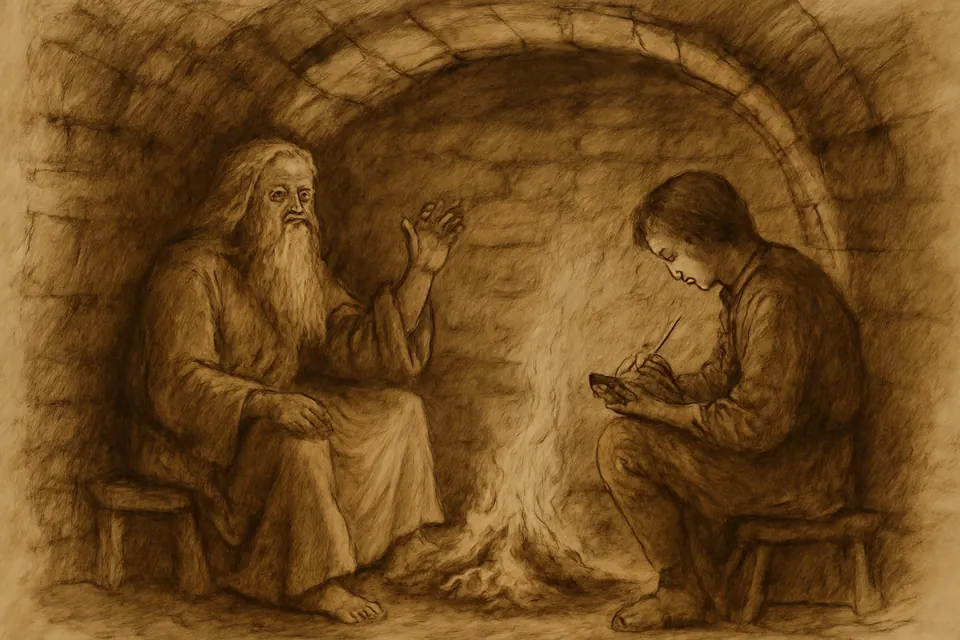
Of his blindness Colgan writes that he "through the severity of his studies, lost the use of his eyes." He was learned in the old poetry of his people, and later tradition made him the chief poet of Ireland in Columba's day.
The poem Columba would not hear
The best-known story about Dallán belongs to the great assembly at Druim Cete, by the River Roe in County Derry, which Columba attended to settle disputes among the Irish kings. Colgan tells it this way. When the assembly was ending, Dallán came to Columba with a poem in his praise. As it was read, Columba felt a stir of vanity, and his disciple Baithéne saw "a great troop of evil demons... scoffing above his head." Columba was struck with sorrow and forbade the poem to be published, saying that no one should be praised in life, since he might end badly; only the one who had finished the race well should be praised after death. Dallán asked leave to praise him after his death, and Columba agreed.
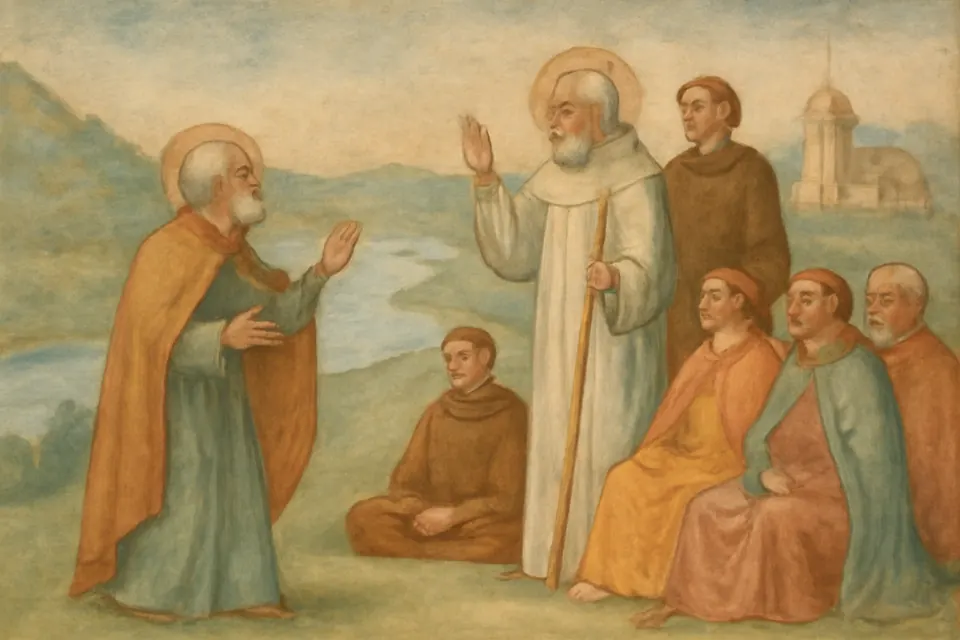
Columba died on Iona in 597. Then, Colgan says, Dallán "received by angelic ministry the announcement of his death" and composed the Amra.
The miracles of St. Dallán Forgaill
These are all traditional, handed down in the prefaces and notes to his poems.
- His sight restored (traditional). When he finished the Amra, Colgan writes, Dallán "was regifted with the immediately-lost light of his eyes." Crowe's note explains the old belief that Columba allowed him sight while he made the poem; the old gloss on the poem's last lines reads, "I am blinded again."
- A happy death for those who know the Amra (traditional). Dallán was promised, the tradition continues, that whoever recited the praises of Columba from memory "would close his life with a happy end."
- The Amra of Senán (traditional). He also wrote a funeral poem for St. Senán of Scattery Island. Colgan says devout people held it in great honor because of "the grace of preservation from blindness" granted to those who recited it from memory.
- His death (traditional). Later tradition says he was killed by raiders while staying on Inishkeel.
Inishkeel and his grave
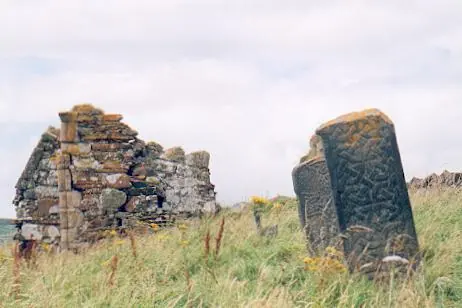
Dallán honored St. Conall Cael, abbot of the island monastery of Inishkeel off the Donegal coast, with a third poem of praise, Colgan says. The Martyrology of Donegal records that Dallán was buried there, at Inis Caoil, "a place sacred to Conall of Inis-Caoil." The island can be reached on foot at low tide, and the ruins of two old churches and early carved stones still stand there.

"Be Thou My Vision"
Christians all over the world know one poem tied to his name. Rop tú mo baile, an Old Irish prayer asking God to be the singer's vision, wisdom and treasure, is attributed to Dallán by tradition. Hymnary.org lists the Irish original as eighth-century, which would make it later than his lifetime, so the attribution is uncertain. Mary Byrne published an English translation in the journal Ériu in 1905, and Eleanor Hull put it into rhymed verse in 1912. Sung to the Irish folk tune SLANE, it begins: "Be Thou my vision, O Lord of my heart."
Symbols of St. Dallán Forgaill in art
Dallán is almost never painted, and we know of no old image of him. When artists do portray him, he appears as:
- An old man with closed or blind eyes: the nickname that became his name.
- A harp, a book or a scroll of verse: the poet and his poems.
- Beside St. Columba: the abbot he praised, recognizable by his monk's habit, his staff and often a dove.
Feast day and prayer
We keep the feast of St. Dallán Forgaill on January 29, the day the old Irish martyrologies give him. See the feast day calendar.
There is no traditional prayer to St. Dallán himself, but the prayer most often linked with his name is one every Christian can make their own: "Be Thou my vision, O Lord of my heart." Let us ask him to pray for poets, writers and church musicians, for the blind, and for all who use their gifts to praise God: St. Dallán, pray for us.
Frequently asked questions
Who was St. Dallán Forgaill?
An Irish poet of the sixth century, baptized Eochaid, of the race of Colla Uais and a cousin of St. Máedóc of Ferns. He went blind, by tradition from too much study, and wrote the Amra Choluim Chille, the praise-poem for St. Columba after his death in 597. He is buried on Inishkeel in County Donegal.
Did St. Dallán Forgaill write "Be Thou My Vision"?
Tradition credits him with the Old Irish poem Rop tú mo baile, which became "Be Thou My Vision." Hymnary.org dates the Irish text to the eighth century, after his lifetime, so the attribution is uncertain. Mary Byrne translated it into English in 1905, and Eleanor Hull put it into verse in 1912.
What does "Dallán" mean?
It means "little blind one," a nickname. His baptismal name was Eochaid (Eochu).
When is the feast of St. Dallán Forgaill?
January 29.
Keep exploring
Sources
- J. O'Beirne Crowe (ed.), The Amra Choluim Chilli of Dallan Forgaill (Dublin, 1871). Colgan's account of his family, his blindness, Druim Cete, the restored sight and the Amra Senáin
- Saints in Scottish Place-Names (University of Glasgow): Dallán Forgaill m. Eirc. His names, Maigen, his feast in the Irish martyrologies and his burial at Inishkeel
- Hymnary.org: Be Thou My Vision. The eighth-century dating, Mary Byrne's translation (1905) and Eleanor Hull's versification (1912)