St. Aquilinus of Milan, Priest and Martyr
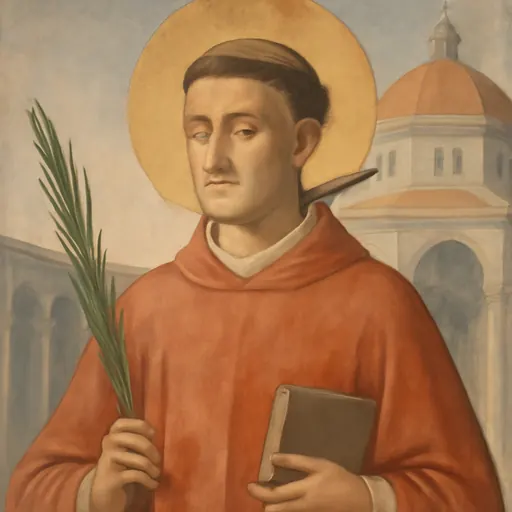
St. Aquilinus of Milan was a priest from Würzburg who was killed in Milan about 1015 for defending the faith against heretics. Tradition holds porters found his body in a canal and carried it to the Basilica of San Lorenzo, where it rests. He is the patron of porters and a co-patron of Milan; his feast is January 29.
Who was St. Aquilinus of Milan?
St. Aquilinus of Milan was a German priest who came to Milan as a pilgrim and died there as a martyr in the early eleventh century. The Roman Martyrology remembers him on January 29 in a single line: "At Milan, St. Aquilinus, priest, who was crowned with martyrdom by having his throat pierced with a sword by the Arians."
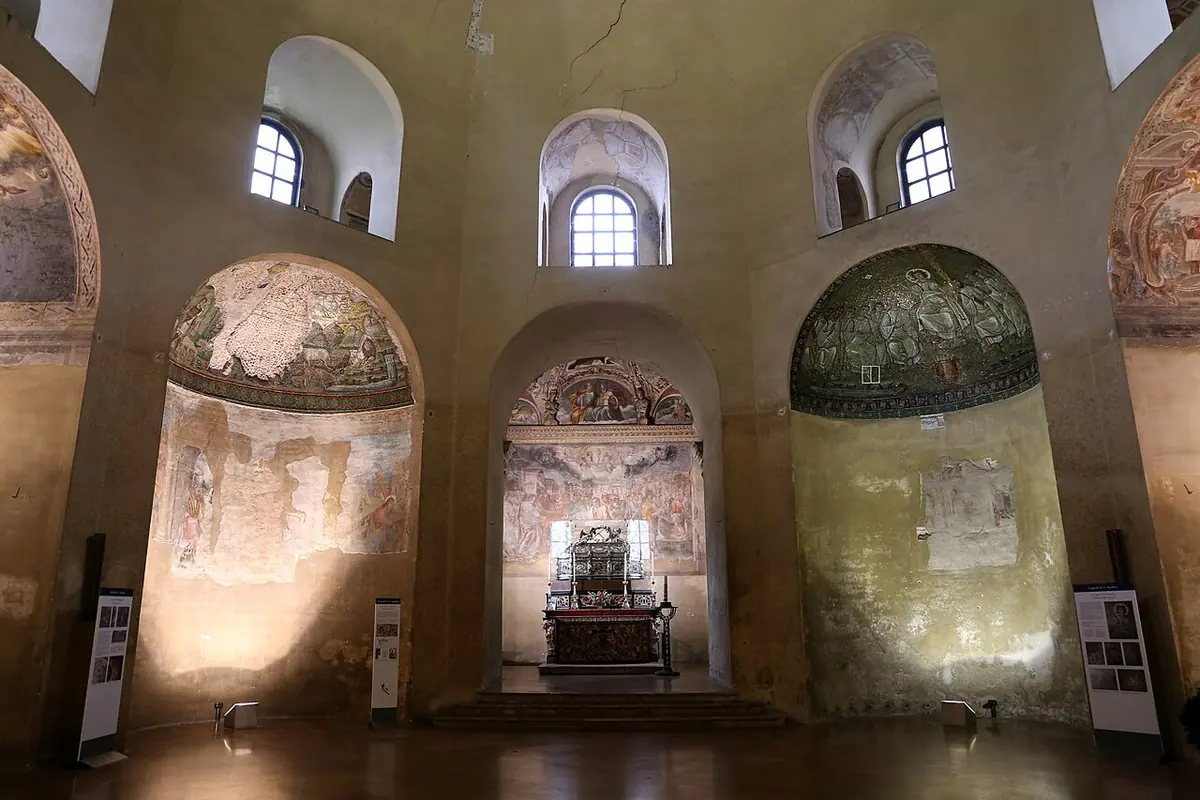
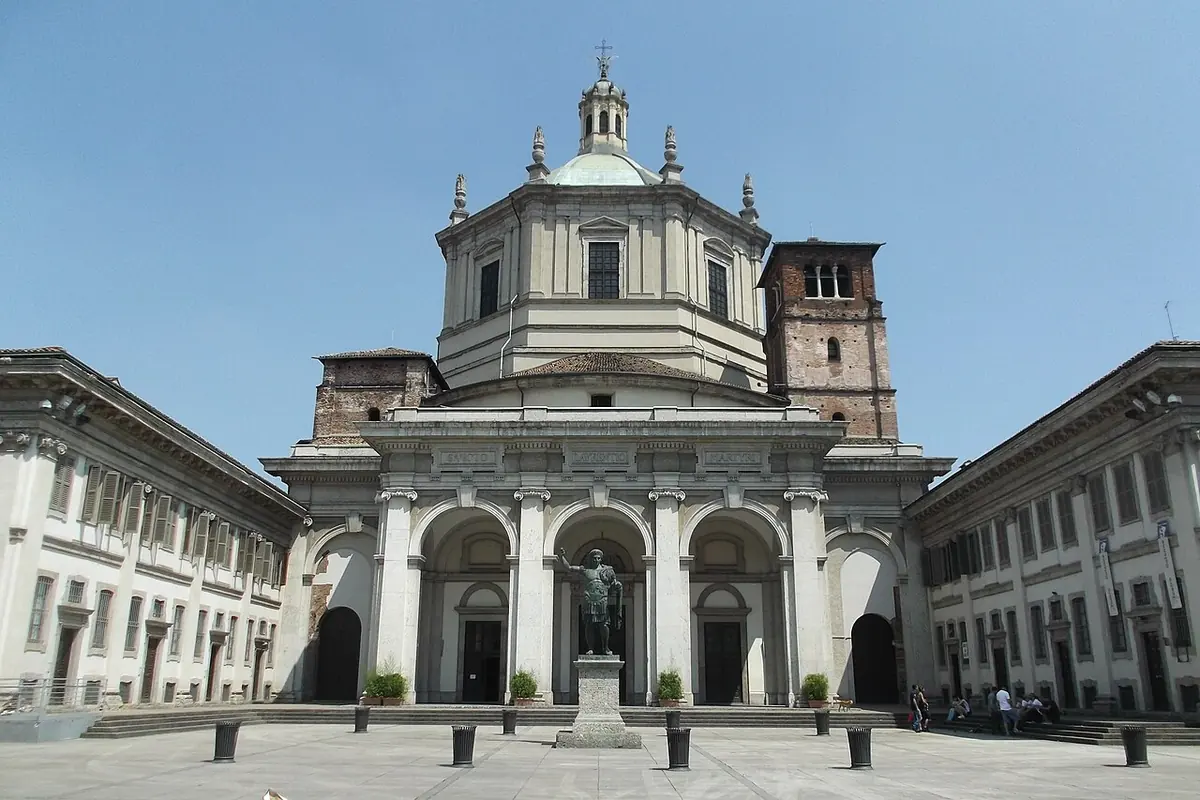
His body lies in the Basilica of San Lorenzo Maggiore, in a chapel that has carried his name for centuries. The porters of Milan took him as their own patron, and St. Charles Borromeo named him a co-patron of the city.
Very little of his story is documented from his own time. The first written life dates from 1465, about 450 years after his death, so most of what follows is Milanese tradition, and we tell it as such.
The life of St. Aquilinus
From Würzburg to Cologne
The German national biography lists him as Wezelin, called Aquilinus, born at Würzburg about 970 and died at Milan about 1015, a canon and provost of the cathedral of Cologne. The Milanese tradition, as Nicola de' Grandi retells it, says he came from a noble family, studied at the cathedral school of Cologne and was ordained a priest there. When his parents died, he gave his inheritance to the poor.
Tradition adds that the clergy of Cologne chose him as their bishop and that he fled rather than accept. The story says the same thing happened again at Paris.
A pilgrim in Milan
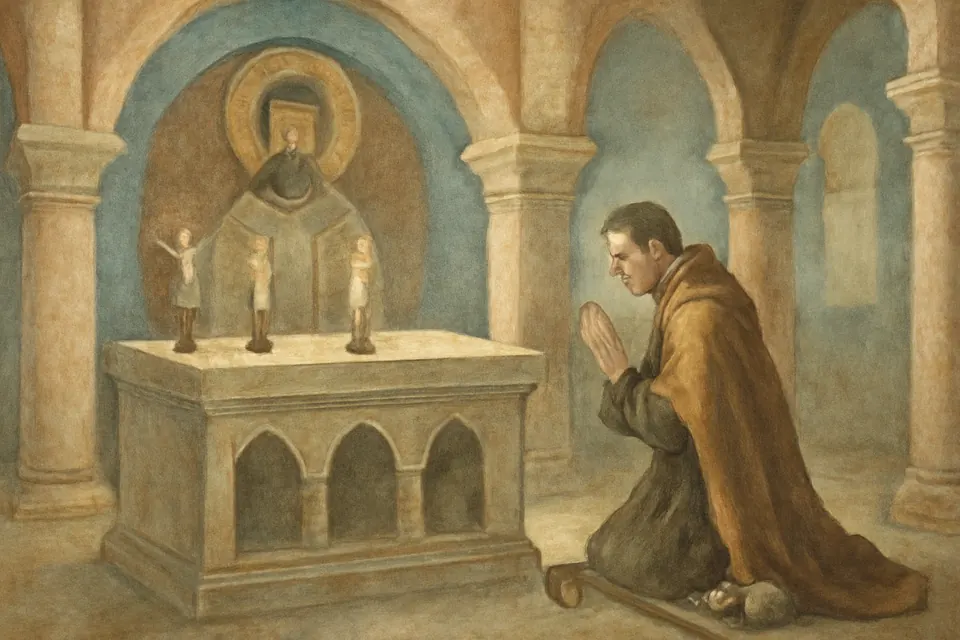
He came to Milan to pray at the tomb of St. Ambrose, and he stayed to preach. The tradition says he spoke against the heretics then active in the city; the Martyrology calls them Arians, and later writers speak of a revived Arianism and of early Cathars.
His martyrdom
On his way to the Basilica of Sant'Ambrogio, he was attacked by heretics, stabbed in the throat and thrown into a canal. The date usually given is 1015; some accounts say 1018. A few lists put his death in 650, but that date cannot fit a priest from Cologne who preached against eleventh-century heretics.
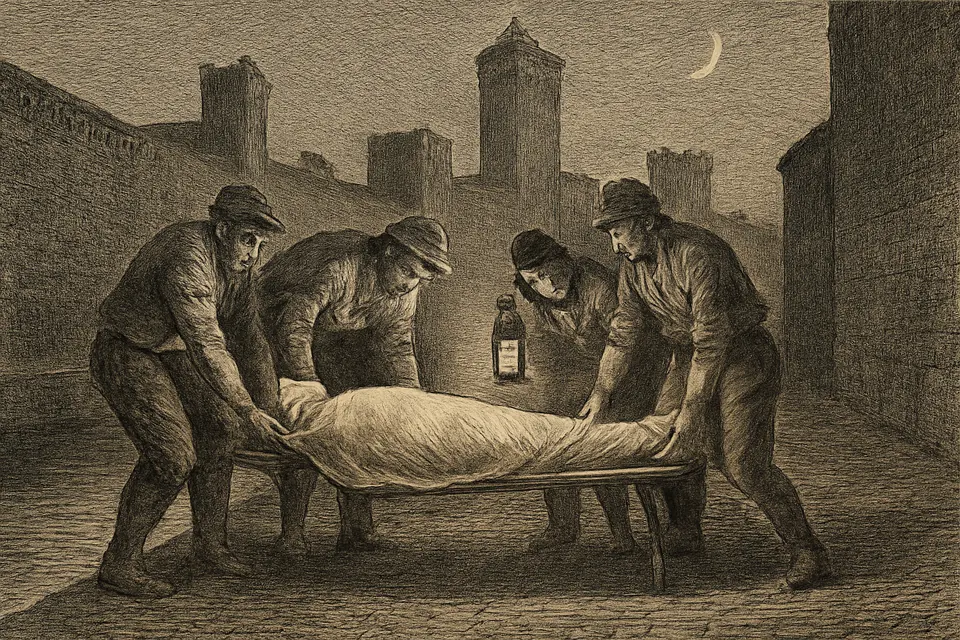
An old tradition says that workmen carrying goods along the waterway found the body and brought it to the Basilica of San Lorenzo. It was laid in the ancient chapel of St. Genesius, which from then on took the name of Aquilinus.

The cult of St. Aquilinus
The first record of a written life comes from 1465, when a confraternity named for him was founded in Milan. The Holy See approved his cult in 1469, and his feast appears in the Ambrosian Missal of 1475 on January 29. In 1581, St. Charles Borromeo named him a co-patron of Milan, especially against plague, a few years after the great plague of 1576 to 1577.
The sources we consulted record no particular miracles through his intercession, so we do not list any. The finding of his body by the porters is a traditional story, handed down in Milan rather than written down at the time, and it is the one wonder-tale attached to his name: that the martyr thrown into the water was not lost, and that working men, not churchmen, brought him home.
Why St. Aquilinus is the patron saint of porters
Because porters, by Milanese tradition, carried his body to its resting place, the city's carriers and movers took him as their patron. Until the nineteenth century they held a yearly procession on his feast and offered candles and oil for the lamp that burns before his relics.
Symbols of St. Aquilinus in art
Aquilinus is shown as a priest with a dagger or short sword at his throat and the martyr's palm in his hand. The blade is not meant to shock. It tells you at once which martyr you are looking at, the way a gridiron marks St. Lawrence, whose basilica keeps his body.
Where St. Aquilinus is honored
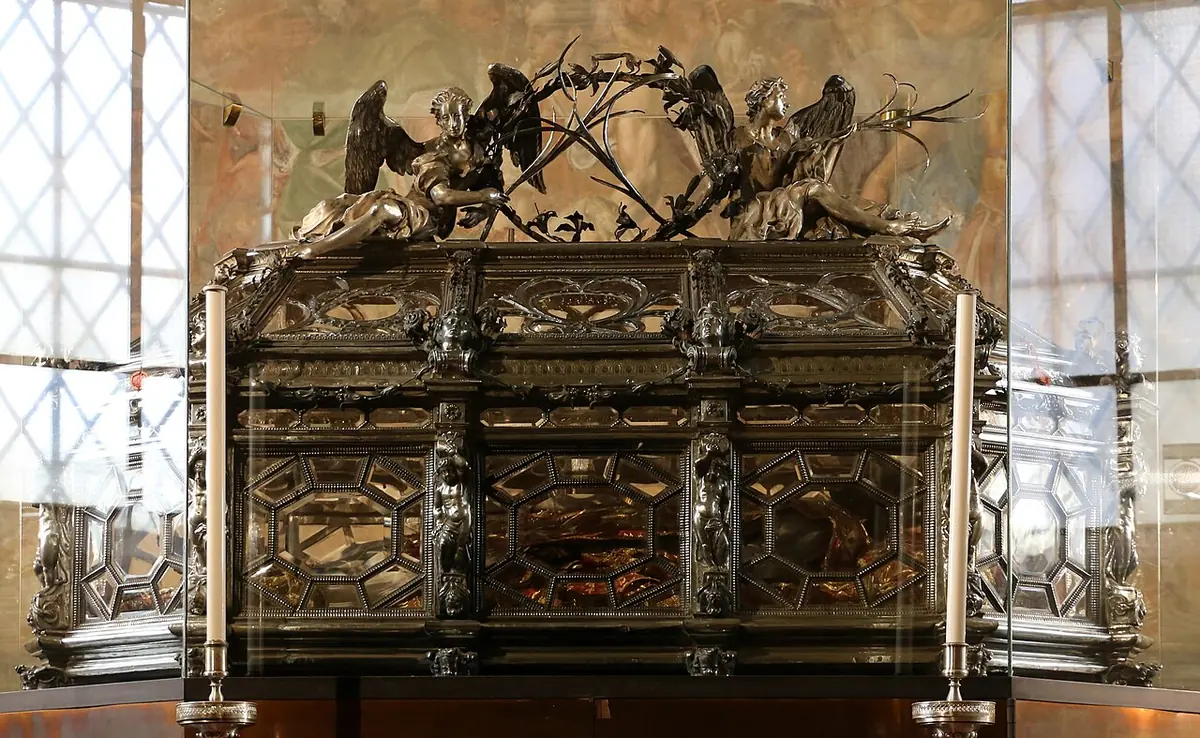
His body rests in a silver and rock-crystal urn on top of the altar where he was first buried, in the Chapel of Sant'Aquilino at San Lorenzo Maggiore, near the Porta Ticinese. The chapel, one of the oldest parts of the basilica, still keeps fragments of early Christian mosaics. We keep his feast on January 29; see our feast days page for the saints around it.
Not to be confused with other saints named Aquilinus
Several saints share the name. St. Aquilinus of Évreux was a Frankish bishop of Évreux in Normandy who died about 695; his feast is October 19. The Martyrology also names a group of martyrs at Fossombrone, in the Marche, that includes an Aquilinus. The priest of Milan is the one with the dagger at his throat.
Prayer to St. Aquilinus
We have not found a traditional prayer to St. Aquilinus in a source we could verify, so we do not print one. Let us ask him to pray for porters, movers and everyone who carries heavy loads for a living; for pilgrims far from home; and for all who suffer for speaking the truth of the faith.
St. Aquilinus, pray for us.
Frequently asked questions
Who was St. Aquilinus of Milan?
A priest born at Würzburg about 970, educated at Cologne, who is said to have refused to become bishop of Cologne and then of Paris. He came to Milan to pray at the tomb of St. Ambrose and was killed there by heretics about 1015.
When is the feast day of St. Aquilinus of Milan?
January 29, in the Roman Martyrology and in Milan's Ambrosian calendar.
Why is St. Aquilinus the patron saint of porters?
Milanese tradition says porters found his body in a canal and carried it to the Basilica of San Lorenzo. Until the nineteenth century Milan's movers and carriers held a procession on his feast and offered candles and oil for the lamp before his relics.
Where are the relics of St. Aquilinus?
In a silver and rock-crystal urn on the altar of the Chapel of Sant'Aquilino in the Basilica of San Lorenzo Maggiore, Milan.