Blessed Maria Bolognesi
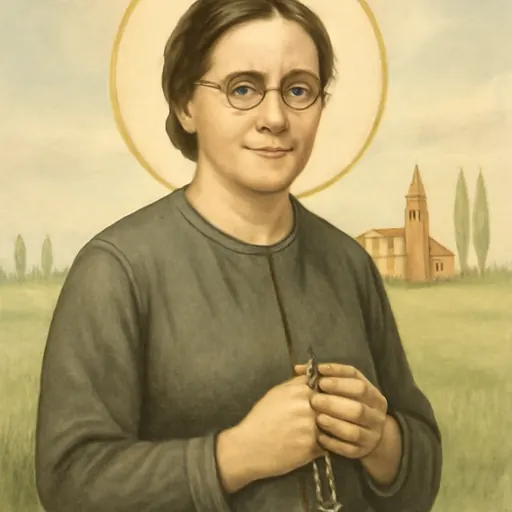
Blessed Maria Bolognesi (1924–1980) was a poor farm laborer and lay mystic from Bosaro, near Rovigo in northern Italy. She cared for children, orphans and the sick, bore long illnesses in union with Christ's Passion, and offered her life for the holiness of priests. She was beatified on September 7, 2013. Her feast is January 30.
Who was Blessed Maria Bolognesi?
Blessed Maria Bolognesi was a poor farm worker from the flat country near Rovigo, in the Veneto, who spent her life serving children, the sick and the poor while carrying great suffering in union with the Passion of Christ. She had almost no schooling, no religious habit and no money. The Church beatified her on September 7, 2013, and we keep her feast on January 30, the day she died.
She was born on October 21, 1924, in Bosaro, the illegitimate daughter of Amedeo Gozzati and Giuseppa Samiolo. She took the surname Bolognesi from her stepfather, Giuseppe, whom her mother later married. The family was desperately poor, and seven more children followed.
A hard childhood
The Dicastery for the Causes of Saints does not soften the story of her home. Her stepfather mistreated her mother out of jealousy, and her mother, nervous and given to cursing, beat the children. Maria was sent away for a time to live in the rectory of Don Sante Magro and do housework there. It was the start of a long, tiring pilgrimage from one home and one hard job to the next.
She went to work in the fields as a child and was a farm laborer for 26 years. She finished only the first grade or two of elementary school; the Dicastery says she failed to move on less for lack of intelligence than because she had to work and was underfed. Her maternal grandmother gave her a simple, concrete faith and a trust in Jesus that became the center of her spiritual life.
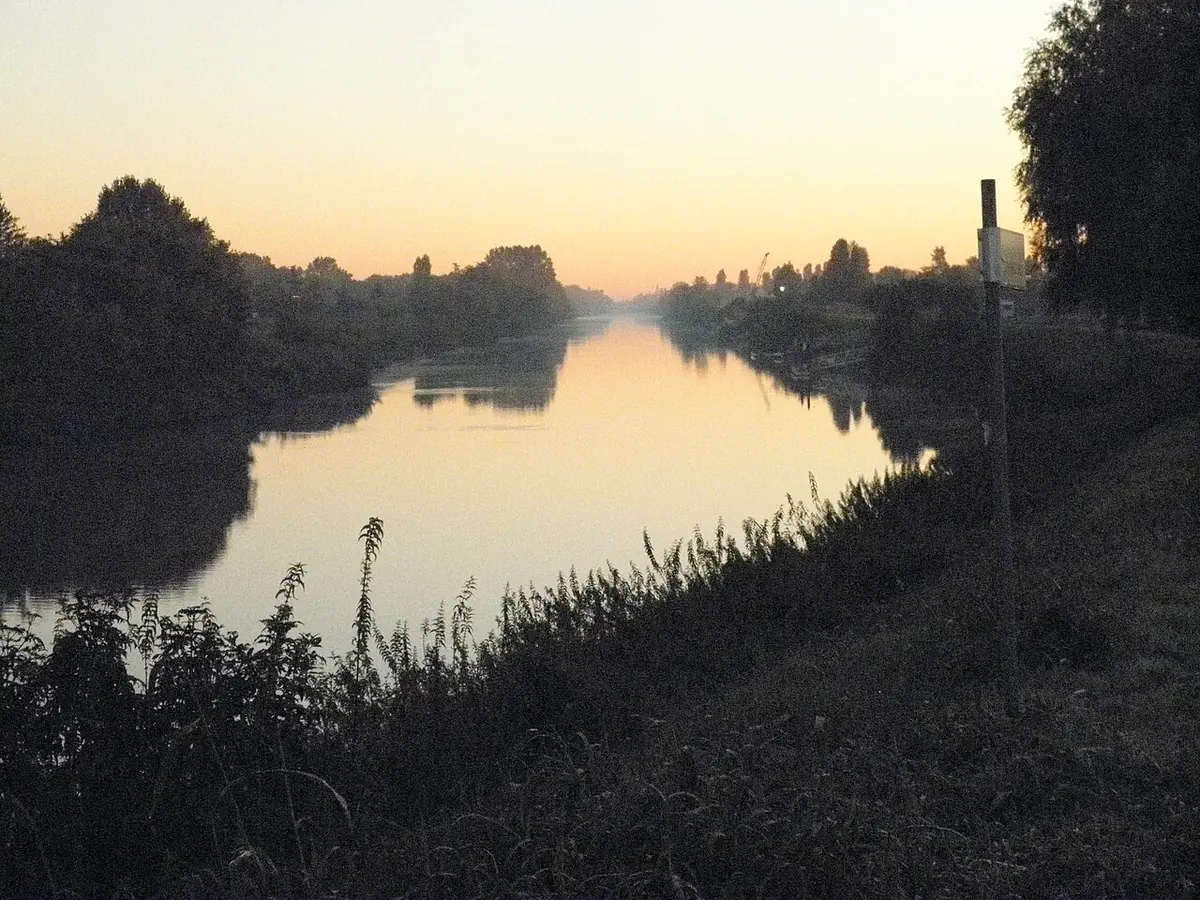
She hoed, harvested wheat and sugar beets, cut wood, worked hemp and sometimes went fishing. She learned to sew clothes, slippers and shoes, and made herself a plain dress that was not "worldly." She was not above doing small masonry jobs either.
Servant of the poor
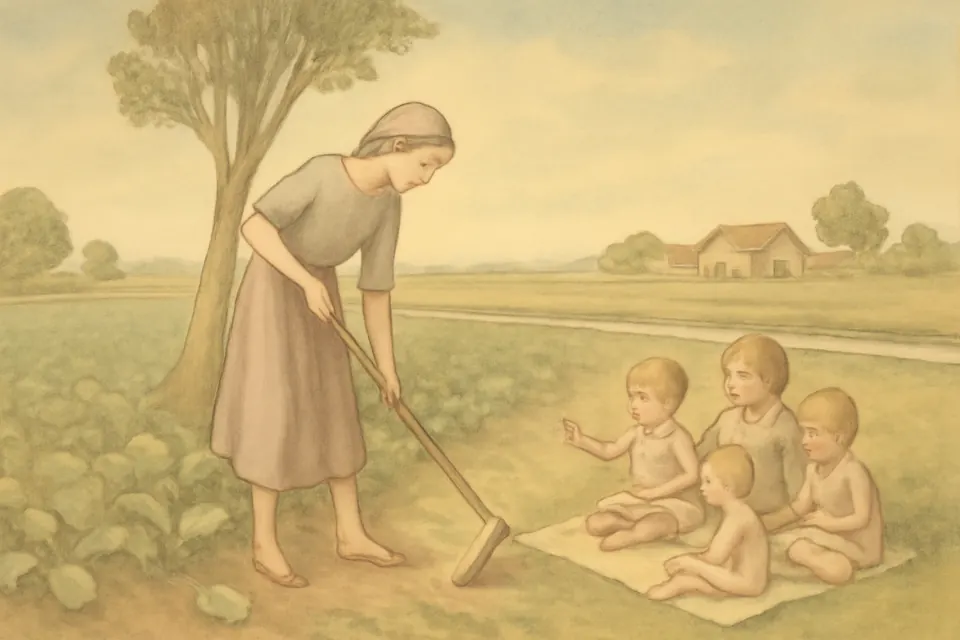
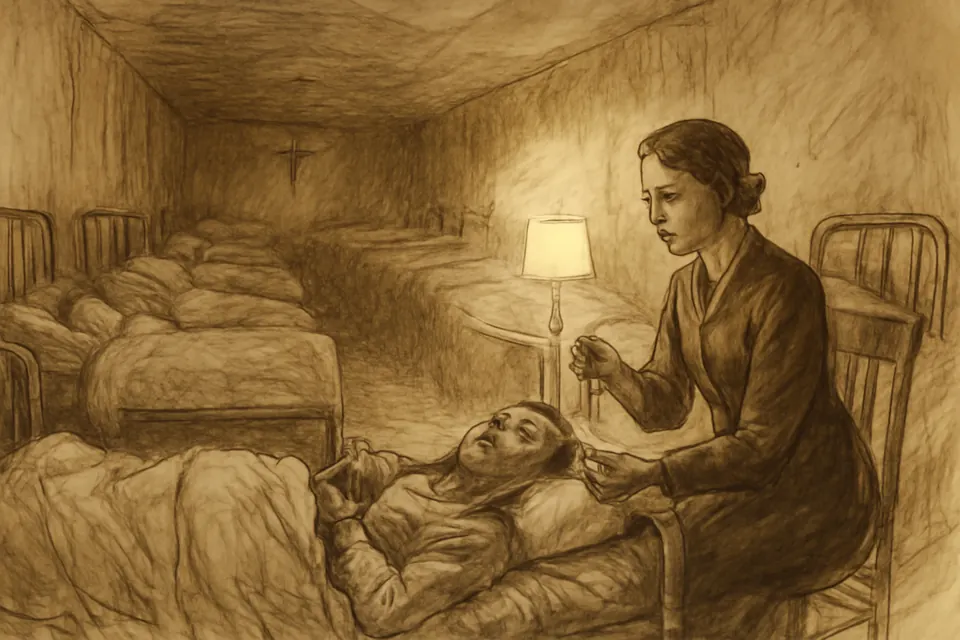
From 1943 she gathered the children of poor families for a few hours each day so their parents could go to work. For them she became, in the Dicastery's words, a factotum, cobbler, seamstress, carpenter and even a beggar. She visited the sick, sat up through the night with patients in the hospital, especially those in the tuberculosis sanatorium, and collected money and food for families in need. She found good homes for orphans with generous families or in institutions.
She also gave the spiritual works of mercy. Her firm faith and a gift of consolation brought peace to people tormented by moral troubles, to the incurably ill and to the dying. As a teenager she asked to be given a spiritual director, and so as not to choose for herself, she asked the bishop to name one.
Sharing the Passion
Maria was devoted to the suffering Christ. The decree on her virtues says she had a vivid vision of His Passion throughout her life and, from 1944, bore its signs inwardly. She came to recognize Christ in "the thousand faces of human suffering."
Her holiness drew admirers and enemies. In the heated political climate of 1948 she was brutally assaulted, and because she was not believed, she was even tried for self-harm and faking a crime. She was fully acquitted.
In 1949 she offered herself as a victim for the good of others, and especially for the holiness of priests. Years of physical, mental and moral suffering followed. A serious heart attack in 1971 cut back her work, and she lived her last years as an invalid, the decree says, "with generosity and joy," despite ingratitude and misunderstanding. One line she wrote shows her spirit:
Oggi cosa potrò fare per il bene delle anime? Voglio lavorare sempre per il bene delle anime, lavorare per i poveri, cercare l'ufficio che più mi pesa per farne un fioretto da offrire a Gesù in riparazione per tutta l'umanità.
In English: "Today what can I do for the good of souls? I want to work always for the good of souls, to work for the poor, to look for the task that weighs on me most, to make it a little offering to Jesus in reparation for all humanity."
She died of a heart attack in Rovigo on the night of January 30, 1980.
The miracle and her beatification
The diocesan inquiry into her life ran in Rovigo from 1992 to 2000. Pope Benedict XVI declared her Venerable on May 10, 2012.
- Approved: in the winter of 1993–1994, a boy named Marco, two years and three months old, developed a severe Lyell's syndrome (toxic epidermal necrolysis) after treatment for an ordinary flu. His skin blistered and peeled as if he had been burned. On February 2 his heart stopped. Doctors revived him after two hours, and instead of the brain damage everyone expected, he recovered quickly and completely. His grandmother had found a holy card of Maria, recognized her as a woman who had comforted her in a dream months before, and prayed to her with the boy's parents. The Vatican's medical board found the healing rapid, complete, lasting and unexplained, and Pope Francis approved the miracle on May 3, 2013.
She was beatified on September 7, 2013.
Symbols of Blessed Maria Bolognesi in art
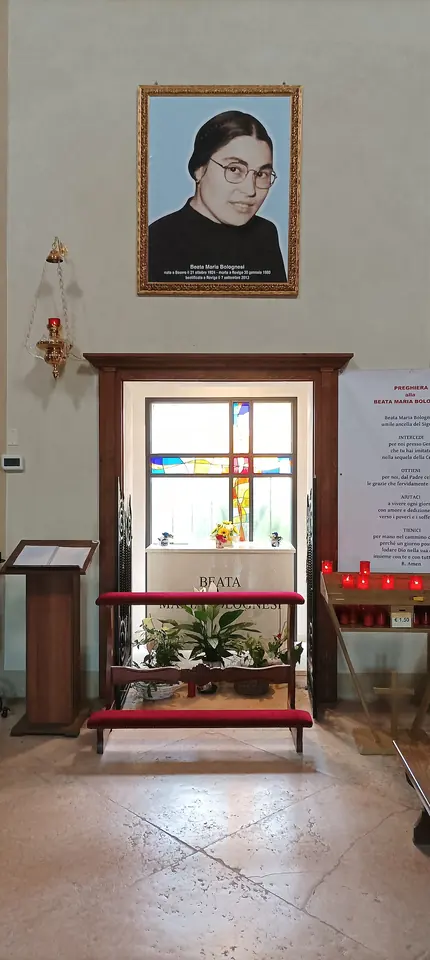
Maria lived in the age of photography, and her images are photographs and portraits made from them. She is shown in a plain dark dress, often with round glasses, as on the photograph above her tomb. Look for a rosary and a crucifix, the signs of her prayer and of her union with Christ's Passion. Some devotional images place her among children or the sick, the people she served.
Feast day, tomb and prayer
We keep her feast on January 30. Her body rests in the parish church of Bosaro, the village where she was born, and pilgrims come there to pray at her tomb. See the feast day calendar for the saints of the season.
We know of no traditional prayer to Blessed Maria. Let us ask her to pray for priests, for the poor, for children whose homes are hard places, and for all who carry long illness. Blessed Maria Bolognesi, pray for us.
Frequently asked questions
Who was Blessed Maria Bolognesi?
She was a laywoman from Bosaro in the province of Rovigo, born poor and illegitimate in 1924, who worked in the fields for 26 years, cared for other families' small children, nursed the sick through the night and found homes for orphans. The Church recognizes her as a mystic who shared in Christ's Passion and offered her sufferings for priests.
When is the feast of Blessed Maria Bolognesi?
January 30, the day she died in Rovigo in 1980.
What miracle led to her beatification?
The healing of a two-year-old boy named Marco in the winter of 1993–1994. He had a severe Lyell's syndrome (toxic epidermal necrolysis) and his heart stopped for about two hours, yet he recovered quickly and completely after his grandmother asked Maria's intercession. Pope Francis approved the miracle on May 3, 2013.
Where is Maria Bolognesi buried?
In the parish church of San Sebastiano in Bosaro, the village where she was born.
Keep exploring
Sources
- Dicastery for the Causes of Saints: Maria Bolognesi (1924–1980). Her life, the decree on heroic virtue (May 10, 2012), the decree on the miracle (May 3, 2013), the beatification date and her burial in Bosaro