St. Maurus, the Disciple of St. Benedict Who Walked on Water
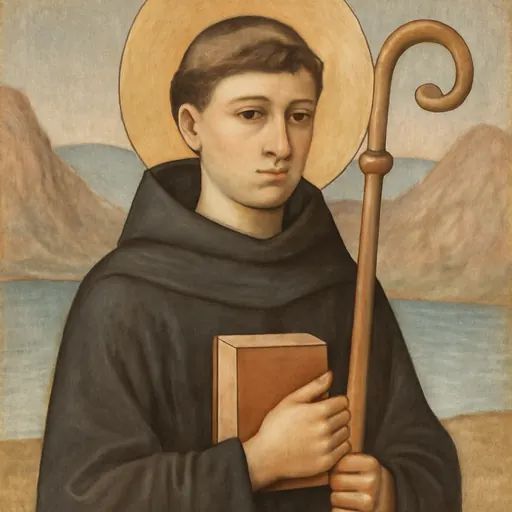
St. Maurus (about 510–584) was the first disciple of St. Benedict, given to him at Subiaco as a boy by his Roman father. St. Gregory the Great tells how, at Benedict's word, he ran across a lake to pull young St. Placid from the water, and later tradition sends him to found the abbey of Glanfeuil in France. We keep his feast on January 15, and the Blessing of St. Maurus is still given to the sick.
Who was St. Maurus?
St. Maurus was the first disciple of St. Benedict, the father of Western monks. He came to Benedict at Subiaco, in the hills east of Rome, as a boy in the early 6th century, grew up in his monasteries and became his right hand. He is remembered above all for one moment: the day Benedict told him to run and save a drowning child, and Maurus ran out across the surface of the lake without noticing he had left the shore.
There are many saints named Maurus, including martyr bishops of Parenzo and Cesena. This one is the monk, often called St. Maur, whose feast we keep on January 15.
Our oldest source is St. Gregory the Great, who wrote the life of Benedict in Book II of his Dialogues around 593 to 594. Everything about Maurus in France comes from a much later Life, discussed below.

The life of St. Maurus
A boy given to Benedict
Gregory writes that as Benedict's fame grew, noble families of Rome brought him their sons to raise for God. "Evitius delivered him Maurus, and Tertullius the Senator brought Placidus." The Catholic Encyclopedia gives the father's name as Equitius. Maurus, Gregory says, grew "to great virtue" and became "his master's coadjutor," while Placid "as yet was but a boy of tender years."
Gregory gives Maurus small parts in several stories. When a restless monk kept wandering out of the oratory at prayer time, Benedict saw "a little black boy" pulling him by the habit. After two days of prayer Maurus saw it too, though the monk Pompeianus could not. When a Goth lost the iron head of his brush-hook in the lake, it was Maurus he went to first.
Running on the water
The most famous story is in chapter 7. Placid went down to the lake to draw water, lost his footing and was carried out "so far as one may shoot an arrow." Benedict, in his cell, knew it at once and called out: "Brother Maurus, run as fast as you can, for Placidus, that went to the lake to fetch water, is fallen in." Maurus asked his blessing and ran. He reached the boy, took him by the hair and brought him back, and only on the shore did he look behind him and know "that he had before run upon the water."
Then came what Gregory calls a "friendly contention proceeding of mutual humility." Benedict said the miracle came from Maurus's obedience. Maurus said it came from Benedict's command. Placid settled it: he had seen "the Abbot's garment" over his head as he was pulled from the water.

The mission to France
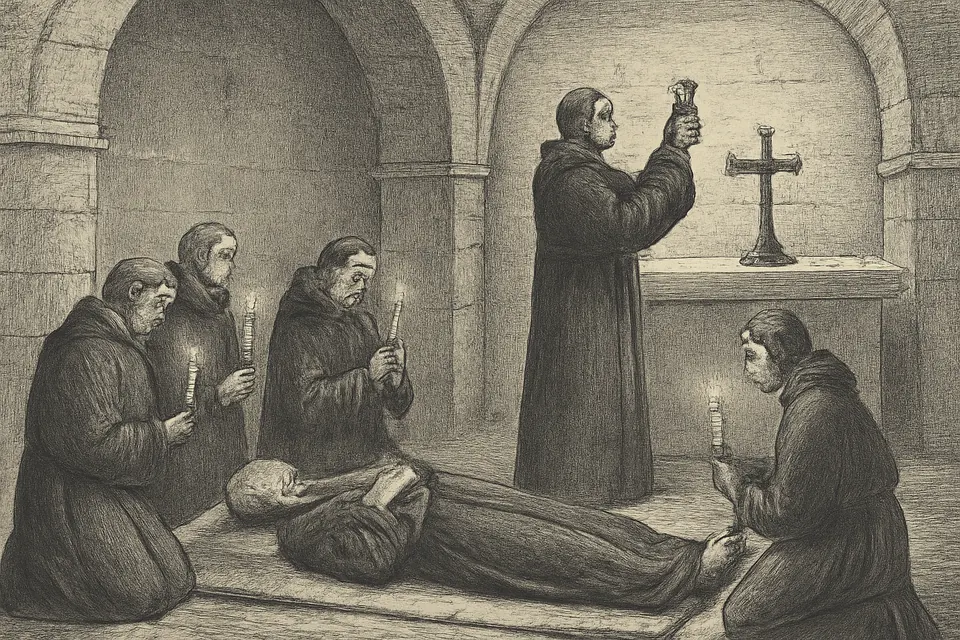
A Life of St. Maurus, said to be by his companion Faustus but first known through Abbot Odo of Glanfeuil in the 9th century, sends Maurus to France in 543 at the request of the bishop of Le Mans. He founds the abbey of Glanfeuil on the Loire and rules it for many years. In 581 he resigns, lives in a cell near the church of St. Martin, and after two years dies of a fever, lying on sackcloth before the altar of St. Martin, on January 15, 584.
We should say honestly that this Life is disputed. The Jesuit scholar Hippolyte Delehaye called it a forgery by Odo, and the Benedictine Adlhoch defended it. Gregory, who knew men who knew Benedict, says nothing of France.
The miracles of St. Maurus
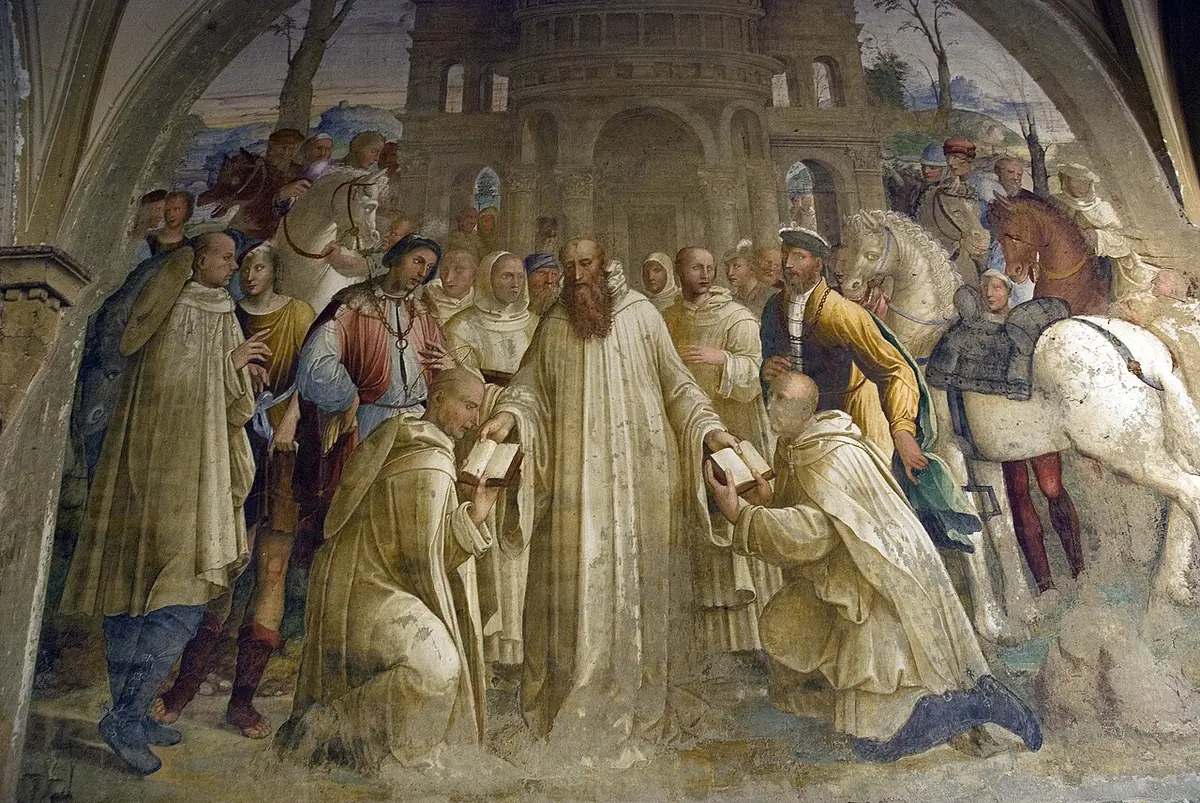
- Running on the water to save Placid (traditional). Recorded by Gregory the Great some fifty years later, from Benedict's own disciples. Gregory's companion Peter compares it to the apostle St. Peter walking on the sea.
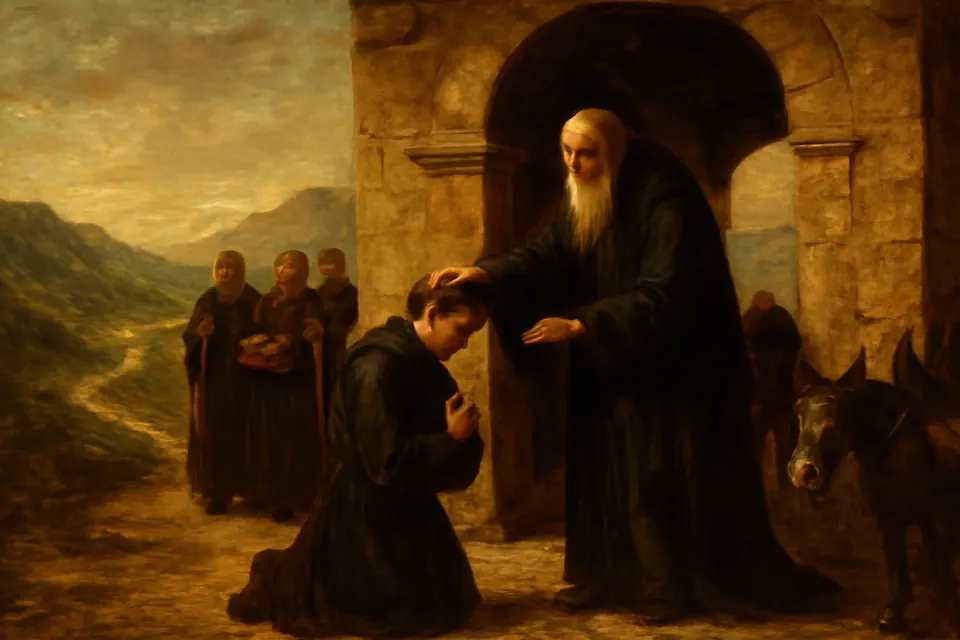
- Healings by the sign of the cross (traditional). The Life of Faustus tells of a mute and lame boy healed when Maurus laid his deacon's stole on his head, and of a man with a crushed, swollen arm healed with a relic of the True Cross on the road to France.
- Healings through his blessing (reported). The Order of St. Benedict writes that many sick people have been relieved through the Blessing of St. Maurus received with faith. None of these cures has been formally examined.
Why St. Maurus is a patron of the sick
The healing stories in his Life are the reason. The words of the Blessing of St. Maurus are said to be the very words he used over the mute and lame boy, so the sick, the lame and disabled, and those suffering from gout, rheumatism and hoarseness have long asked his prayers. The Catholic Encyclopedia also names him patron of charcoal burners and coppersmiths, and in Belgium of shoemakers. More patronages are on our patron saints page.
Symbols of St. Maurus in art
Maurus is easiest to find in the cycles of St. Benedict's life. Look for:
- A young monk on the water: the rescue of Placid, almost always with Benedict watching or sending him. Placid is the boy in the water, often pulled up by his hair.
- A Benedictine habit: black in most Western art, white in the Olivetan frescoes.
- An abbot's crozier, a book or a censer: for the abbot of Glanfeuil and for his office as deacon.
- Weights and measures: the measures of food and drink set by the Rule, which his master gave him.

St. Maurus's feast day and relics
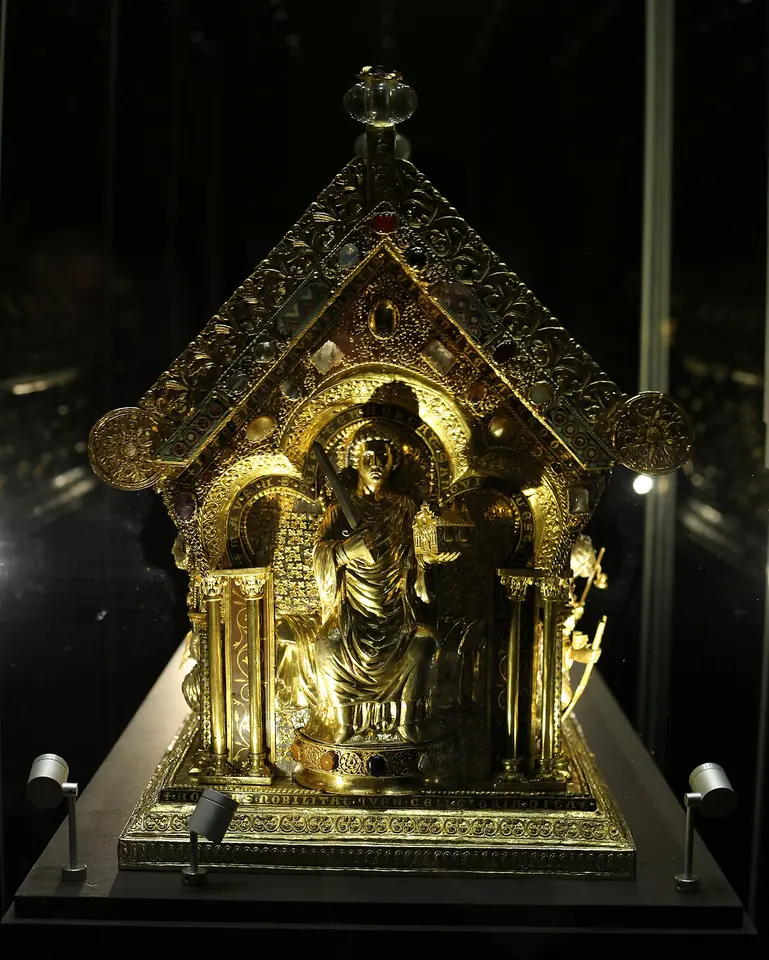
We keep his feast on January 15, the day of his death. Glanfeuil itself came to be called Saint-Maur-sur-Loire, and in the 9th century, when Viking raiders came up the Loire, the monks carried his body to an abbey near Paris that also took his name, Saint-Maur-des-Fossés. A great Romanesque shrine called the Reliquary of St. Maurus, made in the early 13th century for the Benedictine abbey of Florennes in what is now Belgium, is kept at Bečov nad Teplou Castle in the Czech Republic. Hidden under the floor of the castle chapel at the end of World War II, it was found again by Czechoslovak police on November 5, 1985. See other January saints on our feast days page.
The Blessing of St. Maurus
The Church has kept an approved blessing of the sick in his name, given by a priest or deacon with a relic of the True Cross, or since 1959 with the Medal of St. Benedict. Its central words, as given by the Order of St. Benedict, are:
In the name of the most holy and undivided Trinity and supported by the merits of the most holy Father Benedict, I bid you, N., to rise, stand upon your feet and be cured, in the name of the Father and of the Son + and of the Holy Spirit.
It closes: "Through the invocation of the Immaculate Mother of God and ever Virgin Mary, and the intercession of Saints Benedict and Maurus, may the Power + of God the Father, the Wisdom + of God the Son, and the Strength + of the Holy Spirit free you from your infirmities. Amen."
Let us ask St. Maurus to pray for the sick we love, and for the grace to obey as quickly as he did.
Frequently asked questions
Who was St. Maurus?
The son of a Roman nobleman named Equitius, given as a boy to St. Benedict at Subiaco in the early 6th century. He became Benedict's chief helper, and St. Gregory the Great held him up as a model of obedience. A later Life says he went to France in 543 and founded the abbey of Glanfeuil on the Loire, where he died on January 15, 584.
What miracle is St. Maurus known for?
Walking on water. When the boy Placid fell into the lake at Subiaco, Benedict sent Maurus to save him; Maurus ran out over the water, pulled Placid out by the hair, and only realized on the shore what he had done. St. Gregory the Great records it in Book II of his Dialogues.
What is the Blessing of St. Maurus?
A blessing of the sick given by a priest or deacon with a relic of the True Cross, invoking St. Benedict and St. Maurus. In 1959 the Sacred Congregation of Rites allowed the Medal of St. Benedict to be used in place of the relic.
What is St. Maurus the patron saint of?
The sick, especially people who are lame or disabled, and he is invoked against gout and hoarseness. The Catholic Encyclopedia also names him patron of charcoal burners and coppersmiths, and in Belgium of shoemakers.
Keep exploring
- Patron saint pages
- Healing
- Feast-day calendar
- Saints remembered in JanuarySaint of the day
- More
- Saints A to ZPatron saints A to ZExplore every section
Sources
- St. Gregory the Great, Dialogues, Book II, chapters 3–7 (Gardner translation, 1911). Maurus given to Benedict by Equitius; the run across the water and the 'friendly contention' over who worked the miracle; Peter's comparison of Maurus to the apostle Peter
- Francis Mershman, St. Maurus (Catholic Encyclopedia, 1911). His attributes and patronages; the Life ascribed to Faustus called a forgery by Delehaye and defended by Adlhoch
- Life of St. Maurus and the Blessing over the Sick (Order of Saint Benedict). The form of the Blessing of St. Maurus; the 1959 permission to use the St. Benedict medal; his death before the altar of St. Martin
- The Shrine of St Maurus, Bečov nad Teplou State Castle and Chateau (archived). Made for the Benedictine abbey of Florennes; found under the floor of the castle chapel on November 5, 1985