St. Clement of Ancyra

St. Clement of Ancyra was a bishop of Ancyra, today's Ankara in Turkey, who died a martyr under the emperor Diocletian in the early fourth century. The Roman Martyrology says that "after having frequently endured torments, he finally completed his martyrdom under Diocletian." We honor him with his companion St. Agathangelus on January 23.
Who was St. Clement of Ancyra?
St. Clement of Ancyra was a bishop of Ancyra, the capital of the Roman province of Galatia and today's Ankara, the capital of Turkey. He died a martyr in the Great Persecution under the emperor Diocletian, at the beginning of the fourth century. We honor him on January 23, together with his disciple St. Agathangelus.
The Roman Martyrology gives the essentials in one line: "At Ancyra, in Galatia, St. Clement, bishop. After having frequently endured torments, he finally completed his martyrdom under Diocletian." It adds that Agathangelus suffered "on the same day."
Almost everything else comes from Greek Acts of the martyrs, which the Orthodox Church reads in its lives of the saints. Sabine Baring-Gould warned in his Lives of the Saints that these Acts "are not genuine," meaning that they were written long after the events and filled out with legend. So we hold the core firmly (a bishop of Ancyra, many torments, martyrdom under Diocletian) and tell the rest as traditional.

His youth, as tradition tells it
The Orthodox Church in America gives the traditional account. Clement was born at Ancyra about 258, the son of a pagan father and a Christian mother. His father died when he was an infant and his mother when he was twelve; Baring-Gould's version says ten. Before she died she urged him never to desert Christ, whatever it cost him, and foretold that he would die a martyr.
A Christian woman named Sophia took him in. During a terrible famine in Galatia, when some pagan families turned out children they could not feed, Sophia gathered them up, and young Clement helped her feed and clothe them. He taught them the faith and prepared them for baptism, and tradition says that many of them later died as martyrs. Baring-Gould adds that when Clement came of age he used his own money to adopt poor boys and raise them "in the nurture and admonition of the Lord."
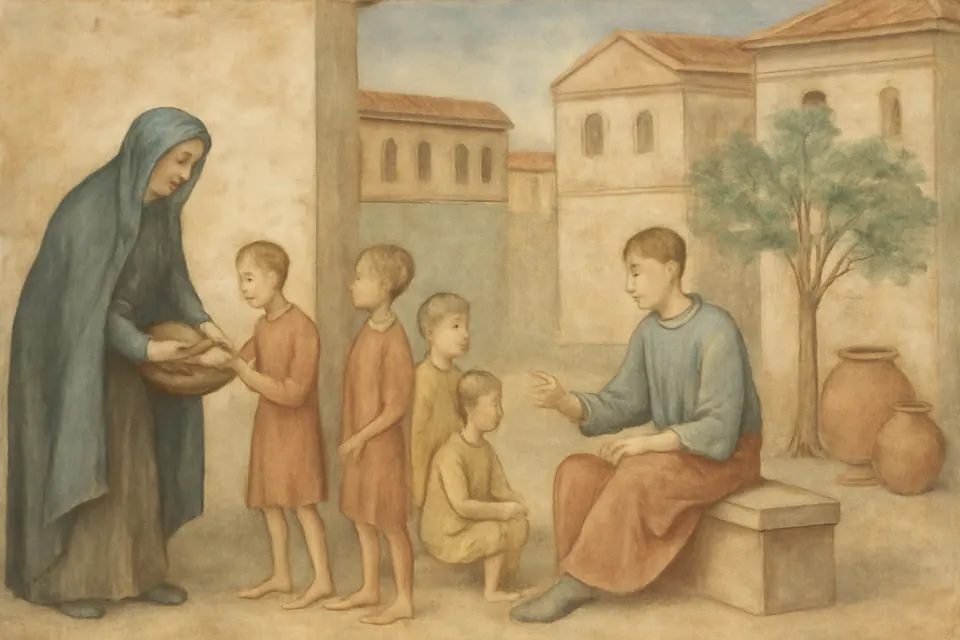
He served as a reader and then a deacon. According to the Orthodox account he was ordained a priest at eighteen and consecrated bishop of his city at twenty, a remarkably young age that may belong to the legend.
Twenty-eight years of suffering
When Diocletian's persecution broke out, Clement was denounced and brought before the governor of Galatia. Here the Acts tell a long series of trials. He was tortured at Ancyra, sent to Rome to face Diocletian himself, sent on to Nicomedia, and then back and forth across Asia Minor to Ancyra, Amasea and Tarsus. Again and again he was tortured, and again and again, the story says, God healed his wounds. These healings are traditional, part of the Acts rather than history we can check.
In Rome, the OCA account continues, so many people came to him in prison for teaching, healing and baptism that the jail "was literally transformed into a church." There his disciple Agathangelus joined him, eager to suffer with him.
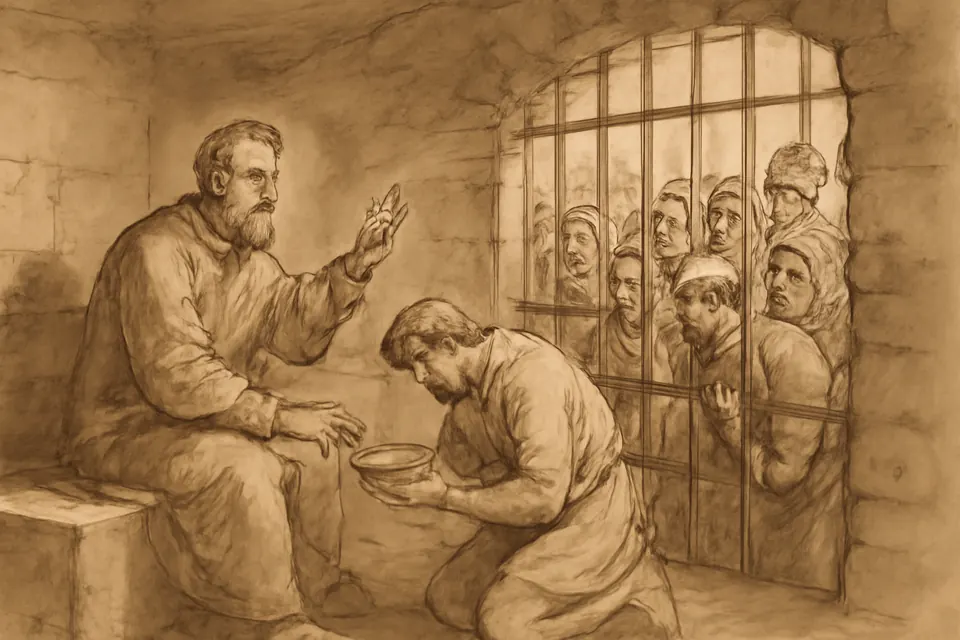
Baring-Gould tells another traditional story from the same Acts. One night in prison, after a day of torture, a bright light filled the cell, and a man in shining garments came in holding the Holy Eucharist and gave Communion to the bishop. "Whether he were mortal priest, or an angel of God, no man knows."
On the road, the Orthodox life says, Clement learned in a revelation that he would suffer for Christ for twenty-eight years in all.
Martyred at the altar
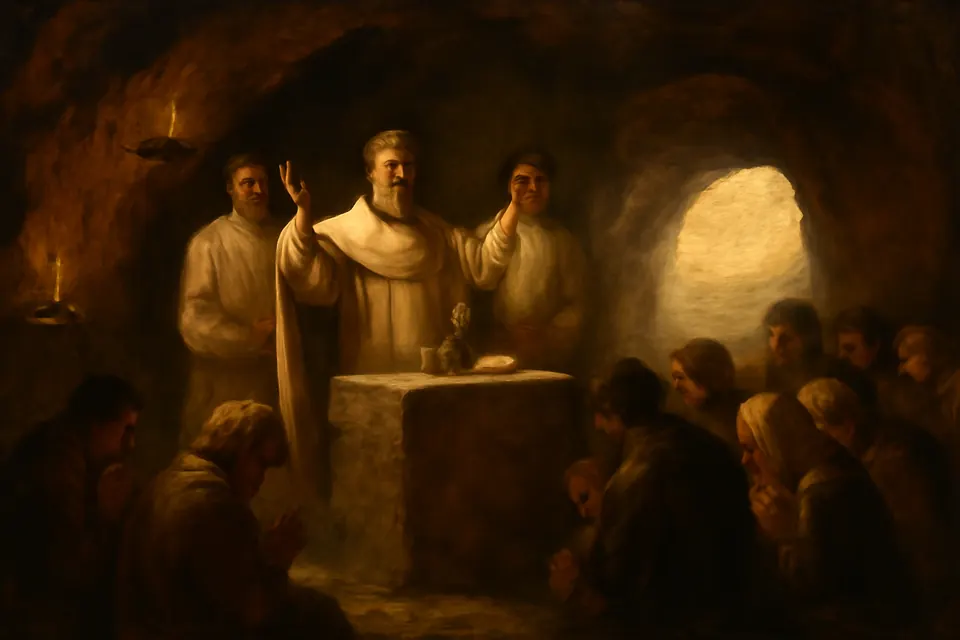
Agathangelus was beheaded first. The Christians of Ancyra freed Clement from prison and brought him to a church hidden in a cave. There he celebrated the Divine Liturgy and told the faithful that the persecution would soon end and that his own death was near.
On January 23, soldiers broke into the church. They beheaded the bishop where he stood at the altar, offering the Holy Sacrifice. Two deacons, Christopher and Chariton, died with him. The OCA life notes that no one else in the church was harmed.
Symbols of St. Clement of Ancyra in art
Clement is honored chiefly in the East, and he appears in Byzantine and Russian icons and church frescoes rather than in Western painting.
- The omophorion: the wide white stole with crosses worn by Eastern bishops, marking him as a hierarch.
- A Gospel book: the bishop as teacher, and the children he taught.
- A martyr's cross: held in his hand, for his death for Christ.
The Menologion of Basil II, the illustrated Byzantine calendar of saints made in Constantinople about 985 and now in the Vatican Library, pictures his martyrdom for January 23. In later icons, look for a bishop in an omophorion paired with the young martyr Agathangelus.
Feast day and prayer
We keep his feast on January 23; see our feast day calendar. Ancyra gave the Church other martyrs too, among them St. Theodotus and St. Basil of Ancyra. There is no traditional English prayer to St. Clement, so let us pray in our own words. Holy Hieromartyr Clement, who cared for abandoned children and offered the Holy Sacrifice to your last breath, pray for children who have no one to care for them, and for all who suffer long for their faith.
Frequently asked questions
Who was St. Clement of Ancyra?
The bishop of Ancyra in Galatia, central Asia Minor, during the Great Persecution under Diocletian. Orthodox tradition holds that he was raised by a Christian woman named Sophia, cared for abandoned children, became bishop very young, and suffered many years of torture before he was beheaded at the altar while celebrating the Liturgy.
Who was St. Agathangelus?
His disciple and fellow martyr. Tradition says Agathangelus joined Clement on his journey from Rome and shared his sufferings, and was beheaded before him. The Roman Martyrology and the Orthodox calendar both commemorate the two together on January 23.
When is the feast of St. Clement of Ancyra?
January 23, in both the Orthodox Church and the Roman Martyrology.
Keep exploring
Sources
- Orthodox Church in America: Hieromartyr Clement, Bishop of Ancyra, and Martyr Agathangelus. The Orthodox account of his life, journeys, sufferings and death at the altar
- The Roman Martyrology (English edition, 1916), Internet Archive. January 23, with St. Agathangelus
- Sabine Baring-Gould, The Lives of the Saints, vol. 1: January (Project Gutenberg). January 23; notes that the Greek Acts are not genuine, and tells of the Eucharist brought to him in prison