St. Maximus the Greek (Maxim Grek)
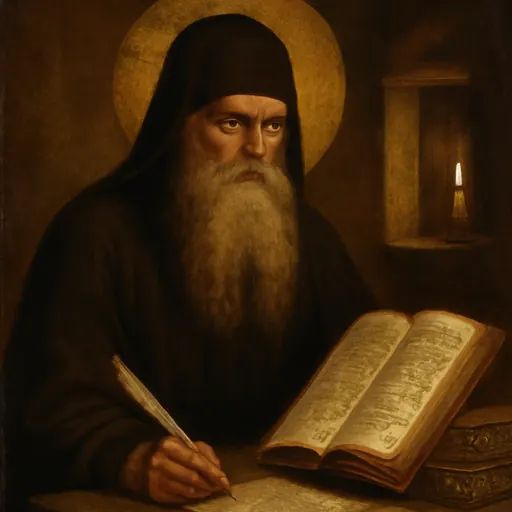
St. Maximus the Greek (died 1556) was a monk of Mount Athos, trained among the scholars of Renaissance Italy, who was sent to Moscow to translate Church books into Slavonic. Condemned on false charges, he spent more than twenty years in confinement, and the Russian Orthodox Church glorified him in 1988. We keep his feast on January 21.
Who was St. Maximus the Greek?
St. Maximus the Greek was a monk of Mount Athos who came to Moscow as a translator and stayed as a confessor of the faith. Born in Arta, in Epirus, around 1470 or 1480 (the sources differ), he studied in Paris, Venice and Florence among the humanist scholars of the Renaissance, became a monk at the Vatopedi monastery on the Holy Mountain, and in 1518 traveled to Moscow at the request of Grand Prince Basil III. He never went home. Accused of heresy and corrupting the sacred books, he spent more than twenty years in confinement, and died at the Trinity-St. Sergius Lavra in 1556.
The Russian Church calls him "Maxim Grek." He is not the same man as St. Maximus the Confessor, the seventh-century theologian, though by coincidence they share the same feast day. Our account follows the life published by the Orthodox Church in America and the Encyclopaedia Britannica.
The life of St. Maximus the Greek
A scholar of the Renaissance
He was the son of a wealthy Greek family, and as a young man he traveled to Italy and France to study languages and philosophy. Britannica says he was a friend of prominent humanist scholars and editors in Italy and came under the influence of Girolamo Savonarola, the Dominican reformer of Florence. Then he returned to the Greek world and took monastic vows at Vatopedi, where he spent years among the old manuscripts in the monastery's library.
Called to Moscow
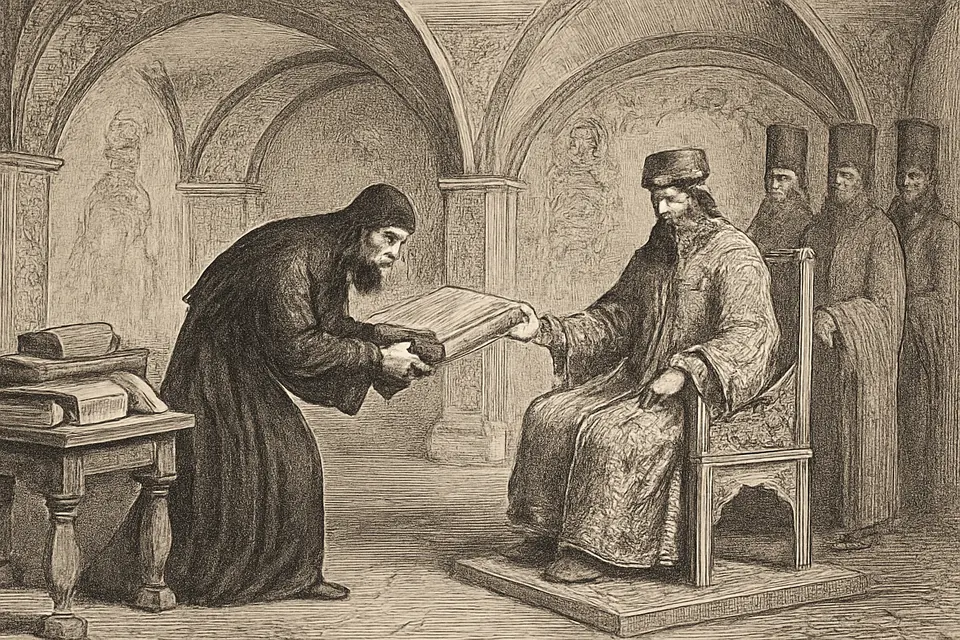
Basil III wanted the Greek books of his late mother, Sophia Palaiologina, catalogued and translated, and he asked Mount Athos for a learned monk. Maximus was chosen. In Moscow he was asked to translate patristic and liturgical books into Slavonic, beginning with an annotated Psalter. He did not yet know Slavonic well and worked through Russian helpers, so mistakes crept in. He also translated St. John Chrysostom's commentaries on the Gospels of Matthew and John, and wrote many works of his own.
Trial and prison
Metropolitan Varlaam valued his work, but Varlaam's successor, Metropolitan Daniel, did not. Maximus refused to translate a church history that contained the letters of the heretic Arius, fearing it would mislead readers who were only half-taught. He sided with the monks who held that monasteries should not own great estates. And when Basil III resolved to divorce his wife Solomonia because she had borne no children, Maximus wrote against it.
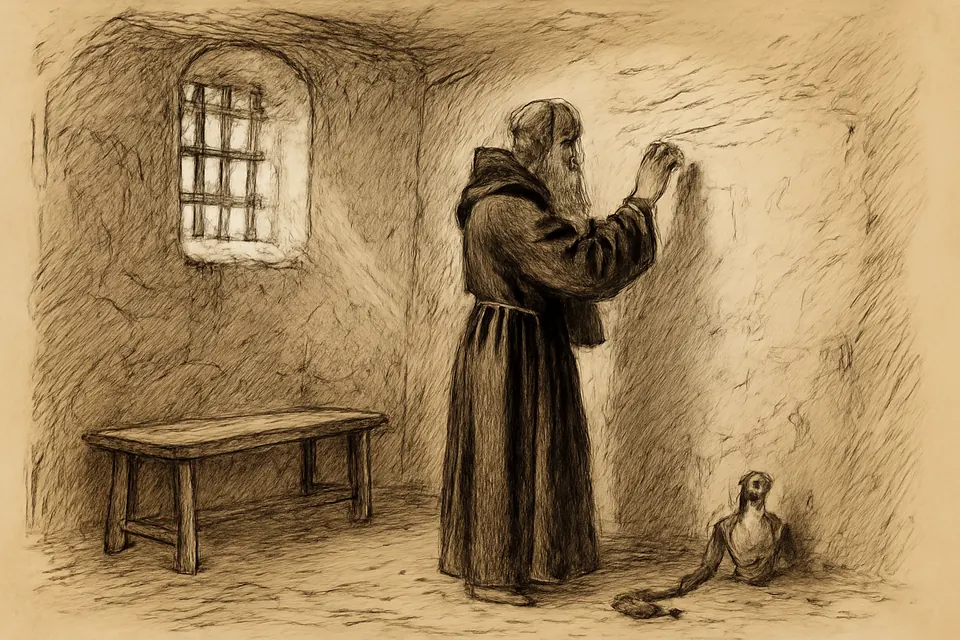
In 1525 he was arrested and tried for heresy; a second trial in 1531 condemned him again. The errors in his translations were treated as deliberate corruption of the sacred books. The OCA life says that an angel came to him in prison and said, "Endure, Abba! Through this temporary pain you will be delivered from eternal torments." There, with charcoal on the wall of his cell, he wrote a canon to the Holy Spirit that the Church still uses. It begins, "Just as Israel was nourished with manna in the wilderness of old, so Master, fill my soul with the All-Holy Spirit."
After years in close confinement he was sent to Tver, where Bishop Acacius treated him kindly. In his own account he wrote, "Neither grieve, nor be sad, beloved soul, that you have suffered unjustly, for it behooves you to accept all for your benefit." Only around 1551 was he freed, and his excommunication lifted. Britannica records that Tsar Ivan IV paid him public honor.
Last years at the Lavra
He spent his last years at the Trinity-St. Sergius Lavra founded by St. Sergius of Radonezh. Old and worn, he kept working, and with his disciple Nilus translated the Psalter from Greek into Slavonic once more. He died on January 21, 1556, and was buried by the northwest wall of the Church of the Holy Spirit.
The miracles and relics of St. Maximus the Greek
The OCA life says that "many manifestations of grace took place" at his grave, and by the end of the sixteenth century he was honored as a local saint. Those healings are reported, recorded by the Lavra and remembered in its services, never formally examined.
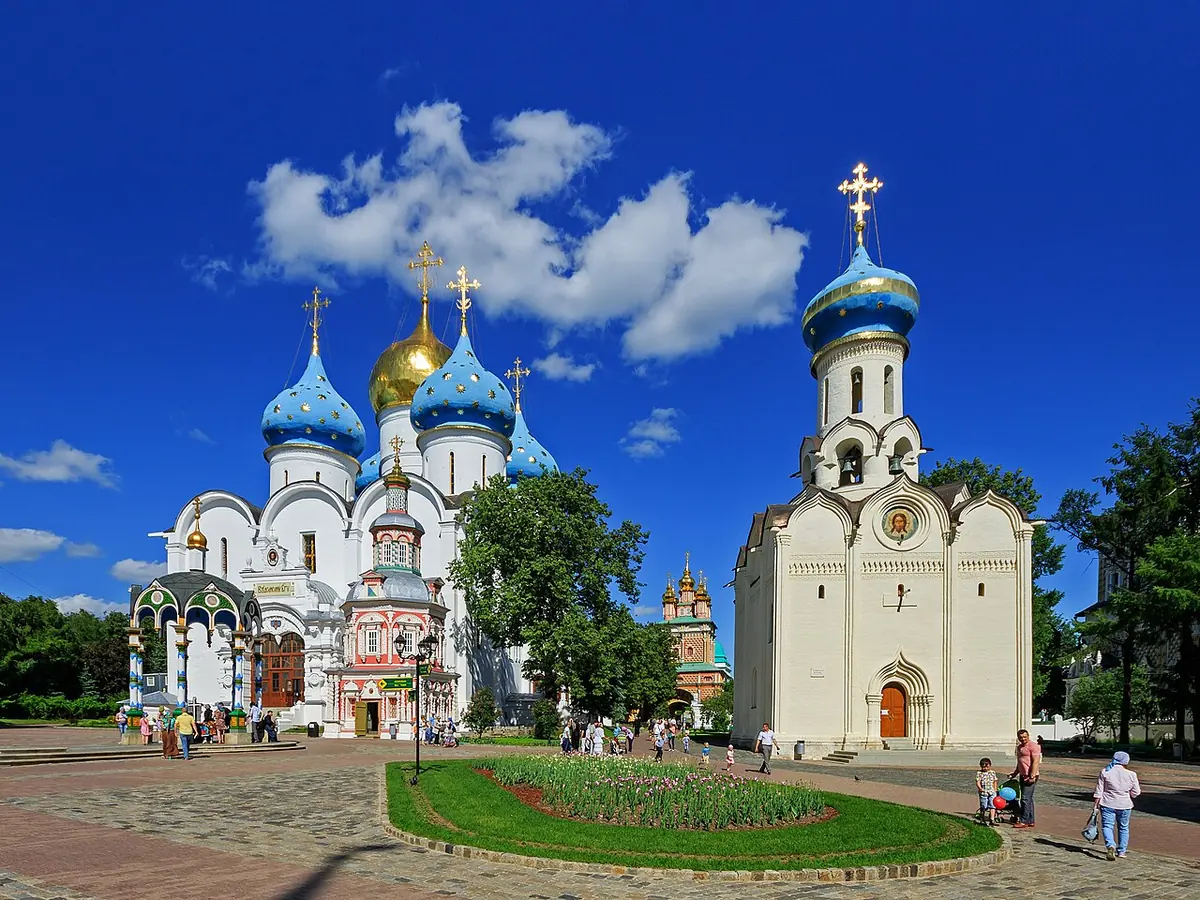
His glorification came late. The Jubilee Council of the Russian Orthodox Church, meeting at the Lavra in 1988 for the millennium of the Baptism of Rus', numbered him among the saints, calling him "a holy man, a wonderworker, a venerable ascetic, and a master of the monastic life." No one knew exactly where his grave lay, so in June 1996, with the blessing of Patriarch Alexei II, archaeologists dug beside the Holy Spirit church. On June 30 the workers noticed a sweet fragrance, and soon they uncovered the remains of a man of about eighty in the place shown on a plan of 1745. On July 3 the relics were raised and carried into the church. They were later kept in the Dormition Cathedral and returned to the Holy Spirit church on April 9, 2013.
Where the relics of St. Maximus the Greek are kept: see them on the relics map →
Why St. Maximus the Greek is honored
The Church has given him no formal patronage. Orthodox Christians honor him as a confessor who suffered for the truth without bitterness, and scholars and translators of the Church's books look to him as one of their own. Greeks honor him in his hometown of Arta, where a bronze monument stands.
Symbols of St. Maximus the Greek in art
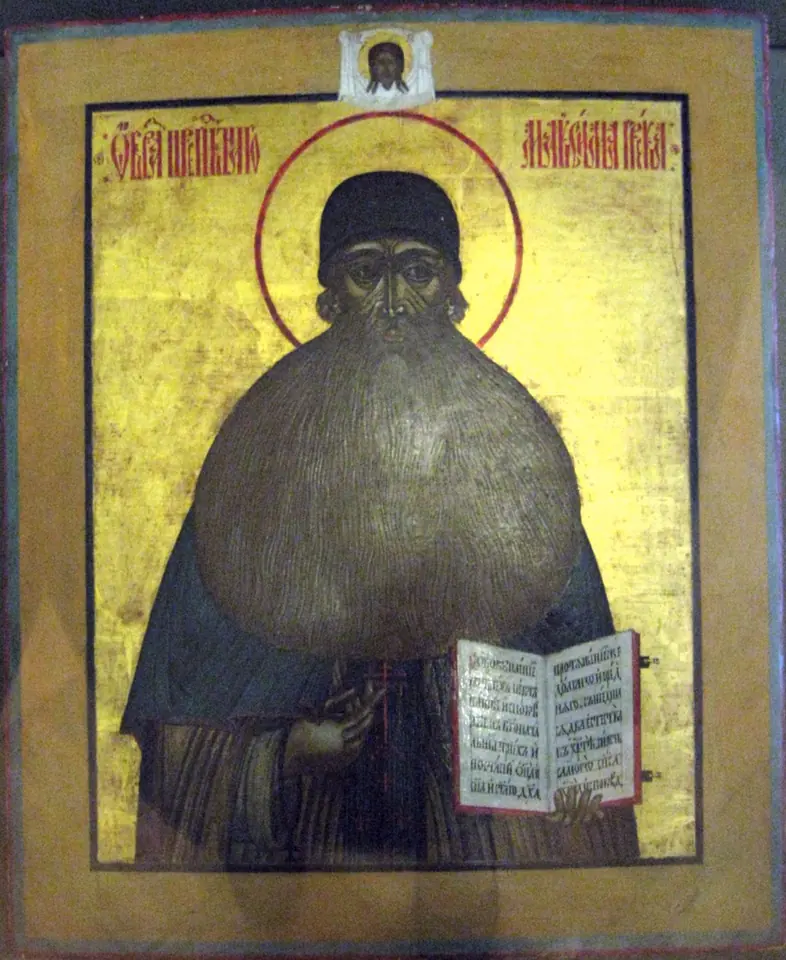
- The beard: his most famous feature. Russian icons give him a beard so long and broad that it covers his chest like a mantle.
- The monk's cowl: a black cowl and mantle, sometimes drawn as a dark halo-shaped hood.
- The open book: the translator's attribute, often with a line of Slavonic text.
- The scroll: in some icons he holds his own words instead of a book.
He also appears on the icon of the Synaxis of the Saints of Radonezh. With that beard and book he is easy to tell from St. Maximus the Confessor, who is usually shown with a shorter beard and a scroll.
Feast day and devotion
We keep his memory on January 21, the day of his repose (February 3 civil date in the Russian Church), and the finding of his relics on July 4. Pilgrims venerate his relics in the Church of the Holy Spirit at the Lavra in Sergiev Posad. See more saints of the month on our feast days page.
Praying with St. Maximus the Greek
There is no Western prayer to St. Maximus with a known origin. On his feast the Orthodox Church sings a troparion that praises him as a luminary of the faith, a scholar who brought the light of piety to the ignorant, and a stranger who endured chains and prison in the Russian lands. The OCA prints the full text on its website.
Let us ask St. Maximus, who wrote of the Holy Spirit on a prison wall, to pray for all who suffer unjustly, that they may meet it with patience.
Frequently asked questions
Who was St. Maximus the Greek?
A Greek monk born in Arta, Epirus, who studied in Italy and became a monk at Vatopedi on Mount Athos. In 1518 he went to Moscow to translate Greek books into Slavonic, was imprisoned from 1525, and died at the Trinity-St. Sergius Lavra in 1556.
Is St. Maximus the Greek the same as St. Maximus the Confessor?
No. Maximus the Confessor was a seventh-century Byzantine theologian. Maximus the Greek lived in the sixteenth century. They happen to share the same feast day, January 21.
When was St. Maximus the Greek canonized?
He was venerated locally from the late 1500s, and the Jubilee Council of the Russian Orthodox Church glorified him for the whole Church in 1988, the millennium of the Baptism of Rus'.
Where are the relics of St. Maximus the Greek?
At the Trinity-St. Sergius Lavra in Sergiev Posad, near Moscow. They were found by archaeological excavation beside the Church of the Holy Spirit in July 1996, kept for some years in the Dormition Cathedral, and returned to the Holy Spirit church in 2013.
Keep exploring
Sources
- Venerable Maximus the Greek, Orthodox Church in America. The angel's words in prison, the charcoal canon and the quotations from his autobiography
- Finding of the relics of Venerable Maximus the Greek (July 4, 1996), Orthodox Church in America. The 1988 glorification, the 1996 excavation and the 2013 return of the relics
- Maximus the Greek, Encyclopaedia Britannica. His Italian education, Savonarola's influence, the 1525 arrest and 1531 condemnation
- Troparion and Kontakion of Venerable Maximus the Greek, Orthodox Church in America