Blessed Teresa Grillo Michel, Widow and Foundress of the Little Sisters of Divine Providence
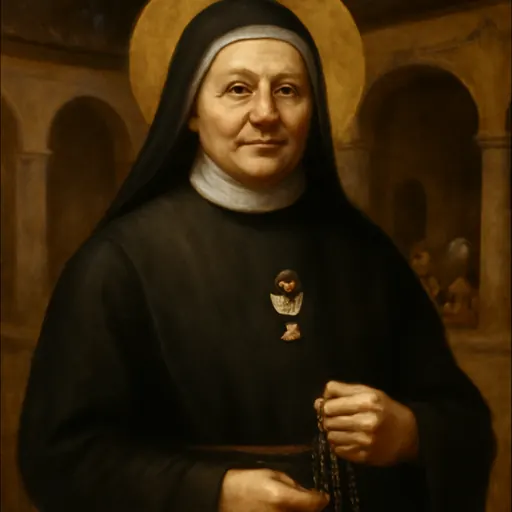
Blessed Teresa Grillo Michel (1855–1944) was a doctor's daughter from Alessandria who married a captain and was widowed at thirty-six. She turned to the poor, sold her palace to shelter them, and founded the Little Sisters of Divine Providence. John Paul II beatified her in 1998. Her feast is January 25, kept by her sisters on January 23.
Who was Blessed Teresa Grillo Michel?
Blessed Teresa Grillo Michel was a wealthy officer's widow from Alessandria who became the mother of the poor of her city. Grief over her husband's sudden death nearly broke her. Then the life of a saint of charity turned her toward the forgotten: orphans, the sick and old people with no one. She opened her home to them, sold it when they no longer fit, and founded the Little Sisters of Divine Providence, who soon crossed the ocean to Brazil and Argentina. Pope John Paul II beatified her in Turin on May 24, 1998, and we keep her feast on January 25.
The life of Blessed Teresa Grillo Michel
A doctor's daughter and an officer's wife
Teresa Maddalena Grillo was born on September 25, 1855, at Spinetta Marengo, just outside Alessandria in Piedmont, the fifth and last child of Giuseppe Grillo, chief physician of the city's civil hospital, and Maria Antonietta Parvopassu, of an old Alessandria family. She went to primary school in Turin. When her father died in 1867 she was sent to board with the English Ladies at Lodi, and she finished there at eighteen.
Back in Alessandria she met a cultured and brilliant captain of the Bersaglieri, Giovanni Battista Michel, and they married on August 2, 1877. His postings took them to Caserta, Acireale, Catania, Portici and Naples. They had no children.
Widowhood and conversion
On June 13, 1891, her husband collapsed from sunstroke during a parade in Naples and died. Teresa, thirty-six years old, sank into a despair that made her ill. Two things brought her out of it: the help of her cousin, Monsignor Prelli, a priest, and the life of St. Joseph Cottolengo, the Turin priest who founded the Little House of Divine Providence for the abandoned. She resolved to give herself to the poor.
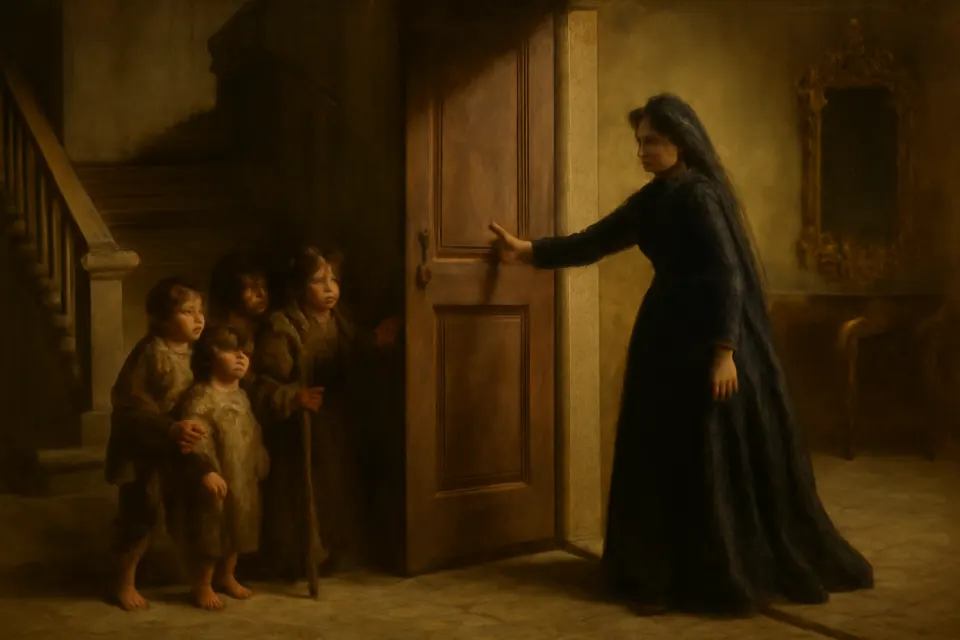
She began by opening the doors of her own palace in Alessandria to poor children and the needy.
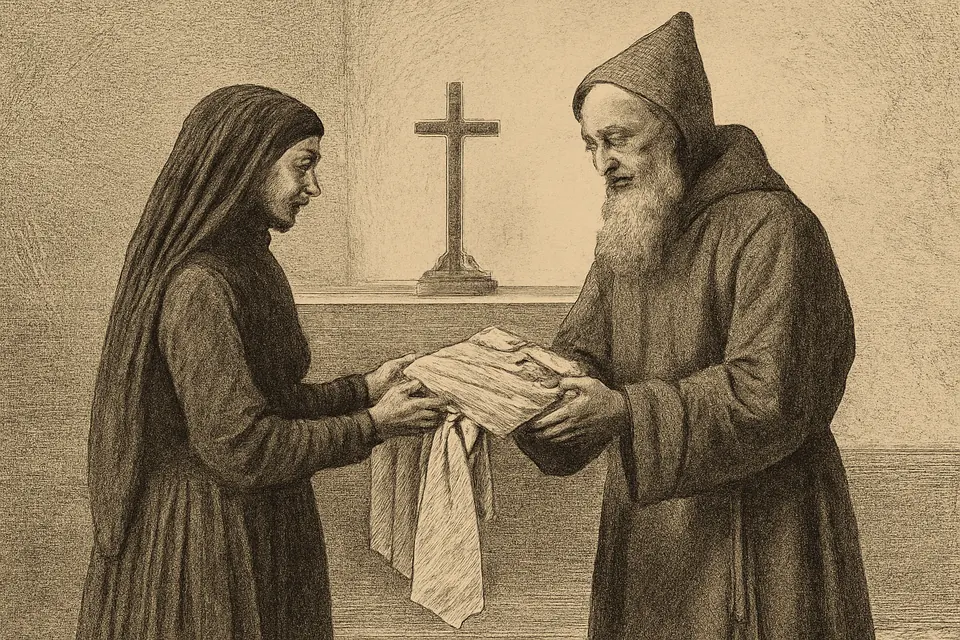
On January 14, 1893, she enrolled in the Third Order of St. Francis, and she made her profession a year later, on January 23, 1894. The friars found her at dawn kneeling on the stone floor of their bare Capuchin church before the doors were even open. About this time she gave her wedding gown to the Capuchins to be made into a vestment. The chasuble they made from it is still kept in their convent as a precious relic.
The Little Shelter of Divine Providence
The poor kept coming. In her own words, as the Dicastery for the Causes of Saints quotes them: "The poor increase beyond all measure, and one would like to open one's arms wide to take in so many of them under the wings of Divine Providence" (our translation). At the end of 1893, against the objections of her family and friends, she sold Palazzo Michel and bought an old building in Via Faà di Bruno, rebuilt it, added a floor, bought the cottages next door, and called it the Little Shelter of Divine Providence.
Women came to help her. At the request of the bishop, on January 8, 1899, Teresa and eight companions received the religious habit in the shelter's small chapel. That day the Little Sisters of Divine Providence were born. At the heart of their life she put the Eucharist, and she wanted its image plainly visible on the sisters' habit.
Across the ocean
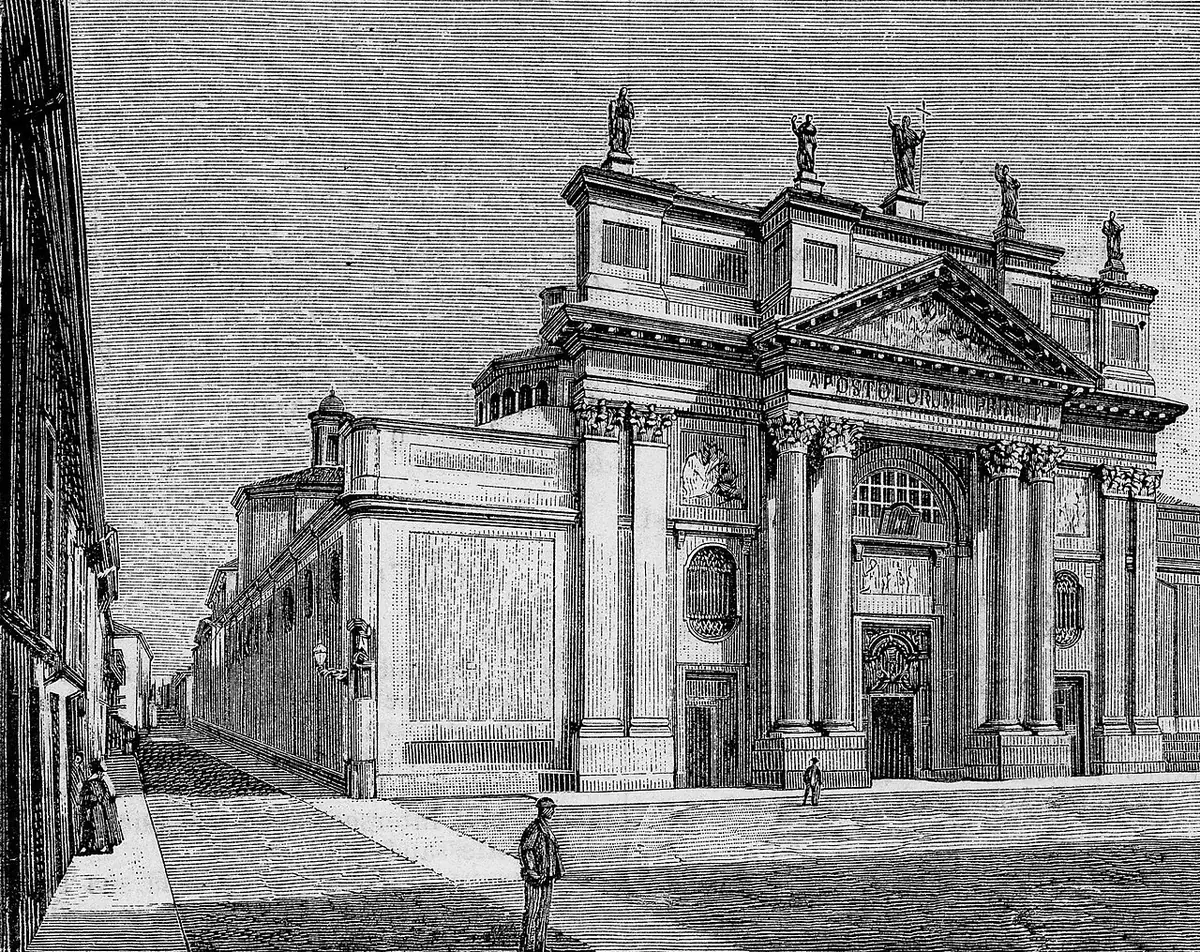
Houses opened across Piedmont and then in Veneto, Lombardy, Liguria, Apulia and Lucania. On June 13, 1900, the sisters went to Brazil, and from 1927, at the request of St. Luigi Orione, to Argentina. Mother Teresa crossed the Atlantic six times to visit them, the last time in 1928 at seventy-three. In Brazil and Argentina her sisters opened kindergartens, orphanages, schools, hospitals and homes for elderly women.
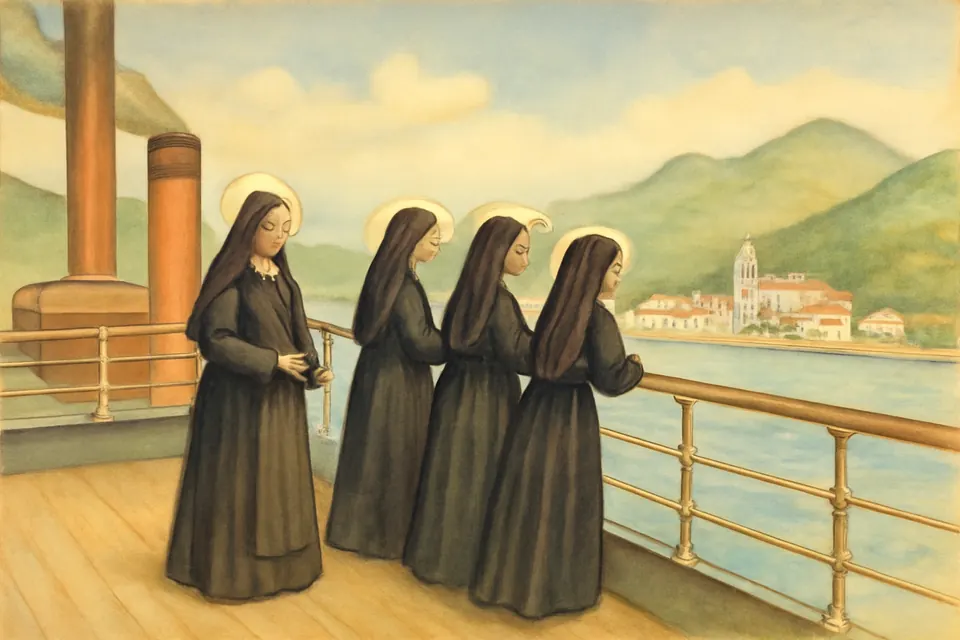
The Holy See praised the congregation in 1935 and gave it full pontifical approval on June 8, 1942. In Alessandria the hat maker Senator Teresio Borsalino became a benefactor: in 1927 he gave the sisters a new institute, and in 1931 he built the Mother House on the site of the old shelter. Mother Teresa died there on January 25, 1944, at eighty-eight. Her congregation then had twenty-five houses in Italy, nineteen in Brazil and seven in Argentina.
The miracle and beatification of Blessed Teresa Grillo Michel
Her cause opened in Alessandria in 1953, and Pope John Paul II declared her Venerable on July 6, 1985. A healing obtained through her prayers was examined in Rome, and on December 18, 1997, the Pope approved it as an approved miracle. He beatified her in Turin on May 24, 1998, together with Blessed Teresa Bracco and Blessed Giovanni Maria Boccardo. Other graces her sisters receive reports of are reported, and they pray for a second miracle for her canonization.
Symbols of Blessed Teresa Grillo Michel in art
All her images are modern, from paintings and statues for her sisters' houses to illustrations in their books, so there is no fixed old iconography. Look for:
- The habit of the Little Sisters of Divine Providence: dark, with the emblem of the Eucharist she wanted on the sisters' habit, a reminder of the hours she spent in adoration.
- Children and old people at her side: the orphans and elderly poor she took in.
- An older woman's face: she founded her congregation at forty-three and led it until she was eighty-eight, so she is usually shown as a mature mother of her community, not a young nun.
Feast day, tomb and prayer
The Roman Martyrology names her on January 25; her sisters and the Diocese of Alessandria keep her feast on January 23. Her tomb is in the chapel of Sant'Antonio at the Mother House in Alessandria. See more saints of January on our feast days page.
We have not found a short traditional prayer to her to reprint. Let us ask Blessed Teresa Grillo Michel to pray for widows and all who grieve, for the elderly poor and the children no one looks after, and for her Little Sisters in Italy and Latin America.
Frequently asked questions
Who was Blessed Teresa Grillo Michel?
An Italian noblewoman born near Alessandria in 1855. After her husband, Captain Giovanni Battista Michel, died in 1891, she gave her home and fortune to orphans, the sick and the elderly poor, and in 1899 founded the Little Sisters of Divine Providence. She died in Alessandria in 1944 at eighty-eight.
What congregation did Teresa Grillo Michel found?
The Little Sisters of Divine Providence (Piccole Suore della Divina Provvidenza), begun on January 8, 1899, when she and eight companions received the religious habit in the chapel of her shelter in Alessandria. The sisters run schools, orphanages, hospitals and homes for the elderly in Italy and Latin America.
When is the feast of Blessed Teresa Grillo Michel?
The Roman Martyrology names her on January 25, the day she died. Her sisters and the Diocese of Alessandria celebrate her on January 23.
Where is Blessed Teresa Grillo Michel buried?
In the chapel of Sant'Antonio at the Mother House of her congregation in Alessandria.
Keep exploring
Sources
- Dicastery for the Causes of Saints: Teresa Grillo Michel (biography and John Paul II's beatification homily, May 24, 1998). Widowed at thirty-six, her words on the poor and Divine Providence, the Eucharistic emblem on the habit, the six Atlantic crossings and the last in 1928 (our translations from the Italian)
- Beata Teresa Grillo Michel, Santi e Beati. Her family, schooling in Turin and Lodi, the marriage of 1877, her husband's death on June 13, 1891, Cottolengo and Monsignor Prelli, the sale of Palazzo Michel, January 8, 1899, the houses at her death, and the Roman Martyrology entry
- Piccole Suore della Divina Provvidenza: Cronologia essenziale. Senator Teresio Borsalino's gifts of 1927 and 1931, the decree of the miracle on December 18, 1997, and her tomb in the chapel of Sant'Antonio
- Piccole Suore della Divina Provvidenza: La veste nuziale. Her entry into the Franciscan Third Order in 1893 and 1894, her dawn prayer at the Capuchin church, and the wedding dress made into a chasuble