St. Anastasius of Persia (Anastasius the Persian)

St. Anastasius of Persia was a Persian soldier named Magundat who was drawn to Christ when the Persians carried the True Cross away from Jerusalem in 614. Baptized and made a monk at Jerusalem, he was arrested at Caesarea, tortured and finally strangled and beheaded near the Euphrates in 628. His feast is January 22.
Who was St. Anastasius of Persia?
St. Anastasius of Persia, also called Anastasius the Persian, was a soldier of the Persian king who came to Christ because of the Cross. In 614 the armies of Chosroes II took Jerusalem and carried off the relic of the True Cross. A young Persian named Magundat began asking what this wood was, and why the Christians grieved for it. The answers changed his life. Fourteen years later he died a martyr, refusing even to pretend to deny Christ.
We know his story unusually well. Butler drew it from "his genuine acts," written by the monk who went with him to his death or from what that monk told, and the Second Council of Nicaea cited them about a hundred and sixty years later.

The life of St. Anastasius
A Magian's son in the army of Chosroes
Magundat was born in the Persian province of Rasech, the son of a Magian the Orthodox Church in America names as Bavi, a priest of the old fire religion, and he was taught its learning. He served as a young soldier in the Persian army. When news came that the king had taken the Cross, Butler writes, he "became very inquisitive concerning the Christian religion."
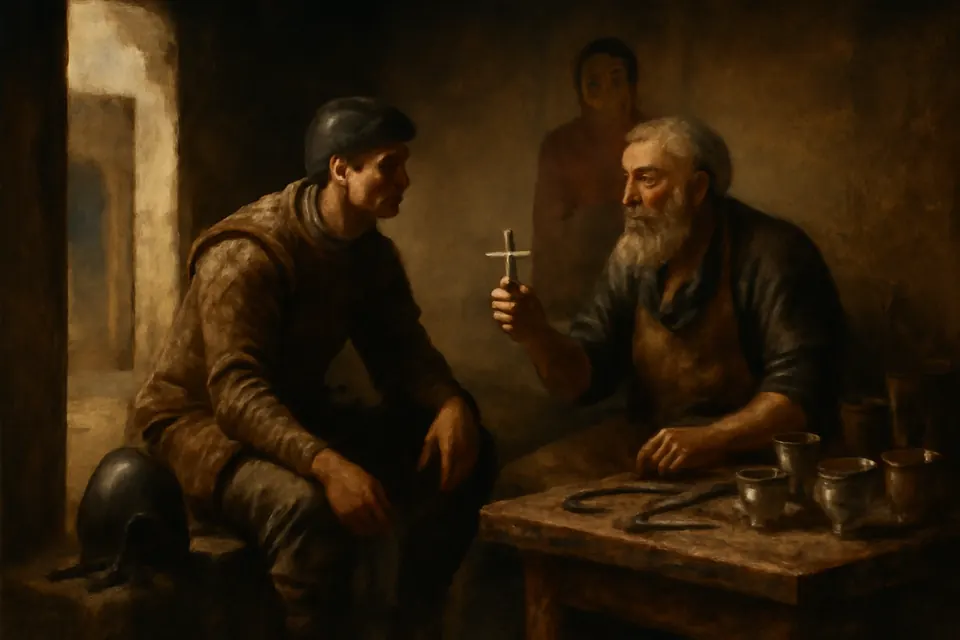
After a campaign he left the army and went to Hierapolis in Syria, where he lodged with a devout Persian Christian, a silversmith, and went with him to prayer. "The holy pictures which he saw, moved him exceedingly," Butler says, especially the paintings of the martyrs in the churches.
Baptism and seven years as a monk
He went on to Jerusalem and was baptized by Modestus, who governed the Church there while the patriarch Zachary was a captive in Persia. He took the name Anastasius, from the Greek word for resurrection, as one risen to new life. In 621 he entered a monastery near Jerusalem, where the abbot Justin had him learn Greek and the Psalter before giving him the habit.
For seven years he lived as a monk. He wept whenever he read the lives of the martyrs. The Orthodox Church in America's life adds that on Holy Saturday he dreamed of a radiant man who handed him a golden cup of wine and said, "Take this and drink," and he understood it as a call to martyrdom.
Arrested at Caesarea
Anastasius left the monastery, prayed at holy places in Palestine and came to Caesarea, then under Persian rule. Seeing Persian magi practicing their rites in the street, he rebuked them, and was arrested. Before the governor Marzabanes he said plainly that he had once been one of them and now followed Christ.
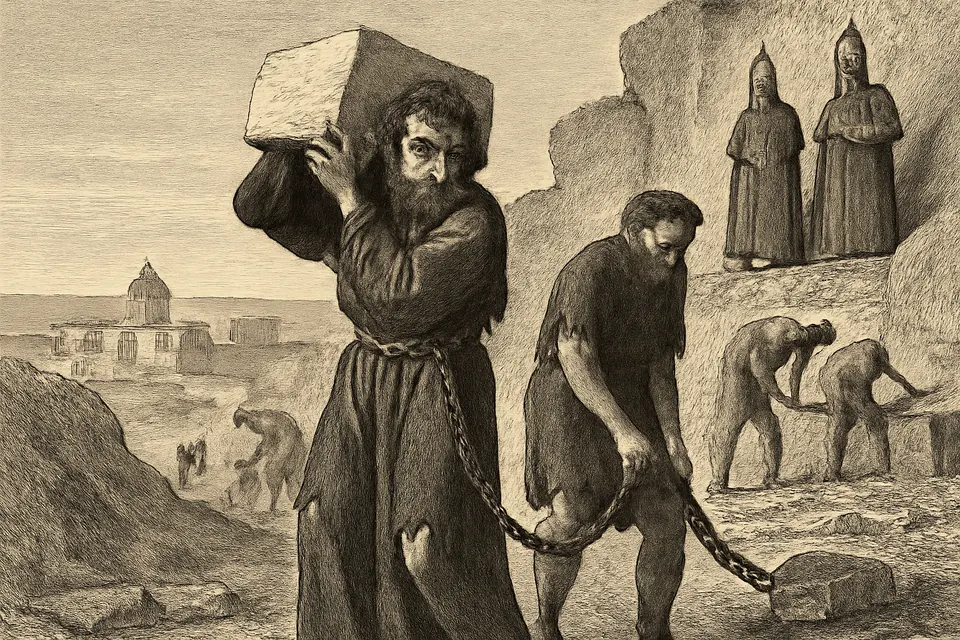
He was chained by the foot to another prisoner and set to carrying stones. When he was beaten, he asked only to take off his monk's habit first, so that it would not be dishonored. Threatened with the king's anger, he answered, "Write what you please, I am a Christian: I repeat it again, I am a Christian."
The governor offered him a way out: deny Christ in words, privately, once, and keep him in his heart. Anastasius refused even to seem to deny his God. The Orthodox Church in America gives his words: "I will never deny my Lord before you or anyone else, neither openly nor even while asleep."
Martyrdom near the Euphrates
He was sent to the king at Bethsaloe, near the Euphrates. There he was beaten again and offered high honors. "The honours and riches of a king, who must shortly die himself are no temptation to me," he said. On January 22, 628, his two companions and some seventy other Christian captives were strangled on the riverbank before his eyes, and then Anastasius himself was strangled and beheaded. Butler adds that Anastasius had foretold the speedy fall of Chosroes, and that ten days after his martyrdom the emperor Heraclius entered Persia.
Miracles and the holy image
His body was thrown to the dogs with the others, but, as the Catholic Encyclopedia says, it was "left untouched by them." Christians ransomed it and laid it in the nearby monastery of St. Sergius, Butler writes, while the monk who had followed him carried home his linen tunic. Later the relics went to Palestine, to Constantinople and finally to Rome. These wonders are traditional.
His image became famous in its own right. The Roman Martyrology says his head was brought to Rome "together with his venerable likeness, by the sight of which the demons are expelled, and diseases cured, as is attested by the Acts of the second council of Nicaea." That council, in 787, defended the veneration of holy images, and these cures were part of the evidence it heard. We count them as reported.
In England, St. Bede the Venerable found a Latin life of Anastasius that was, in his words, "ill translated from the Greek, and worse amended by some unskillful person," and he corrected it himself.
Symbols of St. Anastasius in art
- Monk's habit: his seven years in the monastery near Jerusalem.
- Palm and cross: his martyrdom and his love of the Cross that converted him.
- Chains: the fetters he wore at Caesarea.
- His face as a holy image: in Rome, prints reproduced the venerated image of his head.
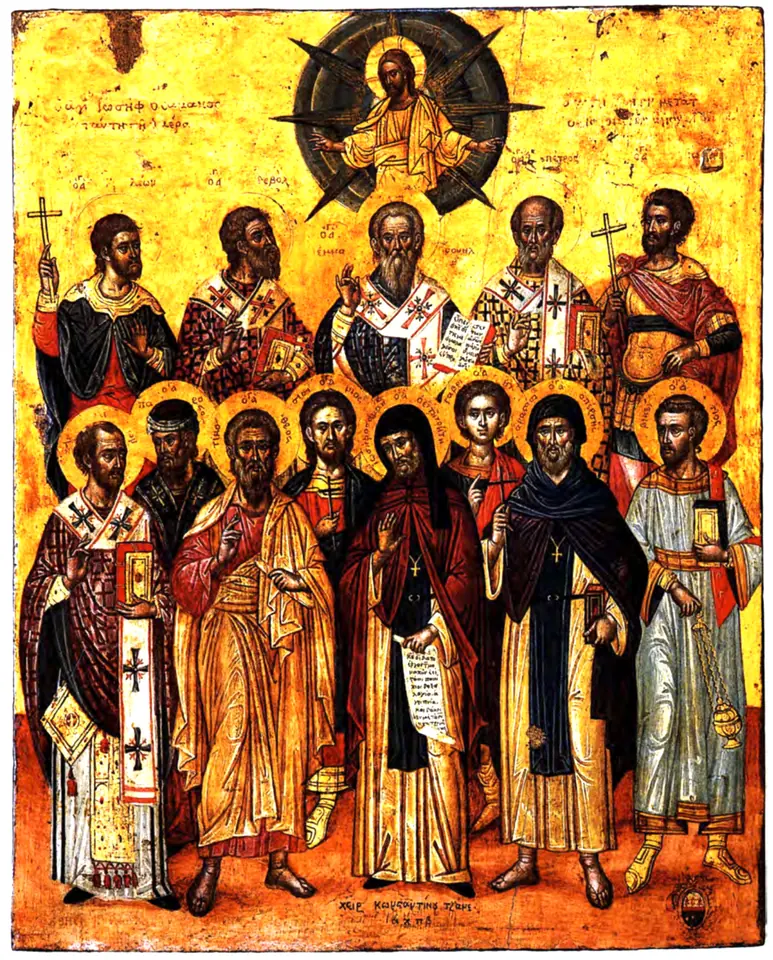
In Byzantine icons he is a young dark-bearded monk-martyr, often among the saints of January 22 with St. Timothy. In Rome he is usually paired with St. Vincent, whose feast he shares.
Feast day and where he is honored
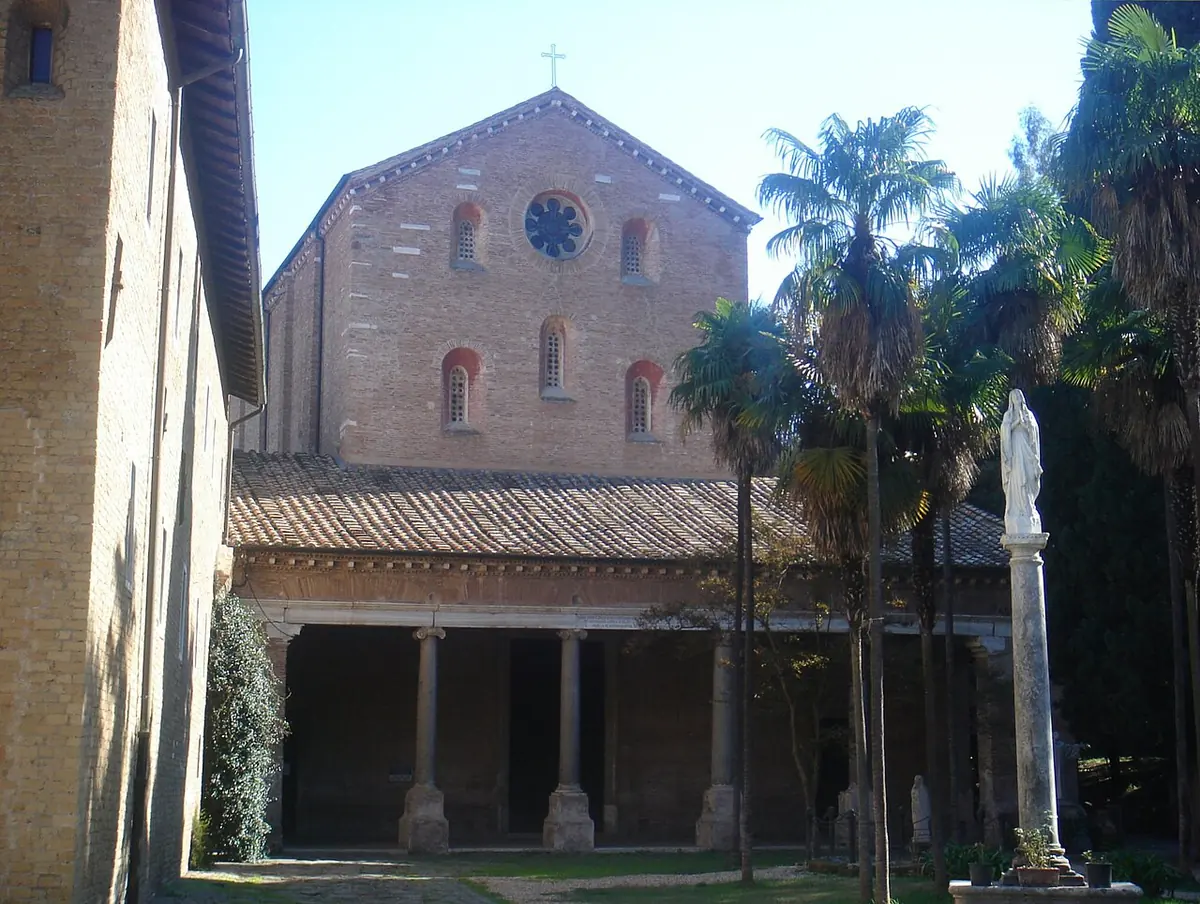
We keep his feast on January 22. In Rome, his head and image were enshrined at the monastery ad Aquas Salvias, today the Abbey of Tre Fontane, whose church is dedicated to Sts. Vincent and Anastasius. Butler records that the rest of his relics were kept in the chapel of the Scala Sancta near St. John Lateran. See other saints of the day on our feast days page.
Praying with St. Anastasius
There is no traditional Western prayer to St. Anastasius. The Orthodox Church sings this troparion (Tone 4, as the Orthodox Church in America gives it):
Your holy martyr Anastasius, O Lord, through his suffering has received an incorruptible crown from You, our God.
For having Your strength, he laid low his adversaries, and shattered the powerless boldness of demons.
Through his intercessions, save our souls!
Let us ask St. Anastasius to pray for converts from other religions, for Christians in Iran and Iraq, and for all who are tempted to deny Christ "only in words."
Frequently asked questions
Who was St. Anastasius the Persian?
A Persian soldier, the son of a Magian, who became curious about the faith after King Chosroes II carried the True Cross from Jerusalem to Persia in 614. He was baptized at Jerusalem, took the name Anastasius, which means resurrection, and lived seven years as a monk before he was martyred for refusing to deny Christ.
When is the feast of St. Anastasius of Persia?
January 22, the day he died in 628. Alban Butler notes that both the Latins and the Greeks keep his feast on that day.
Where are the relics of St. Anastasius?
His body went from Persia to Palestine, then to Constantinople and finally to Rome. The Roman Martyrology says his head was brought to Rome with his image, and Butler places them at the church of Sts. Vincent and Anastasius at Tre Fontane, with the rest of his relics in the chapel of the Scala Santa.
What miracles are connected with St. Anastasius?
His acts say his body was thrown to the dogs but left untouched. The Second Council of Nicaea in 787 heard of cures and of demons driven out before his image, and Butler adds that the Bollandists recorded many miracles at his relics. These are reported or traditional, not formally investigated.
Keep exploring
Sources
- St. Anastasius, Catholic Encyclopedia (1907), New Advent
- Alban Butler, The Lives of the Fathers, Martyrs, and Other Principal Saints, vol. 1 (1866), Internet Archive. January 22, drawn from his contemporary acts: his conversion at Hierapolis, his words to the judges, his death and the places of his relics
- The Roman Martyrology (English edition, 1916), Internet Archive. January 22: his head and his image brought to Rome, and the witness of the Second Council of Nicaea
- Bede, Ecclesiastical History of England, Book V, Internet Medieval Sourcebook (Fordham University). Chapter 24: Bede's correction of the Latin life of St. Anastasius
- Monastic Martyr Anastasius the Persian, Orthodox Church in America. The Eastern tradition, including his dream of the golden chalice
- Monastic Martyr Anastasius the Persian: Troparion and Kontakion, Orthodox Church in America. Text of the troparion quoted on this page