Blessed Gabriele Allegra, the Franciscan Who Gave China the Whole Bible
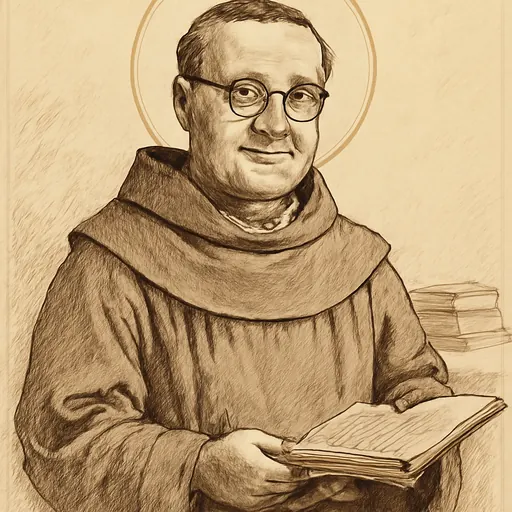
Blessed Gabriele Allegra (1907–1976) was a Sicilian Franciscan priest who spent his life giving Chinese Catholics the whole Bible in their own language. With the Studium Biblicum, which he founded in Beijing in 1945, he completed the first Catholic Chinese translation of the Scriptures, published in 1968. His feast is January 26; he was beatified in 2012.
Who was Blessed Gabriele Allegra?
Blessed Gabriele Allegra was a Franciscan priest from Sicily who gave Chinese Catholics the whole Bible in their own language. When he was a young student in Rome, Catholics in China had no complete translation of the Scriptures. By the time he died in Hong Kong in 1976 they had the entire Bible, translated from the original languages by the team he gathered, along with notes and a Bible dictionary. He was beatified in 2012, and we keep his feast on January 26.
He was born Giovanni Stefano Allegra on December 26, 1907, at San Giovanni la Punta, on the slopes of Mount Etna near Catania, the eldest of eight children. At eleven he entered the Franciscan seminary at San Biagio in Acireale, and he took the name Gabriele Maria when he began his novitiate.
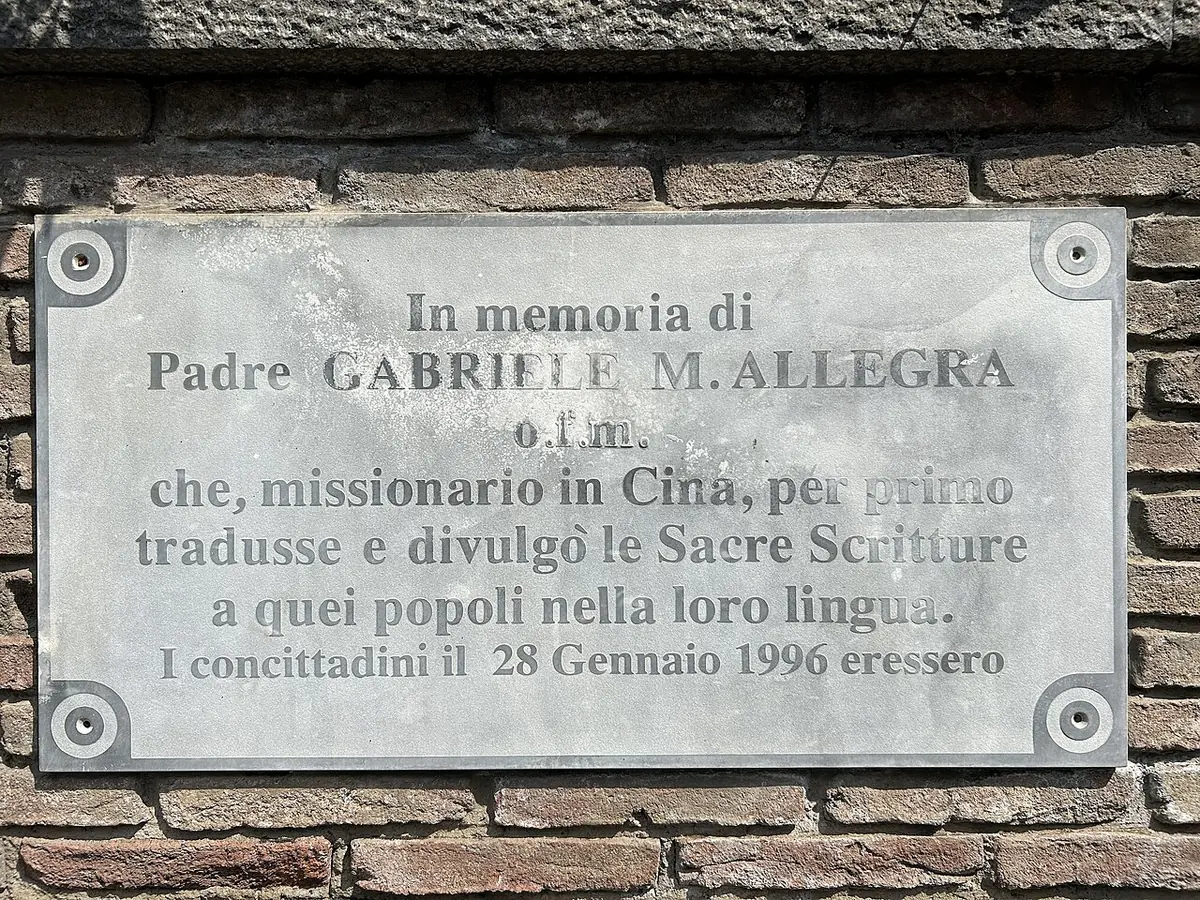
A promise made in Rome
In 1928, while he was a student at the Franciscan college of St. Anthony in Rome, the friars celebrated the sixth centenary of the death of John of Montecorvino, the Franciscan who became the first archbishop of Beijing. A young Chinese Franciscan spoke to him so warmly of his country, and of Chinese Catholics still waiting for a full Bible, that Gabriele gave his heart to the task. In one of his first Masses after his ordination in 1930 he asked Our Lady to stay with him in his intention "to translate the Bible into Chinese."
Forty years of translation
He reached China on July 3, 1931, worked in the Hunan mission, and began the translation on September 15, 1935. By about 1937 he had a rough draft of the Old Testament, but the work broke his health and his superiors sent him back to Italy to rest. He spent the rest studying biblical languages.
He returned in 1940 during the war with Japan. On the long journey north to Beijing he lost his only manuscript, and he started again from nothing. As chaplain to the Italian embassy he was not interned, and he used his position to help missionaries of every denomination held in the Japanese camp at Weihsien, winning the release of several prisoners and better food for others.
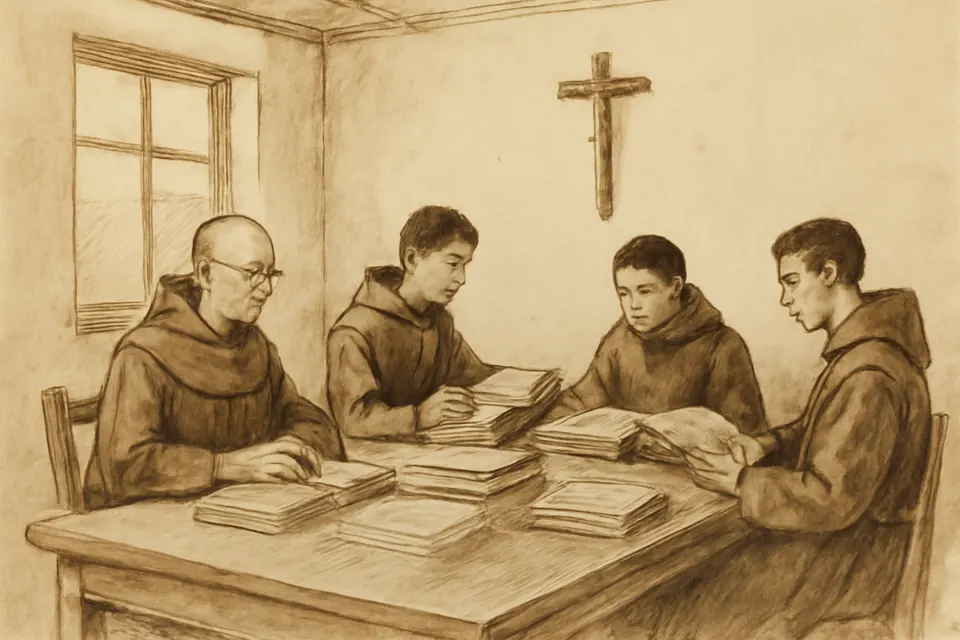
In 1945 his superiors gave him a team of Chinese Franciscan priests, and he founded the Studium Biblicum Franciscanum in Beijing. The first three volumes of the Old Testament appeared in 1948. When the Communist armies advanced, the Studium moved to Hong Kong, and over the next twelve years eight more annotated volumes followed. At the end of 1968 the whole Bible was published in a single volume, and in 1975 the Studium produced a Chinese Bible dictionary.
Scholar, priest and friend
His learning reached well beyond Chinese. He was an expert on Blessed John Duns Scotus, and in 1966 Oxford invited him, an Italian missionary living in Hong Kong, to give the lecture marking Scotus's seven-hundredth anniversary. He had met the Jesuit Pierre Teilhard de Chardin in Japan in 1940, and their conversations on the primacy of Christ later became a book.
Yet Hong Kong knew him best as a retreat-master, a confessor and a courteous friend. He often spent his holidays with people suffering from leprosy in Macau.
Death and beatification
Heart trouble and high blood pressure wore him down in his last years, but he would not stay in Italy to rest. He died in Hong Kong on Monday, January 26, 1976, after a two-day illness, still at work on the Psalms. His last request was characteristic: that his brothers should greet his death by singing the Magnificat. He was buried in the Catholic cemetery at Happy Valley.
Bishop John Baptist Wu opened his cause in Hong Kong on January 14, 1984. In May 1986 his remains were taken home to the church of San Biagio in Acireale, and in 2005 they were placed in a new chapel there. Pope John Paul II declared him Venerable in 1994.
The approved miracle
The miracle approved for his beatification was the healing of a doctor from terminal cancer, which the Church recognized as approved by a decree promulgated on April 23, 2002. Ten years later, on September 29, 2012, Cardinal Angelo Amato beatified him in the cathedral of Acireale. The healed doctor carried the reliquary of the new Blessed into the cathedral, and the Gospel was read in both Italian and Chinese.
Symbols of Blessed Gabriele Allegra in art
Images of Blessed Gabriele follow his photographs: a friar in the brown Franciscan habit, often in round glasses, holding an open Bible, sometimes with Chinese characters on its pages or a pen in his hand. Like St. Jerome, who gave the West the Latin Vulgate, he is shown as a translator at work, but with the Franciscan cord instead of a cardinal's red.
Feast day and prayer
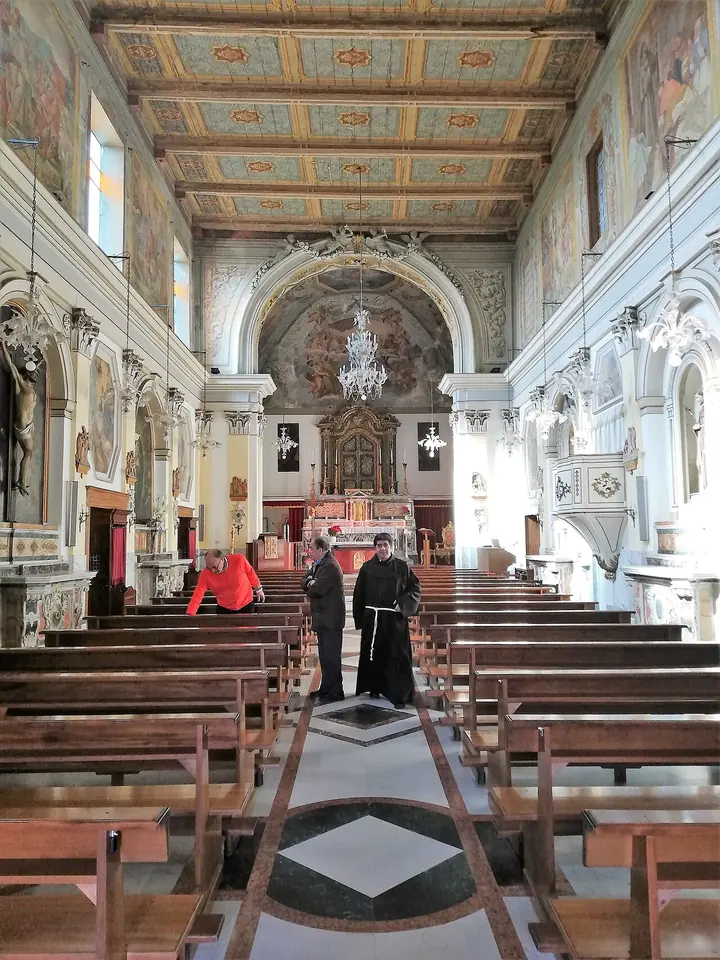
We keep his feast on January 26, the day of his death. His tomb in San Biagio, Acireale, and the Studium Biblicum in Hong Kong, which continues his work, are the places most closely tied to his memory.
We have no traditional prayer to Blessed Gabriele that we can cite here. Let us ask him to pray for the Church in China, for translators of Scripture, and for all who read the Bible in their own language for the first time, and let us honor him the way he asked: with the Magnificat.
Blessed Gabriele Allegra, pray for us.
Frequently asked questions
Who was Blessed Gabriele Allegra?
A Franciscan friar from San Giovanni la Punta in Sicily who went to China in 1931 and devoted forty years to translating the Bible into Chinese. He founded the Studium Biblicum Franciscanum, moved it to Hong Kong in 1948, and also produced a Chinese Bible dictionary in 1975.
When is Blessed Gabriele Allegra's feast day?
January 26, the day of his death in Hong Kong in 1976.
What miracle led to his beatification?
The healing of a doctor from terminal cancer, attributed to his intercession. The decree approving the miracle was promulgated on April 23, 2002, and he was beatified in Acireale on September 29, 2012.
Where is Blessed Gabriele Allegra buried?
In the Franciscan church of San Biagio in Acireale, Sicily, where he entered the seminary as a boy. He was first buried in Hong Kong's Catholic cemetery in Happy Valley; his remains went to Acireale in 1986.
Keep exploring
Sources
- "Blessed Gabriele Allegra, OFM" (Order of Friars Minor). Arrival in China on July 3, 1931; translation begun September 15, 1935; the cause opened January 14, 1984; beatification
- Hong Kong Catholic Diocesan Archives, "Rev. Allegra, Gabriel OFM" (Sunday Examiner obituaries, 1976, and Bishop John B. Wu's address of 1984; archived copy). The 1928 meeting with a Chinese Franciscan, lost manuscripts, the Weihsien internees, the Oxford Scotus lecture, his request for the Magnificat, burial in Happy Valley and transfer to Acireale in 1986
- Studium Biblicum Franciscanum, Hong Kong: Allegra news (archived copy). Decree on the miracle, April 23, 2002; tomb in San Biagio; new chapel in 2005
- "Fra Gabriele Maria Allegra è beato," Giornale di Sicilia, September 30, 2012. The healed doctor carried his relic at the beatification; the Gospel read in Italian and Chinese