St. Vincent Pallotti
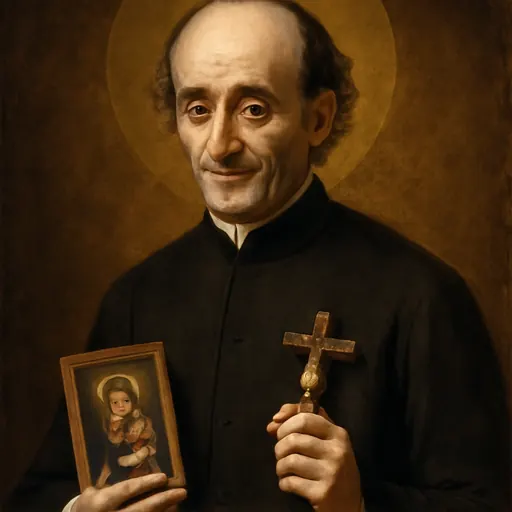
St. Vincent Pallotti (1795 to 1850) was a Roman priest who founded the Union of Catholic Apostolate and the Pallottines, teaching that every baptized Catholic, lay or ordained, is called to be an apostle. He is not St. Vincent de Paul or the ancient martyr St. Vincent. Pope John XXIII canonized him on January 20, 1963, and his feast day is January 22.
Who was St. Vincent Pallotti?
St. Vincent Pallotti was a 19th-century Roman priest, born in 1795 and dead at 54, who spent his whole ministry in the city of Rome and founded the Pallottines. His great idea, a century ahead of its time, was that every baptized Christian is called to share in the Church's mission. In 1835 he gathered priests, religious and lay men and women into one Union of Catholic Apostolate to "revive faith and rekindle charity," as the Union still puts it.
He is easily confused with two other saints called Vincent. St. Vincent de Paul was a French priest of the 1600s. St. Vincent of Saragossa was a deacon martyred in Spain around 304, whose feast falls on the same day as Pallotti's, January 22.
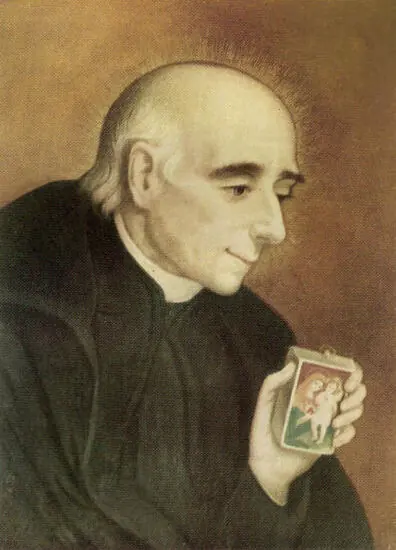
When Pope John XXIII canonized him in St. Peter's Basilica on January 20, 1963, in the first months of the Second Vatican Council, he called Pallotti simply a "Prete Romano," a Roman priest, and "the glory of the Roman clergy." He quoted one of the inscriptions written for Pallotti's tomb in 1850: Rudibus magistrum, egenis solatorem, patrem amatissimum, "teacher of the unlearned, comforter of the needy, most beloved father."
The life of St. Vincent Pallotti
A Roman childhood
Vincenzo Pallotti was born in Rome on April 21, 1795, the third of ten children of Pietro Paolo Pallotti and Maria Maddalena De Rossi. His parents took him to daily Mass in the neighborhood churches. The Pallottines tell a family story: Vincent struggled at school until a priest friend, Father Fazzini, advised his mother to make a novena to the Holy Spirit with him, after which he became the best student in his class. Another story says that before he gave a coin to a beggar he washed it in a fountain, saying, "When I give to the poor, I give the coin to Christ. I want it to look nice."
Every morning he served Mass at Santa Maria in Vallicella, over the tomb of St. Philip Neri, the great apostle of Rome's young people; in later life Pallotti was called a second Philip Neri. At the Collegio Romano he took as his model St. John Berchmans, the young Jesuit who loved the Immaculate Conception, and joined the Marian sodality.
Priest of the city
Pallotti was ordained at the Lateran Basilica on May 16, 1818, and said his first Mass the next day in the Jesuit church at Frascati. He had no parish. He lived with his family and taught at the Sapienza University for ten years, tutoring students who struggled and preaching on church steps in the streets.
He started evening classes for young workers whose jobs kept them out of daytime school, first for the hay sellers who came in from the countryside to Rome's markets. The night schools grew until 500 young workers were enrolled, and then he handed them over to the Christian Brothers. Later the diocese sent him to Trastevere, a rough quarter, to work with its youth from the Ponterotto retreat house, the old family home of St. Frances of Rome.

He heard confessions for hours a day and was spiritual director at the Roman Seminary, at the Propaganda Fide college for students from mission lands, and at the national colleges of the English, the Scots and the Eastern Churches. Martin J. Spalding, later Archbishop of Baltimore, remembered him forty years afterward: "No cross or aggravation could ruffle him." He visited the hospitals, the barracks and the prisons, pressed the authorities until young offenders were kept apart from hardened criminals, and spent whole nights with men condemned to death, holding the crucifix before their eyes at the scaffold.
He was also confessor to another Roman priest saint, St. Gaspar del Bufalo, comforted him at his death in 1837, and later testified to his virtues in his cause for beatification. Pope John XXIII called this "a truly rare case": one Roman priest giving evidence for the sainthood of another.
The Union of Catholic Apostolate
On January 9, 1835, Pallotti founded the Union of Catholic Apostolate. He described its aim in a sentence the Pallottines still quote:
The Catholic Apostolate, that is, the universal apostolate, which is common to all classes of people, consists in doing all that one must and can do for the great glory of God and for one's own salvation and that of one's neighbor.
The Cardinal Vicar of Rome, Carlo Odescalchi, blessed the Union on April 4, 1835, and Pope Gregory XVI approved it on July 11 the same year. The sick and the bedridden could join too, offering their prayers and sufferings for the missions. One of its first members was Elisabetta Sanna, a widow from Sardinia who could not lift her arms; Pallotti was her spiritual director, and she was beatified in 2016.
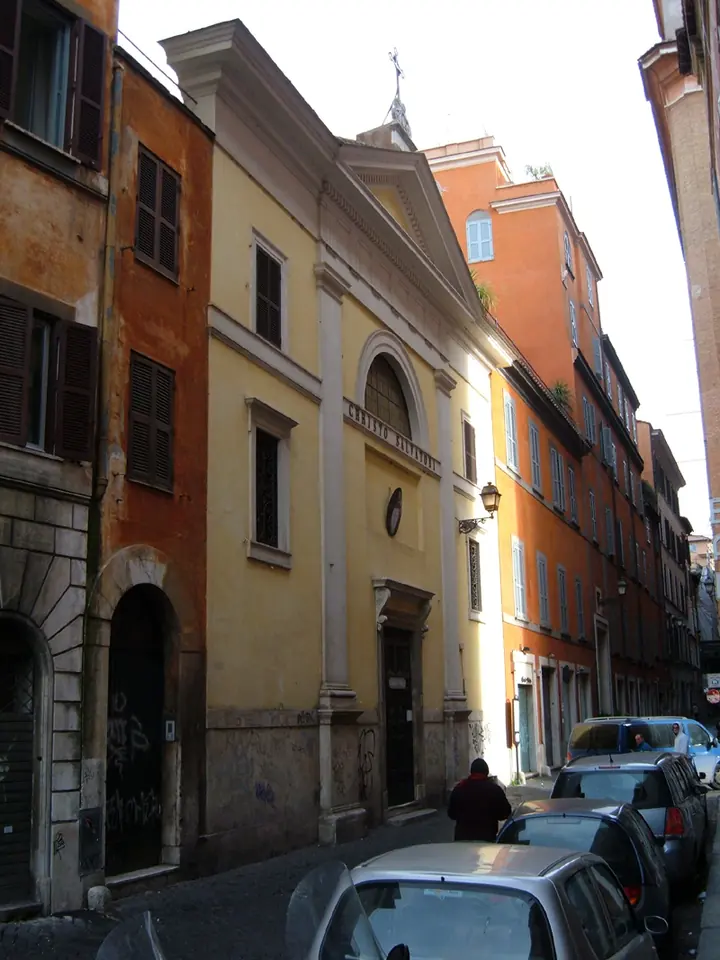
From the Union grew a community of priests and brothers, the Society of the Catholic Apostolate, and the Pallottine Sisters. In 1844 Pope Gregory XVI gave Pallotti's community the old church of San Salvatore in Onda, near the Tiber.
The cholera year
When cholera reached Rome in the summer of 1837, Pallotti was rector of Santo Spirito, the church of the Neapolitans. His own father died in the epidemic. He divided the city into three sectors and sent his priests, with lay members of the Union, to each one. Families who had lost their breadwinner wrote to the rectory of Santo Spirito with what they needed, and his helpers brought bread, meat and fruit, found beds for the sick, and redeemed goods pawned out of desperation.

The epidemic left many orphan girls on the streets. With a friend, James Salvati, Pallotti opened a home for them, the Pious House of St. Agatha, and in 1838 raised money for the orphans with a lottery of prizes donated by wealthy friends.
Newman, Manning and the Epiphany
The Pallottines record that St. John Henry Newman, studying in Rome for the Catholic priesthood, thought Pallotti a very holy man and said so to Henry Edward Manning, then still an Anglican archdeacon, who visited Pallotti and came away convinced too. Both later became cardinals.
Pallotti cared deeply for the unity of the Church, East and West. He promoted the celebration of the Octave of the Epiphany in Rome as a witness to the unity and universality of the Church, with special attention to the Christian East.
Death and glory
Pallotti died at San Salvatore in Onda on January 22, 1850, at the age of 54, surrounded by a handful of followers. Pope Pius XII beatified him exactly a hundred years later, on January 22, 1950, and his body was placed that day in a new sarcophagus under the high altar. Pope John XXIII canonized him on January 20, 1963, and on April 6 of the same year named him principal patron of the Pontifical Missionary Union of Clergy.

The miracles of St. Vincent Pallotti
- The miracles for his beatification (1950) and canonization (1963): approved. As in every modern cause, the Church examined and accepted healings obtained through his intercession before Pius XII beatified him and John XXIII canonized him.
- The revolutionary who confessed: reported in Pallottine tradition. A young revolutionary had sworn to kill any priest who came near him. Pallotti reached him in disguise, took the rifle and pistol from him while he slept, and put a crucifix in his hand. The man woke, made his confession and died about a week later at peace with God.
- Favors received: the Pallottines keep collecting reports of graces through his prayers. These are reported.
Why St. Vincent Pallotti is a patron of the apostolate
Pallotti is the patron of everyone who takes up the work of spreading the Gospel without being a missionary abroad. He himself longed to go to the missions but stayed in Rome all his life because of poor health. He wanted the whole Church, the poor and the sick included, to share in that work. Pope John XXIII made him principal patron of the Pontifical Missionary Union of Clergy, and he is the patron of the Union of Catholic Apostolate and the Pallottine family worldwide.
He took as his motto the words of St. Paul, "The charity of Christ urges us on" (2 Corinthians 5:14), and dedicated his work to Mary, Queen of Apostles, picturing her praying with the apostles in the Upper Room at Pentecost. We ask his prayers for parish volunteers, catechists, teachers and missionaries, and for every Catholic trying to live the faith at work and at home. See other patrons of missionaries on our patron saints page.
Symbols of St. Vincent Pallotti in art
Artists show Pallotti in much the same way from one generation to the next. Look for:
- A thin, balding Roman priest in a black cassock: often with a gentle, slightly smiling face, bent forward a little.
- A small holy picture in his hand: usually the Virgin and Child or Mary, Queen of Apostles, a sign of his Marian devotion. The Ołtarzew bust and the old holy card on this page both show it.
- Mary, Queen of Apostles at Pentecost: the Virgin among the apostles under the tongues of fire, the image he chose for his work.
- A crucifix: for his ministry to the dying and the condemned.
- Crowds of ordinary people around him: in modern windows and murals, for his call to all the baptized.

Pallottine churches and schools in many countries carry his image. A modern window in Ostia, near Rome, shows him reaching out over a crowd.

Feast day, tomb and relics
We keep his feast on January 22, the day of his death. It is listed in the Roman Martyrology and kept by the Pallottines. The Catholic Apostolate Center notes that the feast is not kept throughout the Church, though it appears on the Vatican's calendar of saints. See his neighbors on our feast days page.
His body rests under the main altar of San Salvatore in Onda, on the Via dei Pettinari in the Regola quarter near the Ponte Sisto, in a sarcophagus made by Arnoldo Brandizzi. Blessed Elisabetta Sanna is buried in the same church, in the chapel of the Virgo Potens. The church is open to everyone, and the Pallottine priests and brothers care for it.
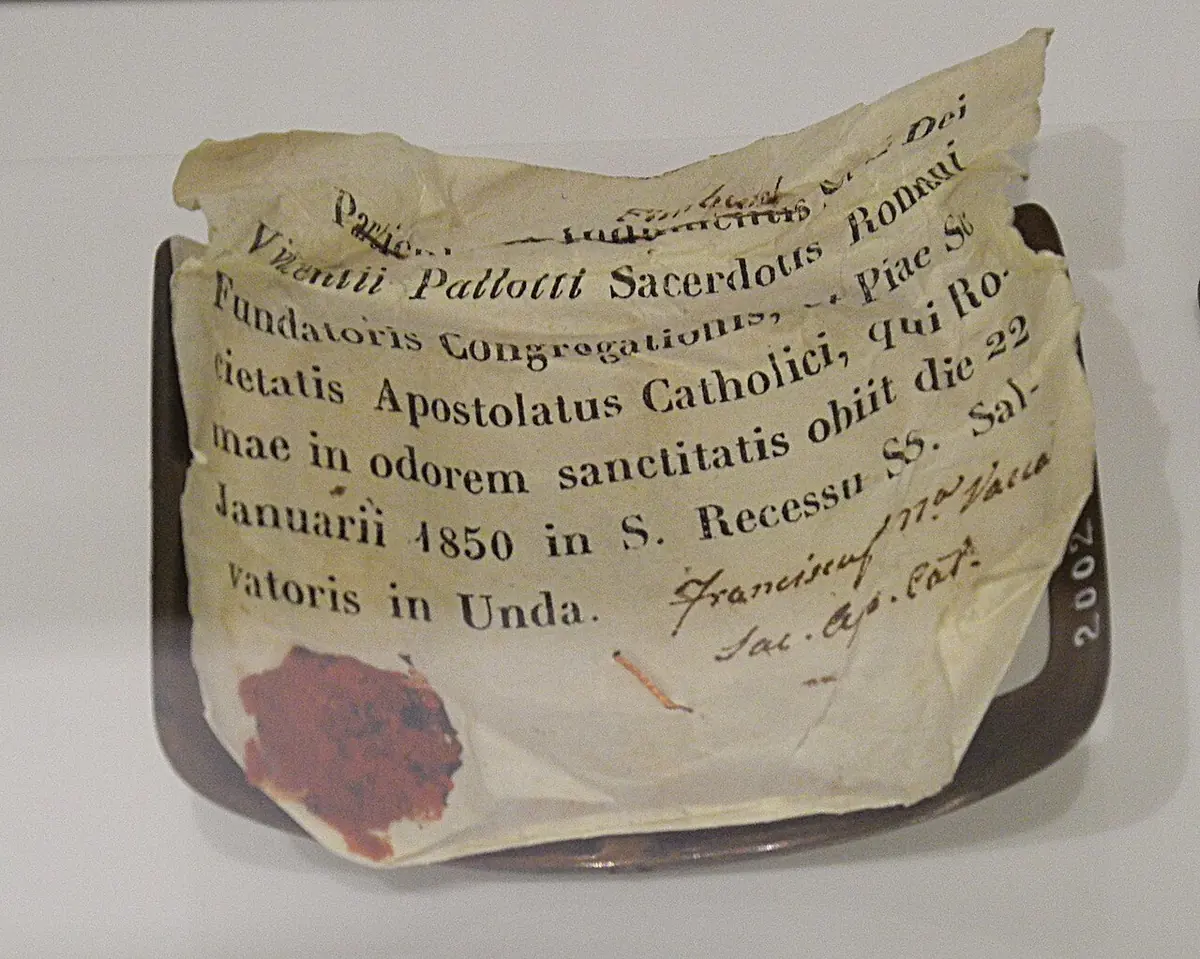
Relics of his belongings turn up far from Rome. The MuCEM museum in Marseille keeps a belt buckle of his with its handwritten Latin authentication, which records that he "died in the odor of sanctity" on January 22, 1850, at San Salvatore in Onda.
The Pallottines reached the United States in the early 1880s, and the Pallottine Fathers and Brothers in Milwaukee keep a small shrine to him with an icon and a basket of prayer petitions. In Poland his statue stands outside the Shrine of Our Lady of Fatima at Krzeptówki in Zakopane.

Prayer to St. Vincent Pallotti
The prayer with the highest standing is the one Pope John XXIII addressed to the new saint at the end of his canonization homily on January 20, 1963. In the original Italian it reads in part:
Tu che fosti instancabile apostolo, direttore di coscienze, suscitatore di entusiasmi santi, magnifico nelle molteplici intraprese, accendi di nuovo fervore tutti i ministri del Signore e questi collaboratori preziosi dell'apostolato cattolico; rendili pronti e aperti a ogni richiamo dei loro fratelli.
In our translation: "You who were a tireless apostle, a director of consciences, a kindler of holy enthusiasm, magnificent in your many undertakings, set all the ministers of the Lord on fire again, and these precious co-workers of the Catholic apostolate; make them ready and open to every call of their brothers."
Let us also pray in his own words, kept by the Pallottines: "My Jesus, anyone who does not love cannot live." And let us take his advice for the day's work: "Remember that the Christian life is one of action; not of speech and daydreams. Let there be few words and many deeds, and let them be done well."
Frequently asked questions
What is St. Vincent Pallotti known for?
For founding the Union of Catholic Apostolate in Rome in 1835, a union of priests, religious and lay people working together to "revive faith and rekindle charity," and the communities that grew from it, the Pallottine Fathers and Brothers and the Pallottine Sisters. Popes Pius XI, Pius XII and John XXIII hailed him as a forerunner of Catholic Action and of the Second Vatican Council.
When is the feast of St. Vincent Pallotti?
January 22, the day he died in 1850. It is in the Roman Martyrology and is kept by the Pallottines, though not on the General Roman Calendar, where the same day belongs to the 4th-century martyr St. Vincent of Saragossa.
Where is St. Vincent Pallotti buried?
In the Church of San Salvatore in Onda on the Via dei Pettinari in Rome, near the Ponte Sisto. His body has rested in a sarcophagus under the main altar since his beatification on January 22, 1950. Pope Gregory XVI had given the church to his community in 1844.
Is St. Vincent Pallotti the same as St. Vincent de Paul?
No. St. Vincent de Paul was a French priest who died in 1660 and founded the Vincentians and the Daughters of Charity. St. Vincent Pallotti was a Roman priest born in 1795 who founded the Pallottines. Both are remembered for their love of the poor.
Sources
- Pope John XXIII: Solemn Canonization of Blessed Vincenzo Pallotti, homily of January 20, 1963 (Italian and Latin)
- Catholic Apostolate Center: Pallotti Portal
- Pallottine Fathers and Brothers, Milwaukee: Our Founder
- Society of the Catholic Apostolate, Immaculate Conception Province: St. Vincent Pallotti
- Catholic Apostolate Center: Looking to the Life of St. Vincent Pallotti During COVID-19
- Catholic Apostolate Center: St. Vincent Pallotti, A Life of Action