St. Antonio Maria Pucci, the "Little Parish Priest" of Viareggio
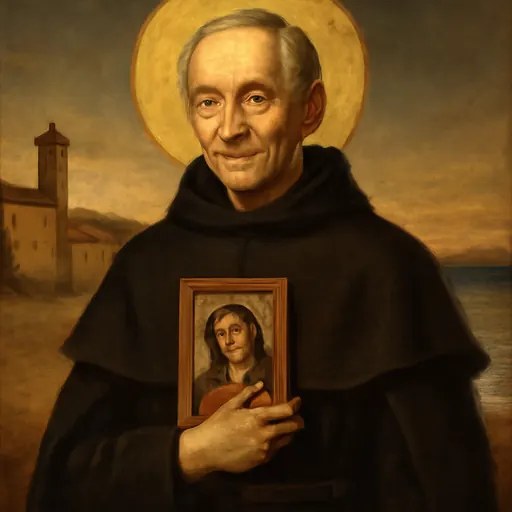
St. Antonio Maria Pucci (1819–1892) was a Servite friar who served as parish priest of Sant'Andrea in Viareggio for 45 years; the townspeople called him "il Curatino," the little parish priest. He nursed the sick through cholera and opened the first seaside hospice for poor sick children. Canonized in 1962, he is honored on January 12.
Who was St. Antonio Maria Pucci?
St. Antonio Maria Pucci was a Servite friar who spent his whole priestly life in one seaside parish: Sant'Andrea in Viareggio, on the coast of Tuscany. He was its parish priest for 45 years, from 1847 until his death in 1892. He was a small man, and his people called him il Curatino, "the little parish priest." When Pope Pius XII beatified him in 1952, he said (in our translation), "There is nothing greater on earth than a holy priest," and he held up the Curatino as the example.
He belongs to the Order of the Servants of Mary, the Servites, the same family as St. Peregrine and St. Juliana Falconieri. Pope St. John XXIII canonized him on December 9, 1962, at the close of the first session of the Second Vatican Council.
The life of St. Antonio Maria Pucci
A boy from the Apennines
He was born on April 16, 1819, at Poggiole di Vernio, a village in the Tuscan Apennines, and baptized Eustachio the same day. He was one of nine children. Avvenire recounts that his father at first opposed his vocation, and that the village priest, Don Diddi, persuaded him and took the boy to the Servite friary of the Santissima Annunziata in Florence.
Pius XII told the story of how the vocation began. When the parish priest asked the boy what he would do when he grew up, he answered (in our translation): "I want to become a religious in an Order consecrated to Our Lady." He took the name Antonio Maria and was ordained a priest on September 24, 1843, in the church of San Salvatore in Florence.
Forty-five years in Viareggio
He was sent to Viareggio, then a small town on the sea, as assistant priest. On July 25, 1847, at 28, he took charge of the parish of Sant'Andrea, and he never left it.
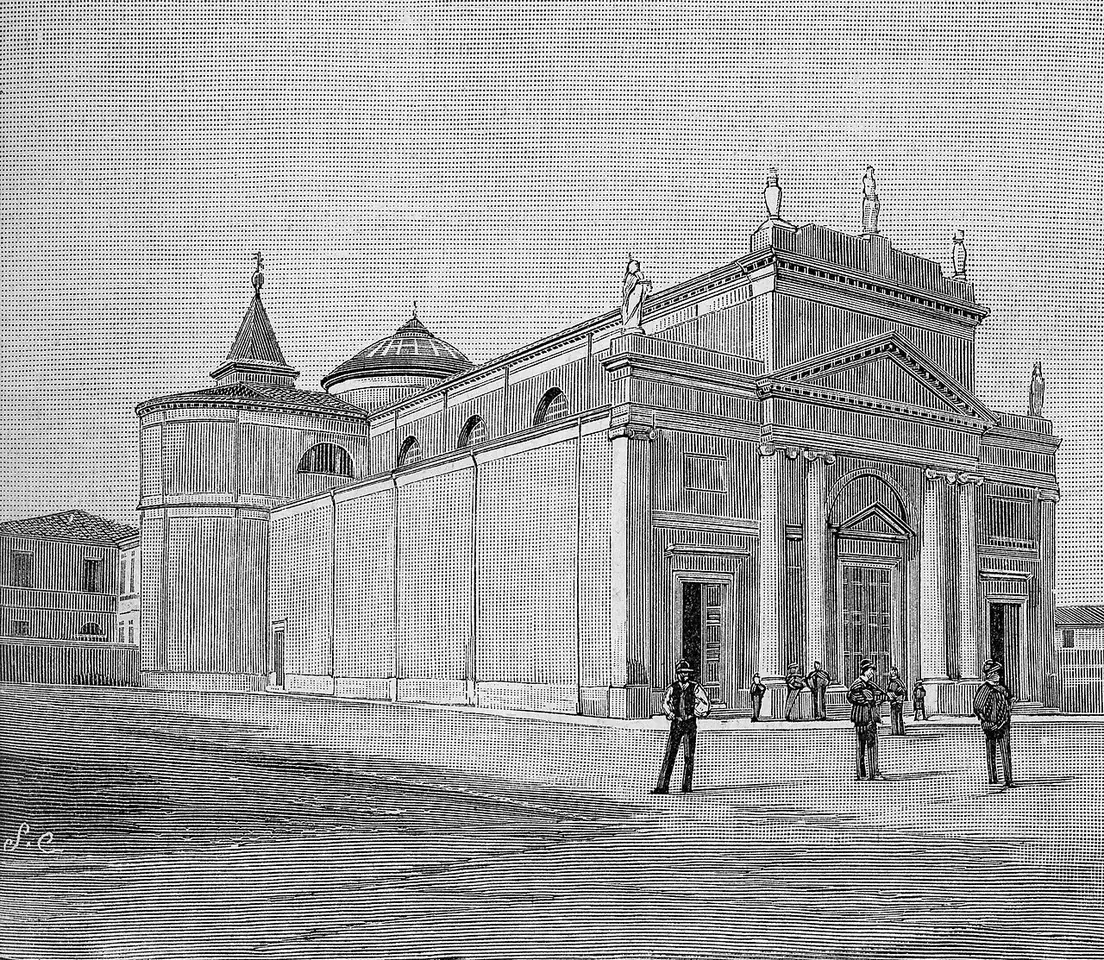
His first sermon as parish priest placed himself and all his people under the protection of Our Lady of Sorrows. Pius XII said he spread that devotion so steadily that Viareggio became known as "the City of the Addolorata."
He knew every family. In 1849 he founded the Congregation of Christian Doctrine and the Company of St. Aloysius for the young, and in time he organized associations for children, young people, men and women, each with its own rule. Pius XII and John XXIII both saw in these groups an early form of Catholic Action. In 1853 he founded the Mantellate Servants of Mary of Viareggio, sisters who taught and raised girls. He also opened the first seaside hospice for poor sick children, brought in the St. Vincent de Paul Society and promoted the Propagation of the Faith and the Holy Childhood.
The cholera years
Cholera struck Viareggio in 1854. Vatican News says the Curatino went from house to house among the poor and the sick. Pius XII said his heroic charity during "the two years of the terrible cholera" overcame every prejudice against him, in a time when priests were often scorned.

In 1883 he was elected provincial of the Servites of Tuscany, yet he went on teaching catechism and visiting his people.
His death
In January 1892, weakened by years of hard work, he caught a sudden and severe pneumonia, according to Vatican News, and died on January 12. The town council declared him a citizen of merit and attended his funeral as a body. A journalist who was there wrote, as Avvenire quotes him, "Confesso di non aver mai visto una simile cerimonia in vita mia" ("I confess I have never seen such a ceremony in my life").

Beatification and canonization
Pope Pius XII beatified him on June 22, 1952. Pope St. John XXIII canonized him on December 9, 1962, together with St. Peter Julian Eymard and St. Francis Mary of Camporosso. In his homily the Pope said that only one of the three new saints had the direct care of souls, "reproducing on Italian soil the examples of the holy Curé of Ars," a reference to St. John Vianney. The miracles accepted in his cause are approved, but the papal texts we consulted do not describe them, so we do not name them here.
Symbols of St. Antonio Maria Pucci in art
Pictures of the Curatino are modern, since he lived in the age of photography. Look for:
- The black Servite habit with its leather belt and cape.
- An image of Our Lady of Sorrows, the Virgin with a sword in her heart, for the devotion he gave his parish.
- Children around him, for his catechism classes and the hospice for sick children.
- Bread or alms, for his care of the poor.
He is usually shown small, smiling and plain, with nothing of a bishop's or abbot's dignity about him.
Where St. Antonio Maria Pucci is honored
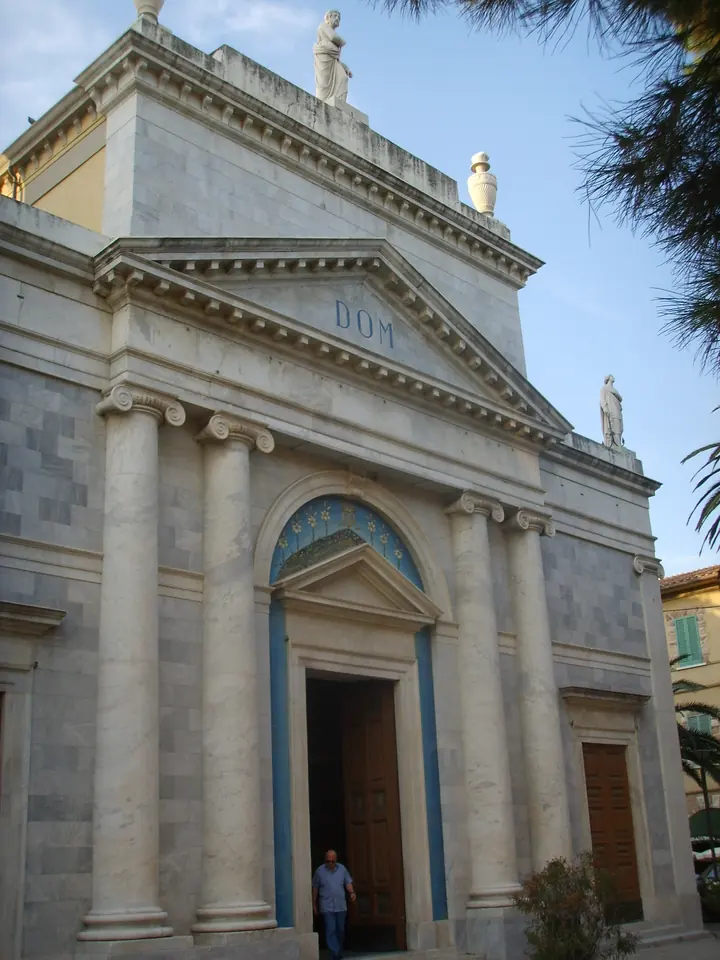
His body rests in his own church of Sant'Andrea in Viareggio. It was moved there from the town cemetery on April 18, 1920, and the parish still keeps the room where he lived. We keep his feast on January 12; see our feast days calendar for the saints around it.

Prayer to St. Antonio Maria Pucci
We have not found a traditional prayer to St. Antonio Maria Pucci in a source we could verify, so we do not print one. We ask his intercession simply, as his people in Viareggio still do.
Let us ask the Curatino to pray for parish priests, that they may know and love their people as he did; for the sick and for children who are poor; and for every family that has given itself to Our Lady of Sorrows.
St. Antonio Maria Pucci, pray for us.
Frequently asked questions
Who was St. Antonio Maria Pucci?
An Italian Servite friar, born Eustachio Pucci in 1819 at Poggiole di Vernio in Tuscany, who was parish priest of Sant'Andrea in Viareggio from 1847 until his death in 1892. He is remembered for his care of the poor and sick, his parish associations and his devotion to Our Lady of Sorrows.
When is the feast day of St. Antonio Maria Pucci?
January 12, the day he died in 1892. The Servite Order keeps it on its calendar, and he is listed on that day in the Roman Martyrology.
Why was he called "il Curatino"?
Curatino means "little parish priest" in Italian. He was a small man, and Vatican News notes that his people gave him the name with affection; he was always smiling and ready to help.
Where is St. Antonio Maria Pucci buried?
In his own parish church of Sant'Andrea in Viareggio. His remains were moved there from the town cemetery on April 18, 1920, and his room is still kept at the parish.
Keep exploring
Sources
- Pius XII, Address to the faithful gathered in Rome for the beatification of Antonio Maria Pucci (June 23, 1952)
- John XXIII, Homily for the canonization of Sts. Peter Julian Eymard, Antonio Maria Pucci and Francis Mary of Camporosso (December 9, 1962)
- Nazareno Giusti, "Antonio Maria Pucci, il Curatino di Viareggio," Avvenire (August 1, 2019)
- Vatican News: S. Antônio Maria Pucci, presbítero (Saint of the Day, January 12)