St. Tatiana of Rome, Virgin and Martyr, Patron of Students
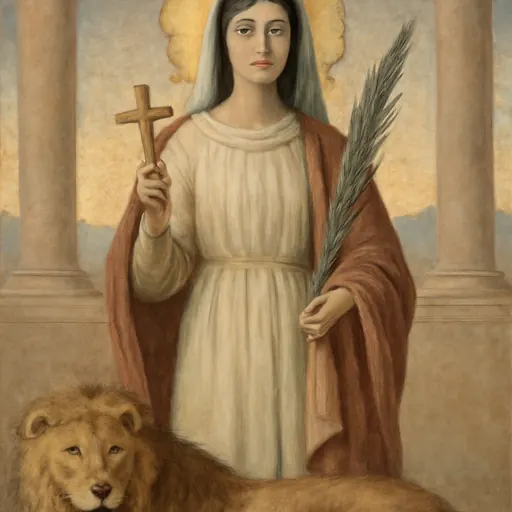
St. Tatiana of Rome was a Roman virgin and deaconess who, according to her Acts, was martyred under the Emperor Alexander Severus in the early third century, after torments and wonders that left her persecutors amazed. Her feast is January 12 (January 25 on the Old Calendar), and in Russia she is the patron of students, who keep her day as Tatiana Day.
Who was St. Tatiana of Rome?
St. Tatiana of Rome was a young Christian woman of the third century who, the Church has long remembered, gave her life for Christ in the city of Rome. Her Acts, read in the Orthodox Church on her feast, describe her as a consecrated virgin and a deaconess who cared for the sick and the poor, and who was put to death under the Emperor Alexander Severus (222–235). The Roman Martyrology names her on January 12, the same day the Orthodox Church keeps her feast.
In the West she has been a quiet name in the calendar. In Russia and the Orthodox world she is one of the best-loved saints of winter, because her feast became the holiday of every university student.
The life of St. Tatiana
What we know of Tatiana comes from her Acts, a Greek account read in the Orthodox Church. The Acts are old but not contemporary, and they are full of wonders. Readers who know the legend of St. Martina of Rome will find a story very much like hers. We tell it here as the Church has received it, and mark it as tradition.
A deaconess in Rome
According to the Acts, as the Orthodox Church in America gives them, Tatiana was born into a noble Roman family. Her father had been consul three times and was secretly a Christian. She chose to remain a virgin, "betrothing herself to Christ," and served as a deaconess in one of the churches of Rome, fasting, praying, tending the sick and helping the needy.
When the young Alexander Severus came to the throne, real power lay with the regent Ulpian, whom the Acts remember as a persecutor. Tatiana was arrested and taken to the temple of Apollo to offer sacrifice.
Her trials and her death
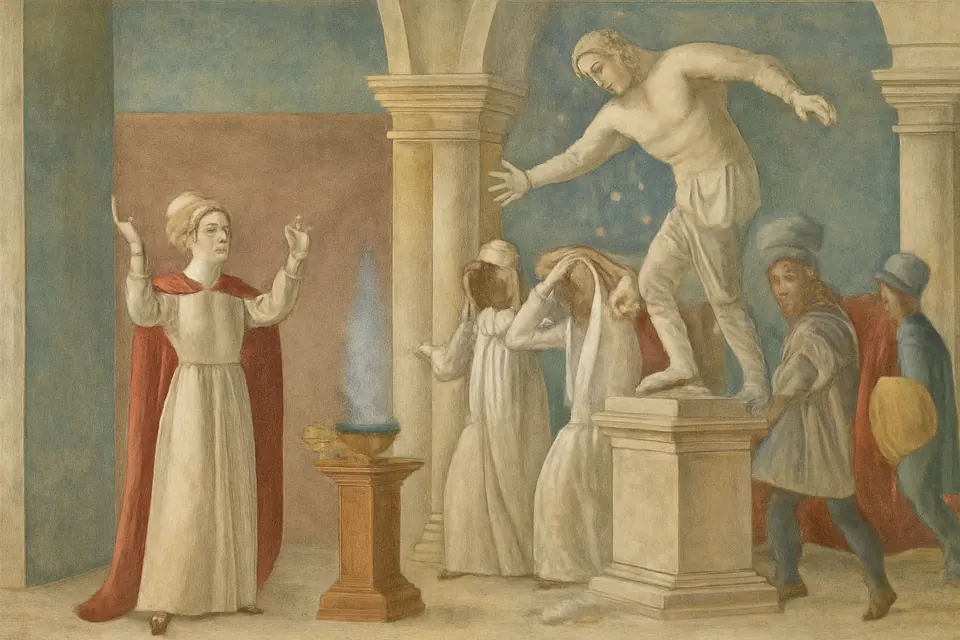
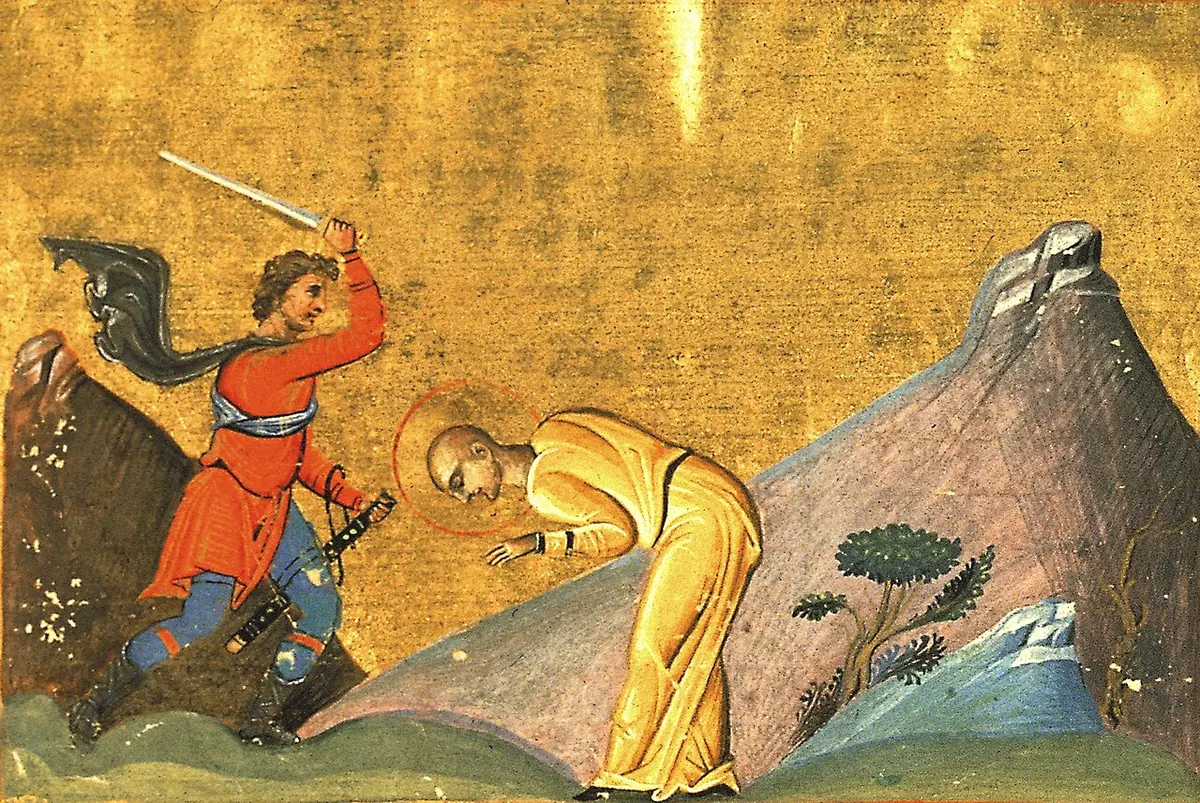
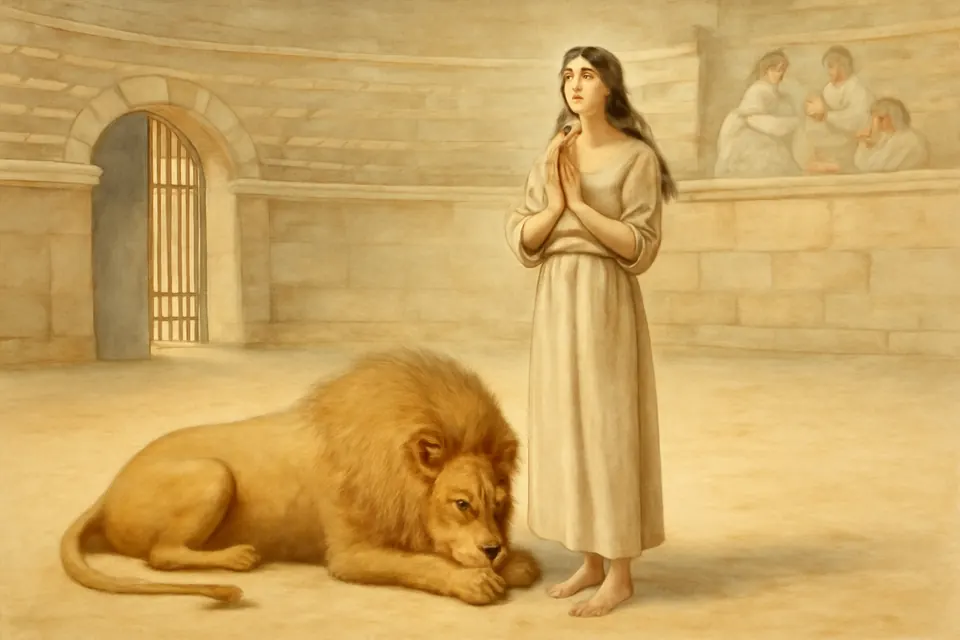
The Acts tell of trial after trial. When she prayed in the temple, the earth shook and the idol of Apollo was shattered. She was tortured, and she prayed for her tormentors. Eight of the men sent to torment her came to believe in Christ and died as martyrs themselves. Each night in prison, the Acts say, angels healed her wounds, so that she came before the judge each morning "more radiant and beautiful than before." A hungry lion let loose on her in the arena lay down and licked her feet. Fire would not burn her. At last she was condemned to be beheaded, and her father died with her, "because he had raised her to love Christ."
The miracles of St. Tatiana
All of the wonders in her Acts are traditional: the shattering of the idols of Apollo, Diana and Zeus at her prayer, the healing of her wounds by angels, the lion that would not harm her, and the fire that did not burn her. They have come down to us through the liturgy of the Church, not through any formal investigation.
Why St. Tatiana is the patron saint of students
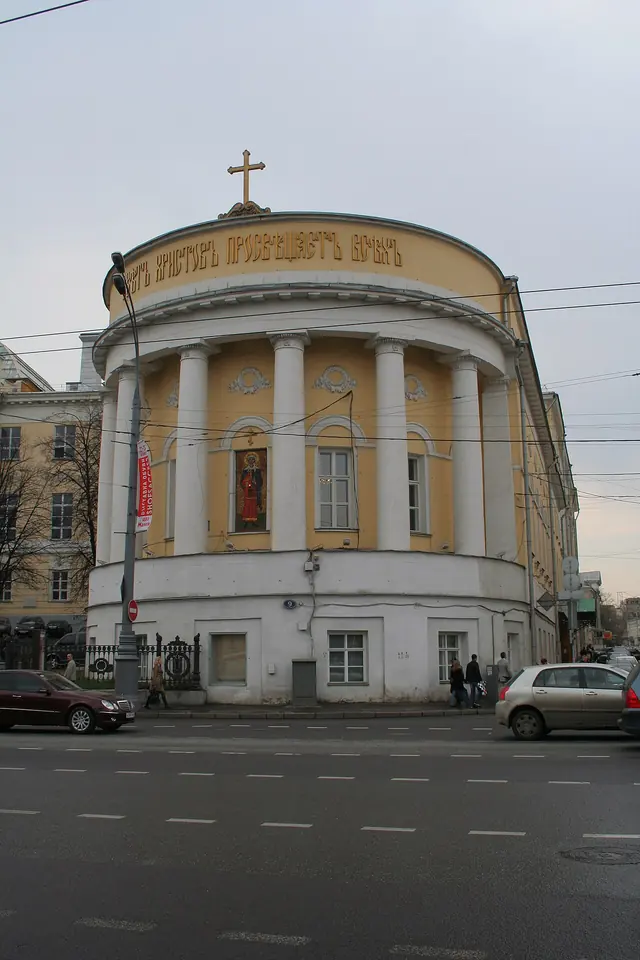
On January 12, 1755, St. Tatiana's day by the Russian calendar, Empress Elizabeth signed the decree that founded Moscow University. The university built a church dedicated to St. Tatiana, and her feast became the students' own holiday, celebrated with a Liturgy in the university church and plenty of student cheer. In Russia it is still called Tatiana Day, or Students' Day, on January 25, and it falls near the end of winter exams. Students in other Orthodox countries have taken her as their patron too.
Symbols of St. Tatiana in art
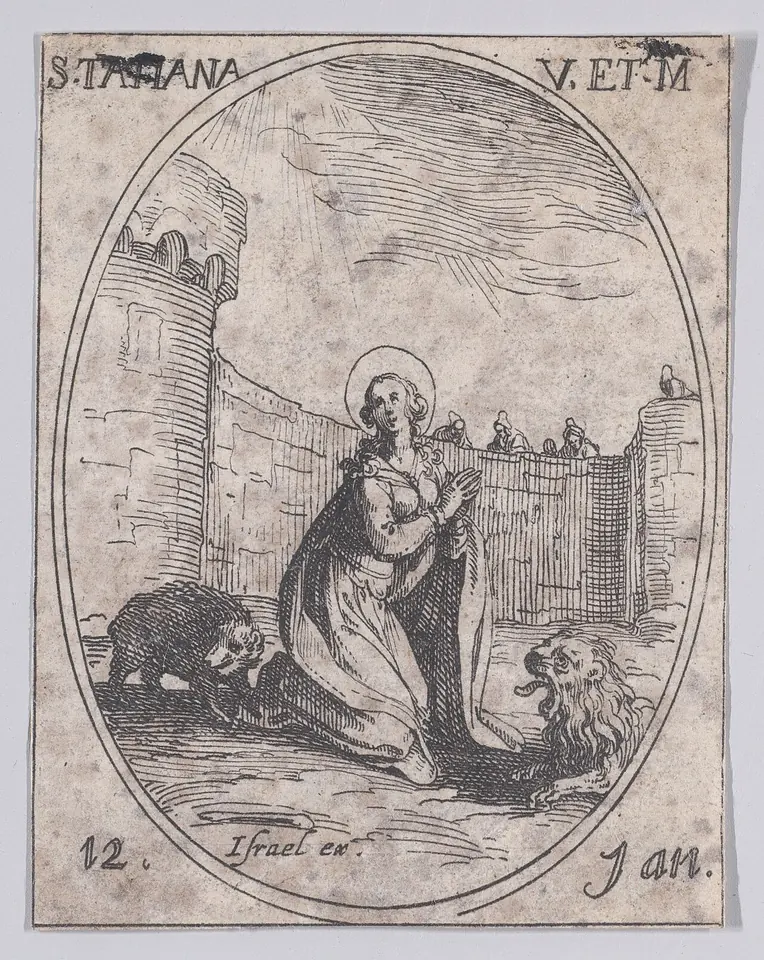
Tatiana is painted as a young woman, often in a red cloak for martyrdom, with the cross or the martyr's palm in her hand. Russian icons often show her with her hands raised in prayer toward Christ. Western prints and paintings usually add a lion lying peacefully at her feet, from the story of the arena, as in Callot's etching and in the painted vault of Sant'Agostino in Rome. Some scenes show a broken idol beside her.

Feast day, relics and prayer
Her feast is January 12; on the Old Calendar it falls on January 25. See our feast days calendar and patron saints list for others.
The Orthodox Church in America tells the long journey of her head: from Tarnovo in Bulgaria to Nicaea and then Constantinople, then to Wallachia after the fall of the city in 1453, and finally to the Metropolitan Cathedral of St. Demetrius in Craiova, Romania, where it is kept in one reliquary with relics of other saints.
The Orthodox Church honors her with a kontakion that celebrates her martyrdom as a shining witness and asks her to pray for all who honor her; the OCA prints the full text on its website.
Let us ask St. Tatiana to pray for students, for their teachers and for every young person who has to stand up for Christ: Holy Martyr Tatiana, pray to God for us.
Where the relics of St. Tatiana of Rome are kept: see them on the relics map →
Frequently asked questions
When is St. Tatiana's feast day?
January 12 in both the Roman Martyrology and the Orthodox calendar. Because the Russian Orthodox Church follows the Old (Julian) Calendar, its January 12 falls on January 25 of the civil calendar, which is why Russians celebrate Tatiana Day on January 25.
Why is St. Tatiana the patron saint of students?
Empress Elizabeth signed the decree founding Moscow University on St. Tatiana's day in 1755, and the university church was dedicated to her. Since then Russian students have kept her feast as their own holiday, Tatiana Day, which also marks the end of winter exams.
Where are the relics of St. Tatiana?
According to the Orthodox Church in America, her head was carried from Constantinople to Wallachia after 1453, kept at Curtea de Argeș and Râmnicu Vâlcea, and is now enshrined in the Metropolitan Cathedral of St. Demetrius in Craiova, Romania.
Is St. Tatiana of Rome the same as St. Tatiana Romanova?
No. St. Tatiana of Rome was an early martyr. Grand Duchess Tatiana Romanova (1897–1918), daughter of Tsar Nicholas II, was named for her and is honored by the Russian Orthodox Church as a passion-bearer on July 17.
Keep exploring
- Patron saint pages
- Students
- Feast-day calendar
- Saints remembered in JanuarySaint of the dayWhat saint is my birthday?
- Relics
- Where the relics are kept (map)
- More
- Saints A to ZPatron saints A to ZExplore every section
Sources
- Orthodox Church in America: Martyr Tatiana of Rome, and those who suffered with her. Her Acts as the Orthodox Church reads them, and the history of her head from Tarnovo to Craiova
- Orthodox Church in America: Martyr Tatiana of Rome, Troparion and Kontakion