St. Bernard of Corleone, the Swordsman Who Became a Capuchin
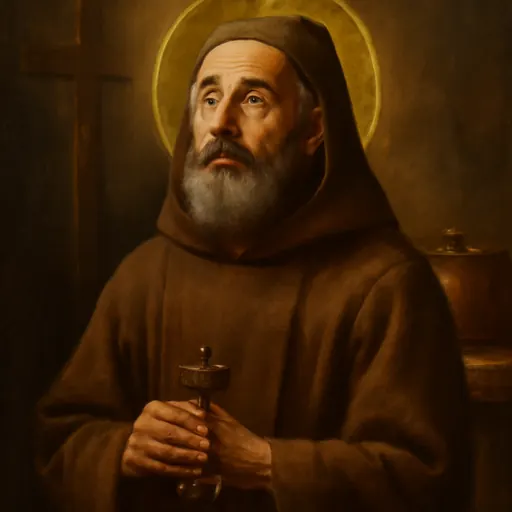
St. Bernard of Corleone (1605–1667), born Filippo Latino, was a Sicilian cobbler and swordsman known as "the finest blade in Sicily" until a duel in 1624 shook him. He became a Capuchin lay brother, serving his brothers as cook, nurse and laundryman, and was famous for constant prayer before the Blessed Sacrament. We keep his feast on January 12.
Who was St. Bernard of Corleone?
St. Bernard of Corleone was a Sicilian Capuchin lay brother of the seventeenth century, a man who traded the finest sword in Sicily for a kitchen apron. Born Filippo Latino in the hill town of Corleone on February 6, 1605, he spent his youth as a cobbler and a feared swordsman, and his last thirty-five years as a humble friar who cooked, nursed the sick and washed his brothers' clothes. He died in Palermo on January 12, 1667, and Pope John Paul II canonized him in 2001. We keep his feast on January 12.
The Vatican's biography for his canonization begins by correcting a popular picture. Old novelistic lives made him a brawling troublemaker of the marketplace. The witnesses at his beatification process remembered a different man.
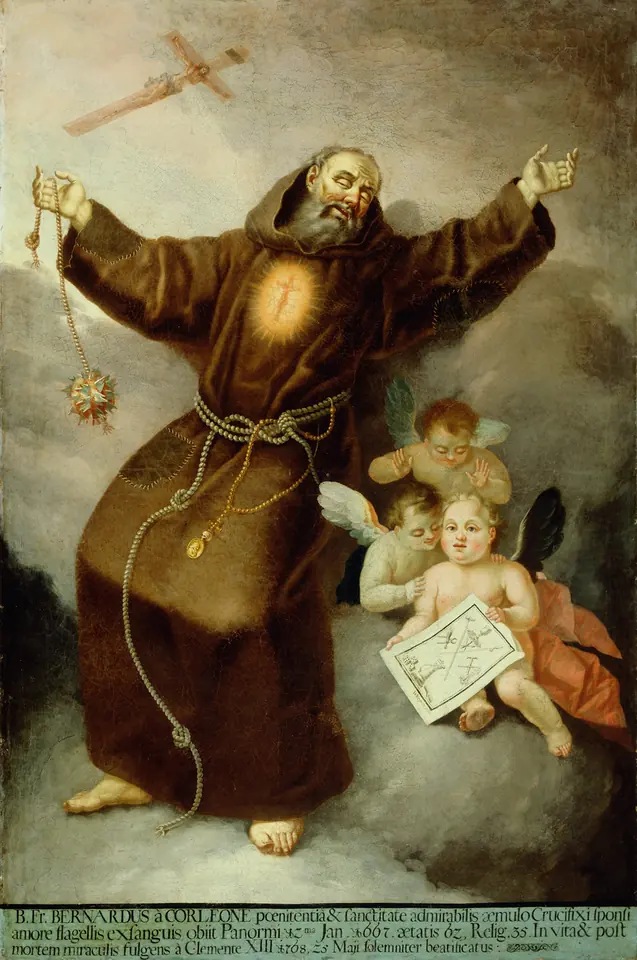
"The house of saints"
The Latino home in Corleone was known in the town as "the house of saints." His father, Leonardo, was a cobbler and leather worker so merciful to the poor that he would bring them home to wash, clothe and feed them, and Filippo's brothers and sisters were devout as well. Filippo ran the shop, treated his workers well, and was not ashamed to go through the town in winter begging alms for the poor prisoners.
He had one fault. Two witnesses at the beatification process put it this way: "he was quick to draw his sword at the slightest provocation."
The finest blade in Sicily
In 1624, when he was nineteen, Filippo fought an arrogant challenger, a hired killer, in front of many onlookers. He wounded the man's hand so badly that it cost him his arm. The town now called Filippo "the finest blade in Sicily," but the young man was shaken to the core. He went and begged the wounded man's forgiveness, and the two later became friends.
From that duel his vocation grew. On December 13, 1631, at the novitiate of Caltanissetta, he received the habit of the Capuchin friars, the branch of the Franciscans closest to the ordinary people, and took the name Bernard.
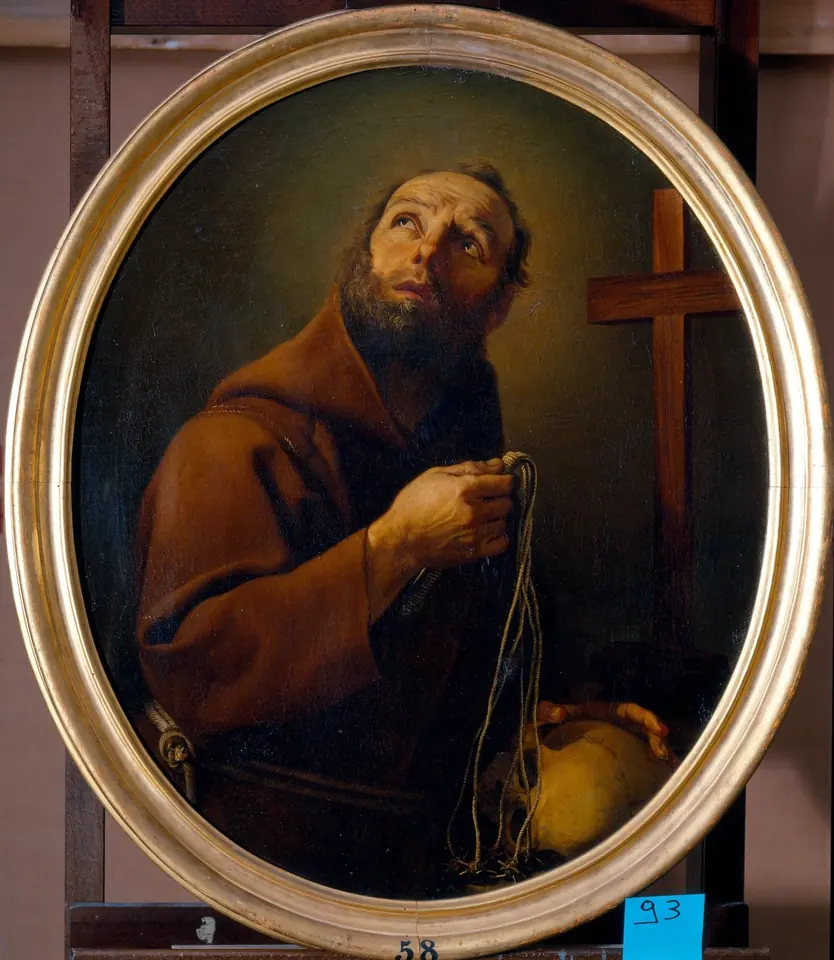
Cook, nurse and laundryman
Brother Bernard never became a priest. He moved among the Capuchin houses of western Sicily, among them Bisacquino, Bivona, Castelvetrano, Burgio, Partinico, Agrigento, Chiusa, Caltabellotta and Polizzi, and spent his last fifteen years in Palermo. His job was nearly always cook or assistant cook. He also cared for the sick and took on extra work to help overloaded brothers, until in the end he was washing the clothes of nearly the whole community.
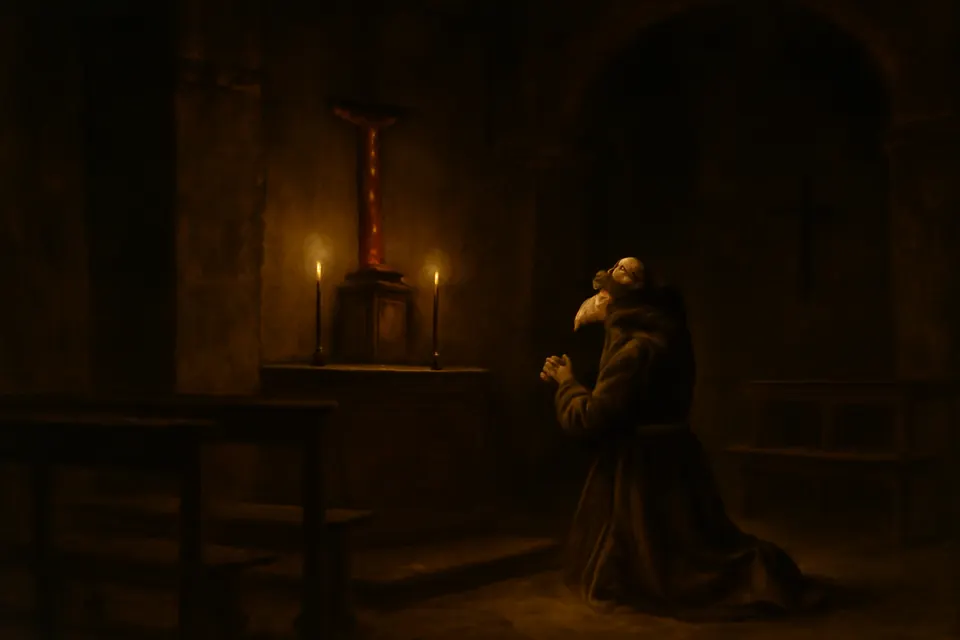
His penances were severe; the Vatican's biography calls them "heroic, if not incredible." His brothers remembered his prayer even more. "He was always at prayer," they testified. He liked to stay in church at night because, as he explained, "it wasn't good to leave the Blessed Sacrament alone and he would keep him company until the other friars arrived." Against the custom of his time, he received Communion every day.
The miracles of St. Bernard
- Reported: in Palermo, during earthquakes and storms, he would plead before the tabernacle like Moses: "Easy Lord, be gentle with us! I want this grace, Lord, I want it!" The witnesses said the disaster ceased.
- Traditional: paintings such as the one in the church of San Pietro at Leonessa show Our Lady placing the Christ Child in his arms, a vision told of him by his devotees.
- Approved: the miracles accepted by the Church for his beatification in 1768 and his canonization in 2001. We have not found the details of those cases in a source we can cite.
His death
On January 12, 1667, at two in the afternoon, after receiving the last blessing, he kept repeating with joy, "Let's go, let's go," and died. A brother who had been close to him, Brother Antonino of Partanna, said he saw him in spirit, radiant and crying out:
Paradise! Paradise! Paradise! O, blessed are the disciplines, blissful the night-watches! Blessed the penances, the self-will sacrificed! O, the blessing of fasting, and acts of obedience! How great is the blessing of religious life well lived!
He was beatified by Clement XIII in 1768. Pope John Paul II canonized him on June 10, 2001, on the feast of the Holy Trinity, and said in his homily that everyone used to wonder "how a simple lay brother could discourse so well about the mystery of the Trinity." The Pope added: "Even today the world needs saints like Brother Bernard immersed in God and for that very reason able to hand on God's truth and love."
Symbols of St. Bernard in art
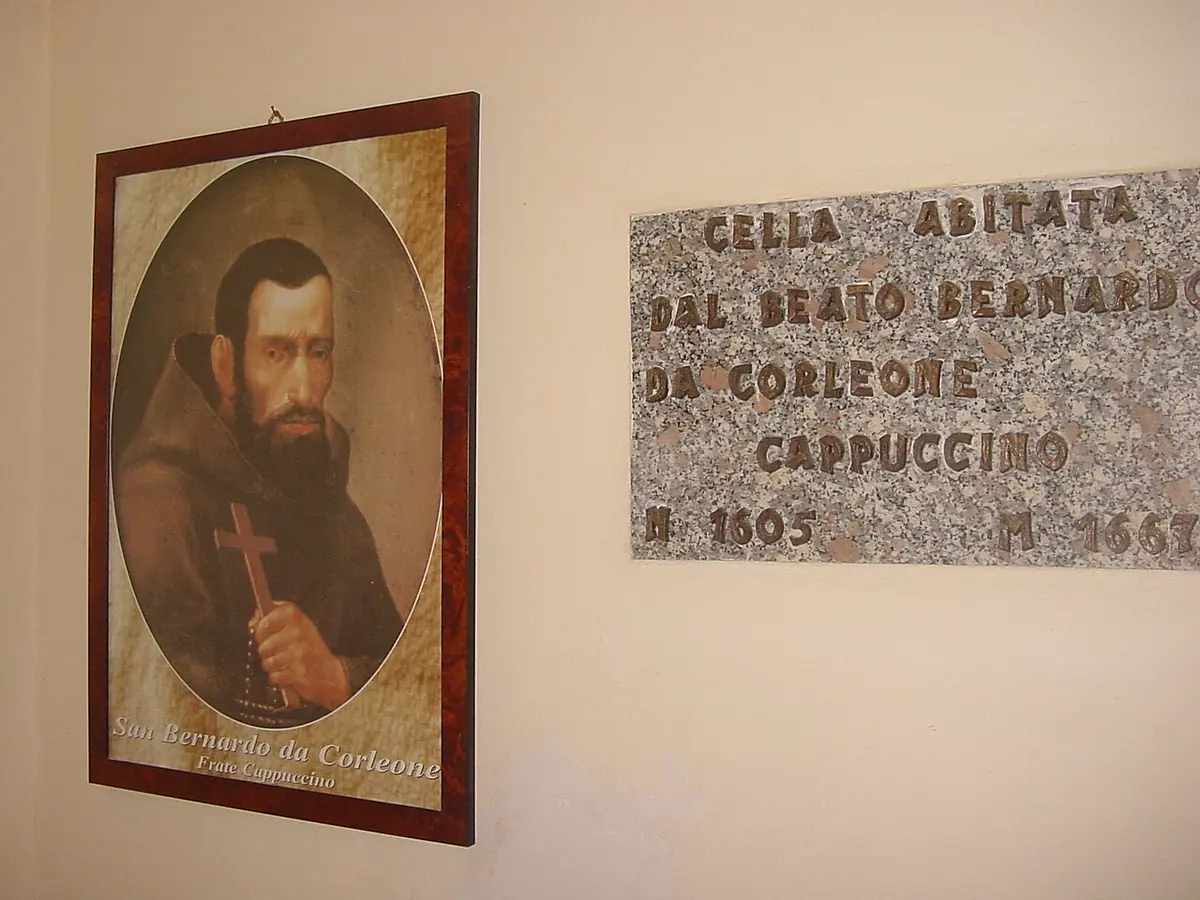
- The Capuchin habit: brown, with the long pointed hood and the white cord.
- The scourge or discipline: the sign of his penances, as in Bergant's painting.
- The crucifix and rosary: his devotion to the crucified Christ and to Our Lady.
- The Christ Child in his arms: in paintings of his vision.
He is easy to confuse with other bearded Capuchin saints, such as St. Felix of Cantalice. Look for the scourge in his hand, or for the Christ Child in his arms.
Feast day and prayer
We keep his feast on January 12. See the feast day calendar. We have not found a traditional prayer to St. Bernard in English with a source we can cite, so let us ask his help in our own words: St. Bernard of Corleone, who laid down the sword and took up the cross, pray for all who struggle with anger, and teach us to keep Jesus company in the Blessed Sacrament.
Frequently asked questions
Who was St. Bernard of Corleone?
A Sicilian Capuchin lay brother, born Filippo Latino in Corleone in 1605. A skilled and hot-tempered swordsman in his youth, he was converted after wounding a hired killer in a duel, entered the Capuchins in 1631 and served as a cook and nurse until his death in Palermo in 1667.
When is St. Bernard of Corleone's feast day?
January 12, the day he died in Palermo in 1667.
When was Bernard of Corleone canonized?
He was beatified by Pope Clement XIII in 1768 and canonized by Pope John Paul II in St. Peter's Square on June 10, 2001, together with four other saints.
Why was he called "the finest blade in Sicily"?
As a young man in Corleone he was an expert swordsman and quick to fight. In 1624, before many witnesses, he wounded a hired killer so badly that the man lost the use of his arm, and the town gave him that nickname. The duel led to his conversion.
Keep exploring
Sources
- Holy See: Bernardo da Corleone (1605–1667), biography for the canonization of June 10, 2001. His family, the duel of 1624, his entry into the Capuchins, his work, the testimony of the beatification process, his prayers in time of disaster and his last words
- Pope John Paul II, homily for the canonization of five blesseds, June 10, 2001. The canonization and the Pope's words on his prayer