St. Nazaria Ignacia March Mesa
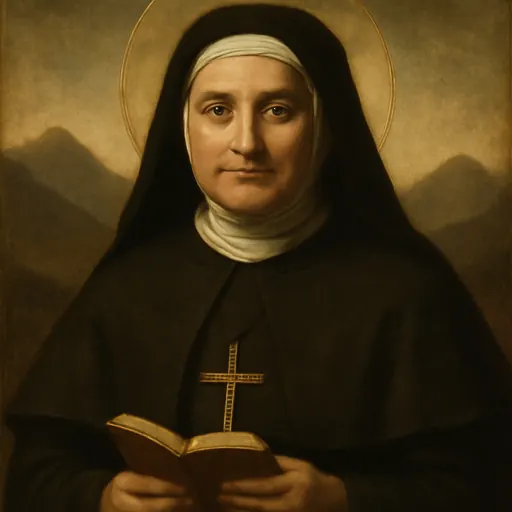
St. Nazaria Ignacia March Mesa (1889–1943) was a Spanish nun who served the elderly poor in Oruro, Bolivia, and there founded the Missionary Crusaders of the Church in 1925, the first native congregation of Bolivia. She opened soup kitchens for unemployed miners and helped start the country's first women workers' union. Her feast is July 6.
Who was St. Nazaria Ignacia?
St. Nazaria Ignacia March Mesa was a Spanish religious sister who gave her life to the poor of Bolivia. Sent to the mining town of Oruro to care for the elderly, she founded there in 1925 a new congregation, the Missionary Crusaders of the Church, the first religious institute born in Bolivia. Her sisters were to "go down into the street," to meet people where they lived and worked, to help the poorest and above all to lead them to God.
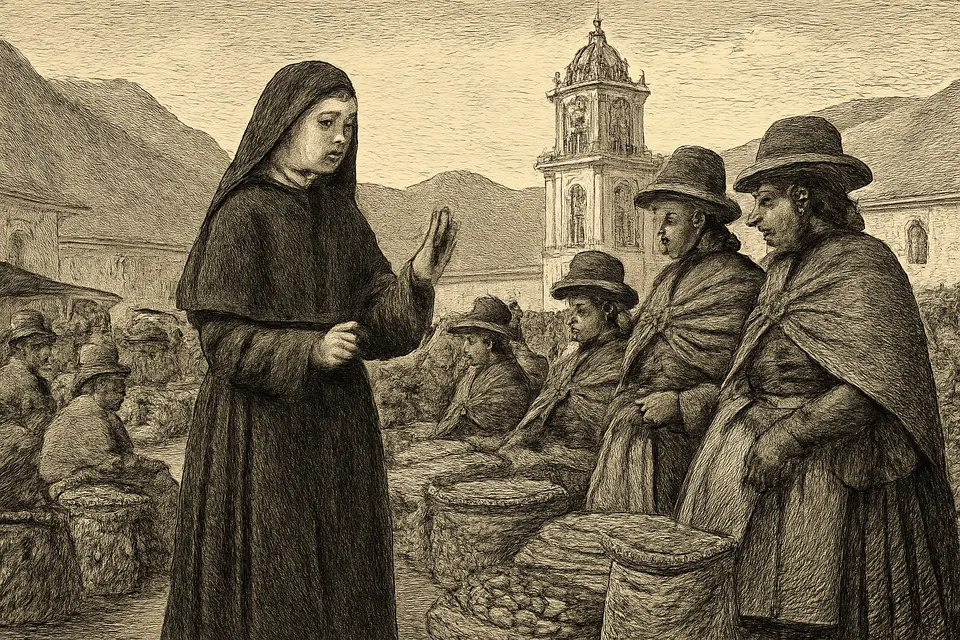
She opened soup kitchens for the unemployed, stood beside striking workers and helped the market women of Oruro form Bolivia's first women's labor union. She loved her adopted country so much that she became a Bolivian citizen.
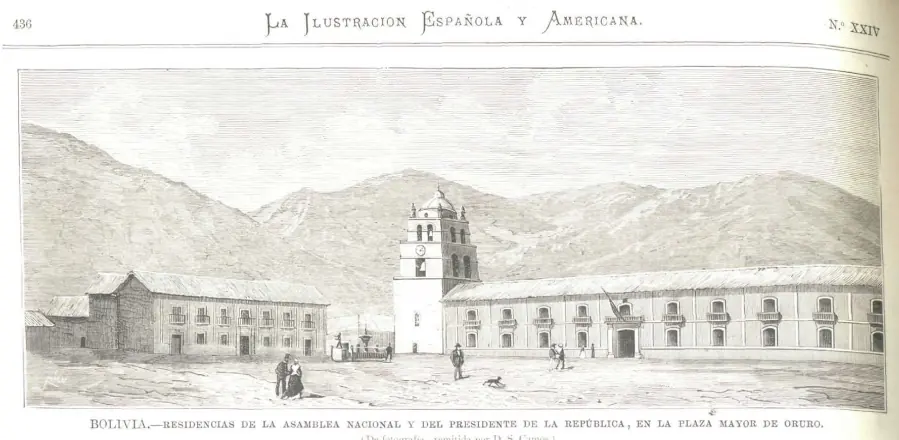
The life of St. Nazaria Ignacia
From Madrid to the Bolivian highlands
Nazaria was born in Madrid on January 10, 1889, to José March and Nazaria Mesa, a working family. Her family later moved to Mexico for work, and there she entered the Little Sisters of the Abandoned Elderly (Hermanitas de los Ancianos Desamparados). At her profession she took the name Nazaria of St. Teresa, after St. Teresa of Ávila.
In 1912 she was sent to Oruro, high in the Bolivian Andes, where she spent twelve years caring for old people. The work was hidden and hard, and she found in it a call to something wider.
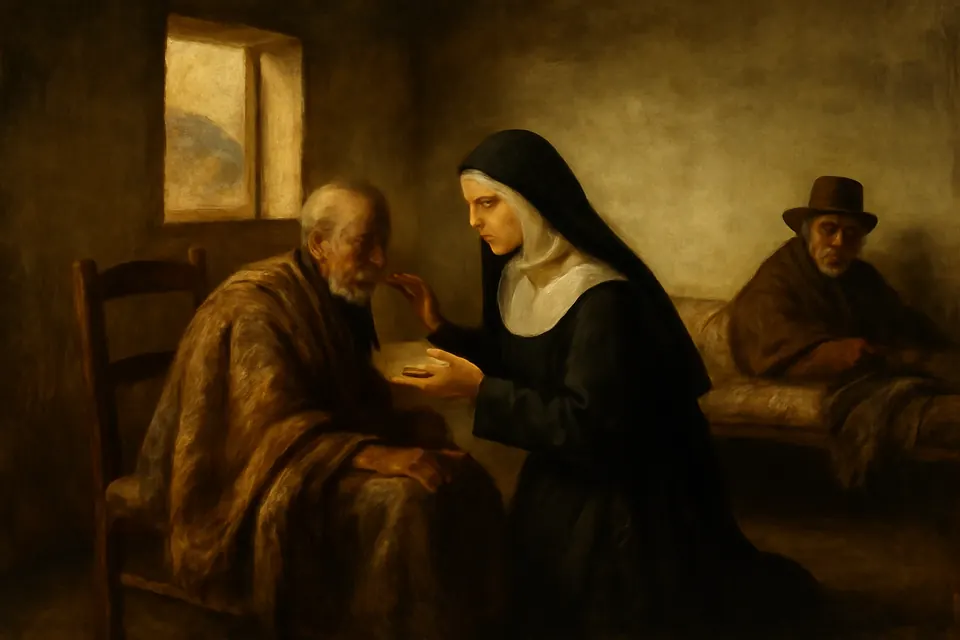
The Missionary Crusaders of the Church
During a retreat in 1920 she felt that God was asking her to found a new congregation. It was not an easy yes. Her sisters today, drawing on her own diaries, describe the struggle she went through, with doubts and fears inside her and opposition outside. On June 16, 1925, she left the Little Sisters and, in Oruro, began the Pontifical Crusade, today the Missionary Crusaders of the Church. Their superior general said in 2018 that she started it with forty centavos.
Her vision was a "crusade of love" around the Church. Pope John Paul II quoted her at her beatification: "In loving and cooperating with the Church in its work of preaching the Gospel to every creature lies our life, our being what we are." She described the spirit she wanted in her daughters this way:
Este es nuestro espíritu: guerrero, fiel, nada de cobardías, todos amores, amor sobre todo a Cristo y en Cristo a todos. Repartirse entre los pobres, animar a los tristes, dar la mano a los caídos.
("This is our spirit: a fighter's, faithful, no cowardice, all love, love above all for Christ and in Christ for everyone; to share ourselves among the poor, to cheer the sad, to give a hand to the fallen.")
The pot of the poor
When the nitrate works across the border in Chile closed, Bolivian miners were thrown out of work by the hundreds. In 1931 Mother Nazaria opened the "Olla del pobre," the pot of the poor, in Oruro, La Paz, Potosí and Cochabamba to feed them. Her sisters still tell how she would say they cooked for 200 and fed 700.
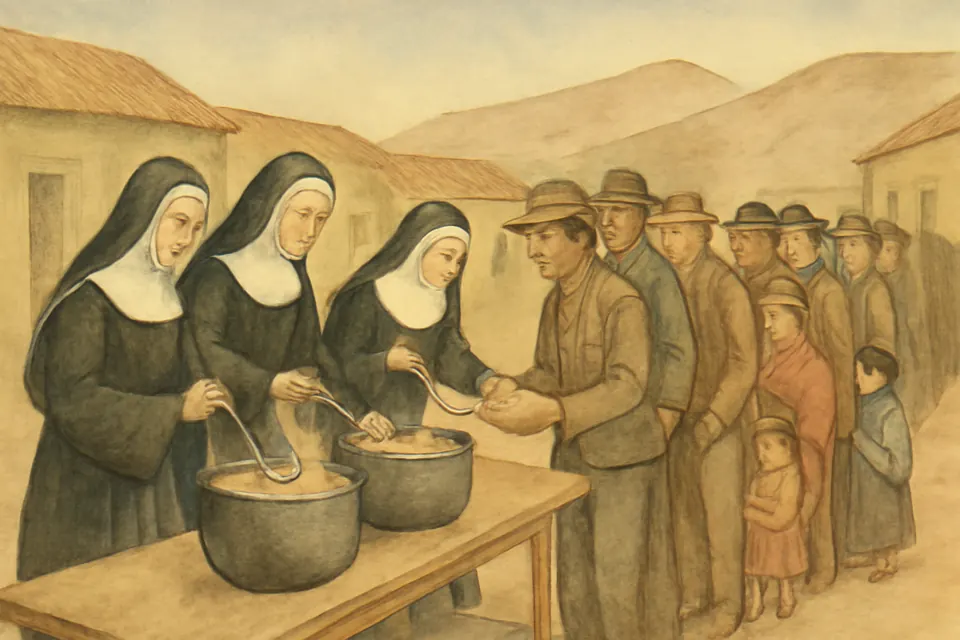
In 1933 she organized the women of Oruro's markets and shops into what is remembered as the first women's labor union in Bolivia. She also walked with the workers in their protests. "I'll go with you," she told them, according to her congregation, "but you have to listen to me." They did.
Arrest, exile and death
Her congregation spread to Argentina, Uruguay and Spain. In 1936, at the start of the Spanish Civil War, she was arrested in Spain with several of her sisters and was in danger of execution for being a religious; the Argentine and Uruguayan consulates won their release and deportation. She spent her last years in Argentina and died in Buenos Aires on July 6, 1943, at fifty-four. In 1972 her body was brought to Oruro, as she had asked.
The miracles of St. Nazaria Ignacia
A first healing was approved by the Church in a decree of March 7, 1992, which opened the way to her beatification by Pope John Paul II on September 27, 1992.
The miracle for her canonization is also approved. On October 13, 2010, Sister María Victoria Azuara, a Missionary Crusader working in Bolivia, suffered a brain hemorrhage and lost her speech completely. The doctor called it a hemorrhage with a very poor outlook. Her sisters began a novena asking Mother Nazaria's intercession. She received no treatment, and within days she began to speak again; her first words at breakfast were to ask someone to pass the butter. When the scans were done, the doctor said that according to them she could not be talking: "esto es de Dios," "this is from God." Pope Francis approved the decree on January 26, 2018, and canonized Nazaria on October 14, 2018, together with Pope St. Paul VI and St. Oscar Romero.
Symbols of St. Nazaria Ignacia in art
St. Nazaria lived in the age of photography, and her images follow her photographs: a sister in a dark habit and veil with a white wimple, often with a crucifix. Paintings made for her congregation add signs of her work:
- The poor, workers and market women around her: her call to "go down into the street."
- A cooking pot: the "Olla del pobre" of 1931.
- The Andes behind her: Oruro and Bolivia, her adopted home.
Feast day and where she is honored
We keep the memory of St. Nazaria Ignacia on July 6. Her relics rest in Oruro at the motherhouse of the Missionary Crusaders, who now serve in twenty-one countries on four continents. Pope Francis knew her sisters well from the slums of Buenos Aires, and the congregation says he used to carry a relic of their founder in his pocket. See other saints of the season on our feast days page.
Praying with St. Nazaria Ignacia
We have not found a traditional prayer to St. Nazaria from a source we can cite, so we do not print one here. Her sisters, when one of them lay unable to speak, simply made a novena asking her intercession. Let us do the same: ask St. Nazaria to pray for the poor and the unemployed, for working women, for missionaries in Latin America, and for all of us to have the courage she asked of her daughters, "nada de cobardías," no cowardice.
Frequently asked questions
Who was St. Nazaria Ignacia?
Born in Madrid in 1889, she became a Little Sister of the Abandoned Elderly and was sent to Oruro, Bolivia, where she felt called to a wider apostolate. In 1925 she founded the Missionary Crusaders of the Church to go out into the streets to serve the poor, workers and women and to bring them to God. She took Bolivian nationality and died in Buenos Aires in 1943.
When is the feast of St. Nazaria Ignacia?
July 6, the day she died in Buenos Aires in 1943.
What miracle made Nazaria Ignacia a saint?
The healing of Sister María Victoria Azuara, a Missionary Crusader who suffered a brain hemorrhage in Bolivia on October 13, 2010, and lost the ability to speak. Her sisters began a novena to Mother Nazaria, and within days she was speaking normally again. Pope Francis approved the miracle in January 2018 and canonized Nazaria on October 14, 2018.
Where is St. Nazaria Ignacia buried?
In Oruro, Bolivia, at the motherhouse of her congregation. Her body was brought there from Buenos Aires in 1972, as she had asked before she died.
Keep exploring
Sources
- John Paul II, Homily for the beatification of twenty-one servants of God, September 27, 1992 (in Italian and Spanish). Her beatification, the call to 'bajar a la calle,' and her words on loving and cooperating with the Church quoted here
- Pope Francis, Homily for the Holy Mass and Canonizations, October 14, 2018. Her canonization with Paul VI, Oscar Romero and four others
- Madre Nazaria: a los altares la santa obrera que fundó una congregación con 40 centavos, Vida Nueva, October 8, 2018. The 'Olla del pobre' of 1931, the women workers' union of 1933, and the canonization miracle as told by Sister María Victoria Azuara
- España tiene una nueva santa: la madre Nazaria, Vida Nueva, January 27, 2018. The decree on the miracle, her Bolivian nationality, and her words on the congregation's spirit quoted here
- Hagiography Circle: Newly canonized saints and blessed, 1943. The stages of her cause: heroic virtue in 1988, beatification in 1992, the miracle decree of January 26, 2018, canonization