Blessed Richard Langhorne, Lawyer and Martyr of the Popish Plot

Blessed Richard Langhorne was a respected Catholic barrister of London, born in Bedfordshire, whom Titus Oates falsely accused in the invented Popish Plot of 1678. Offered a pardon and preferment if he would give up his faith and accuse others, he refused, forgave his accusers by name and was hanged at Tyburn on July 14, 1679. Pope Pius XI beatified him in 1929.
Who was Blessed Richard Langhorne?
Blessed Richard Langhorne was a Catholic barrister in London who died for a crime that never happened. When Titus Oates invented the "Popish Plot" in 1678, Langhorne was one of the first men he named. Condemned on sworn lies, he refused a pardon that would have cost him his faith and his honesty, forgave his accusers by name, and was hanged at Tyburn on July 14, 1679. We keep his feast on July 14.
Bishop Richard Challoner, writing in the 18th century, called him "an eminent counsellor at law, an upright and religious man." The papal letter that beatified him in 1929 uses an even stronger phrase: iurisperitus celeberrimus, "a most celebrated jurist," a layman of Bedfordshire.
The life of Blessed Richard Langhorne
A Catholic lawyer under Charles II
Richard Langhorne came from Bedfordshire and made his career in the law in London. Catholics in Restoration England lived under heavy penal laws, but a skilled Catholic lawyer could still be busy and trusted, and Langhorne was known as a zealous one. That reputation made him useful to Oates, who needed believable names.
The Popish Plot
In the autumn of 1678 Titus Oates, a former Anglican clergyman of very bad character, told the king's council that the Jesuits planned to murder Charles II and seize the kingdom. London panicked. Langhorne was arrested among the first and committed to Newgate prison on October 7, 1678.
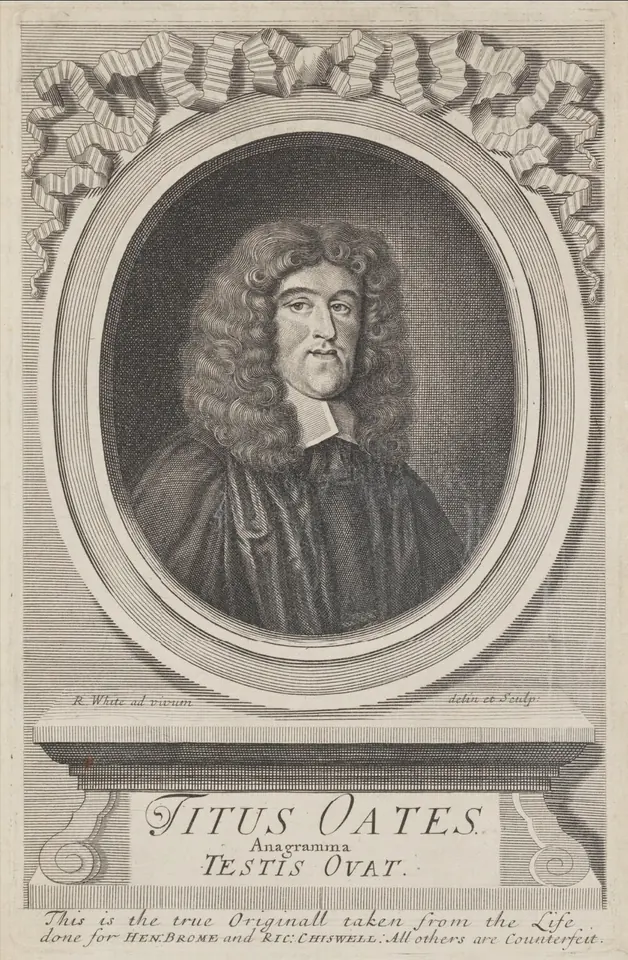
He spent more than eight months in close confinement before his trial at the Old Bailey on Saturday, June 14, 1679, the day after five Jesuits were tried on the same story. Oates swore that Langhorne knew of and consented to the plans to kill the king, and that he kept in his custody the patents for the Catholic lords imprisoned in the Tower, with one for himself as advocate of the army. William Bedloe swore he had seen him register treasonable letters.
The trial
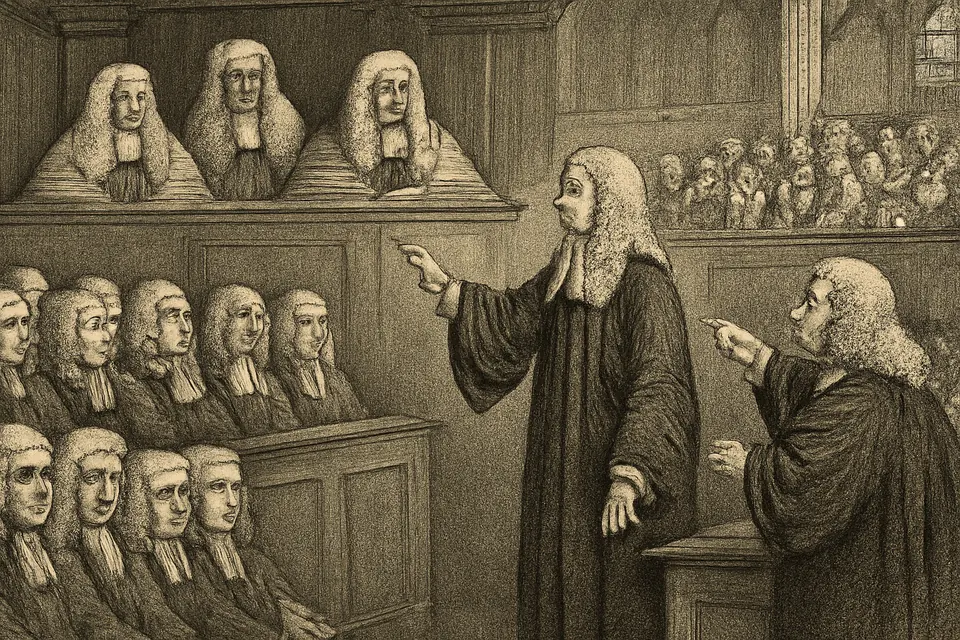
Langhorne defended himself as a lawyer would. He called the witnesses who had testified the day before that Oates was a perjurer. Oates had named a house where he said he stayed during the plotters' meeting, and Langhorne brought Mrs. Grove, who kept it, and her maid to swear he was never there at that time. He showed the improbability of the whole story. It made no difference. In the words of the chronicle Challoner quotes, "the times were not yet good enough to bear reason." He was found guilty and condemned with the five Jesuits.
Waiting in Newgate
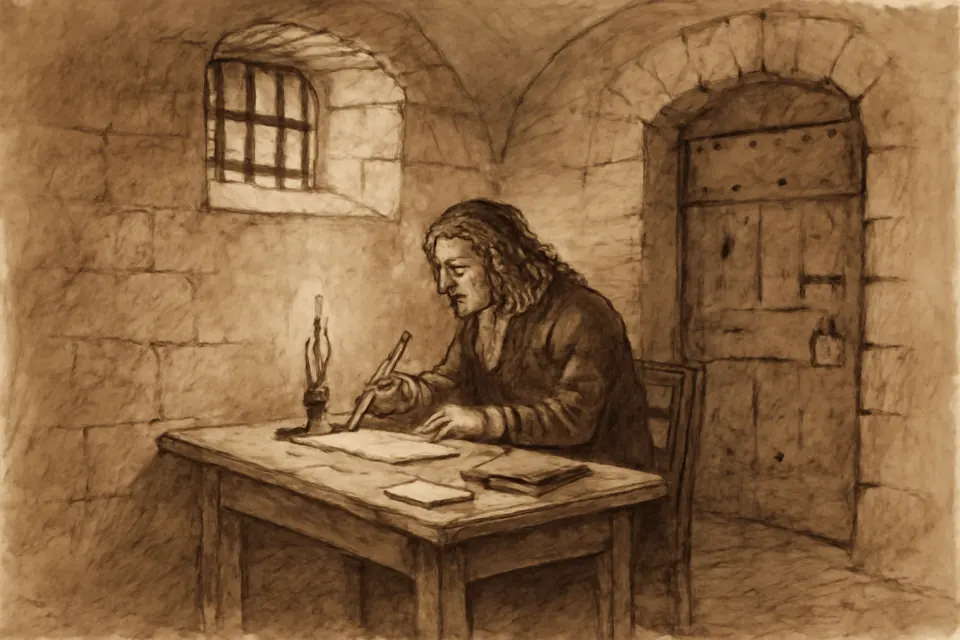
He was reprieved for some weeks in the hope that he would "make discoveries." He would not, because there was nothing to discover. In his last speech he wrote that he had been offered "not only a pardon, but also great advantages as to preferments and estates," if he would forsake his religion, own himself guilty and accuse others. He spent the time writing meditations and devotions, which were printed after his death.
The martyrdom of Richard Langhorne
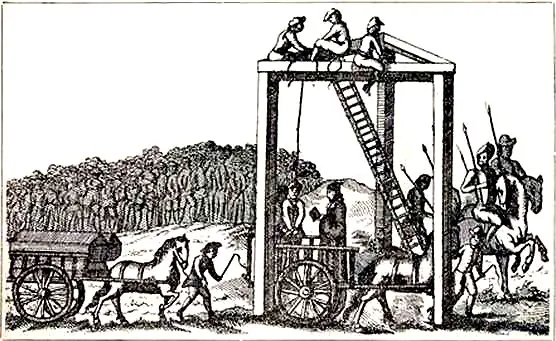
On July 14, 1679, he was drawn to Tyburn. He handed the sheriff the speech he had prepared and asked that it be published. In it he declared his loyalty to the king and his innocence, swore that no power on earth or in heaven could license him to tell a lie, and professed that he died a member of "that holy Catholic and Apostolic Church of Christ." Then he prayed for his enemies:
I also humbly beseech Thee, O God, to give true repentance and pardon to all my enemies, and most particularly to the said Mr. Oates and Mr. Bedloe, and to all who have been any ways accessory to the taking away of my life.
When the hangman put the rope over his head, Langhorne took it in his hands and kissed it. The hangman asked whether he forgave him. "I freely do," he said. Then he prayed his last prayer, the cart was drawn away, and he died.
Oates's credit began to collapse within days of these executions, when a jury acquitted the queen's physician and three monks. By then Langhorne and many others were dead.
Beatification
Langhorne was declared Venerable in the first English cause. On December 15, 1929, Pope Pius XI beatified 136 martyrs of England; the papal letter lists him as number 128.
- Approved: as a martyr he was beatified without a miracle. No miracle has yet been approved for his canonization.
Symbols of Blessed Richard Langhorne in art
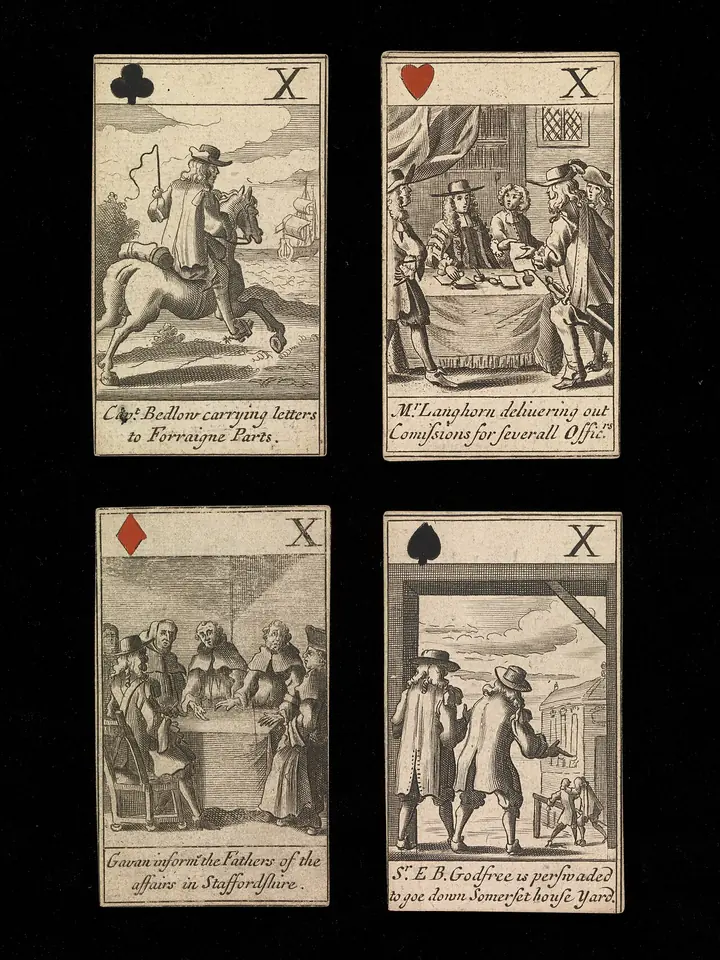
He is seldom pictured. The fitting attributes are the martyr's palm and the rope, which he kissed at Tyburn, together with a barrister's black gown and bands and a small book of devotions for the meditations he wrote in prison. The only image made in his lifetime that shows him is hostile: a 1679 Popish Plot playing card showing him handing out commissions, the very lie that killed him.
Feast day and prayer
We keep his feast on July 14. In England and Wales he is also honored with all the martyrs of the Reformation on May 4. See the feast day calendar and the patron saints of lawyers.
We know of no traditional prayer to him, but we have his own last prayer at Tyburn, recorded by an eyewitness and printed by Challoner. Let us pray it with him:
Blessed Jesus, into Thy hands I recommend my soul and spirit; now at this instant take me into paradise. I am desirous to be with my Jesus. I am ready, and you need stay no longer for me.
Let us ask Blessed Richard Langhorne to pray for lawyers and judges, for all who are falsely accused, and for the grace to forgive those who wrong us. Blessed Richard Langhorne, pray for us.
Frequently asked questions
Who was Blessed Richard Langhorne?
A Catholic lawyer, described in the papal letter of beatification as a "most celebrated jurist" from Bedfordshire. Titus Oates and William Bedloe swore that he was part of a Jesuit plot to kill King Charles II. He was condemned on their perjured evidence and executed at Tyburn on July 14, 1679.
What were Richard Langhorne's last words?
After forgiving the hangman, he prayed: "Blessed Jesus, into Thy hands I recommend my soul and spirit; now at this instant take me into paradise. I am desirous to be with my Jesus. I am ready, and you need stay no longer for me."
Why was Richard Langhorne executed?
For a plot that never existed. Oates swore he held the commissions of the Catholic lords in the Tower and one for himself as advocate of the army. Langhorne answered that his religion was the only reason he was accused and the only reason the jury believed such witnesses.
When is the feast of Blessed Richard Langhorne?
July 14, the day he died. He is also honored with all the martyrs of England and Wales on May 4.
Keep exploring
Sources
- Richard Challoner, Memoirs of Missionary Priests, ed. John Hungerford Pollen (1924 edition), pp. 538–540. Committal to Newgate on October 7, 1678, the trial of June 14, 1679, the evidence of Oates and Bedloe, Mrs. Grove's testimony, the reprieve, the offer of pardon and preferment, his printed dying speech and his last words at Tyburn
- Pius XI, apostolic letter beatifying 136 English martyrs (December 15, 1929), Acta Apostolicae Sedis 22 (1930). No. CXXVIII: Richardus Langhorne, laicus bedfordiensis, iurisperitus celeberrimus, martyred at Tyburn on July 14, 1679
- Catholic Encyclopedia (1909): English Confessors and Martyrs (1534–1729). 1679: Richard Langhorne l., 14 July, Tyburn