St. Emmanuel Ruiz and the Martyrs of Damascus
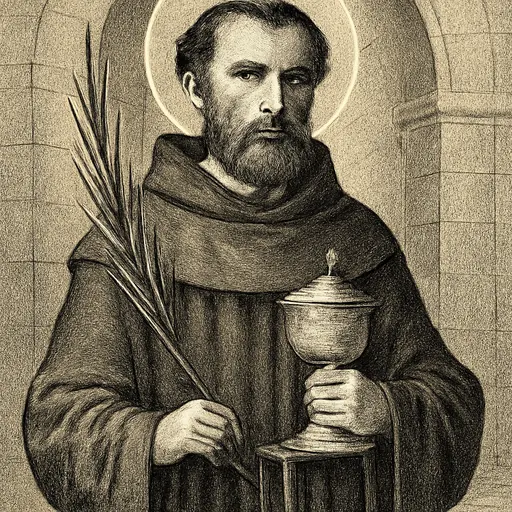
St. Emmanuel Ruiz (Manuel Ruiz López, 1804–1860) was a Spanish Franciscan priest, guardian of the friary at Bab Touma in Damascus, who was killed at the foot of the altar on the night of July 9–10, 1860, after consuming the consecrated Hosts so they would not be profaned. He died with seven fellow friars and three Maronite laymen. We keep his feast on July 10; Pope Francis canonized the eleven Martyrs of Damascus on October 20, 2024.
Who was St. Emmanuel Ruiz?
St. Emmanuel Ruiz, known in Spanish as Manuel Ruiz López, was a Franciscan priest from Spain who gave nearly thirty years to the missions of the Holy Land and died a martyr in Damascus on the night of July 9–10, 1860. He was the guardian, that is, the superior, of the Franciscan friary of St. Paul in the Christian quarter of Bab Touma. When armed men broke into the friary, he hurried to the church, consumed the consecrated Hosts so they could not be profaned, and was killed at the foot of the altar.
Ten others died with him that night: seven of his brother friars and three Maronite Catholic laymen, the brothers Francis, Mooti and Raphael Massabki. Together they are the Martyrs of Damascus. We keep their feast on July 10, and Pope Francis declared all eleven saints on October 20, 2024.
From Spain to the Holy Land
Franciscan Media admits that "not much is known of the early life of Emmanuel Ruiz." It gives his birth year as 1804 and says he was born of humble parents in Santander, on Spain's northern coast. He received the Franciscan habit in 1825 and was ordained a priest.
He felt called to preach Christ where Christians were few, and asked for the missions of the Custody of the Holy Land, which the Friars Minor have served since the Middle Ages. The Irish Franciscans record that he sailed for the Holy Land with his companions in 1831 and was assigned to Damascus.
Guardian of the friary in Damascus
Damascus is a city the Church cannot forget: on the road outside it Saul of Tarsus met the risen Lord, and in the street called Straight he was baptized as St. Paul. The Franciscan friary there is dedicated to him.
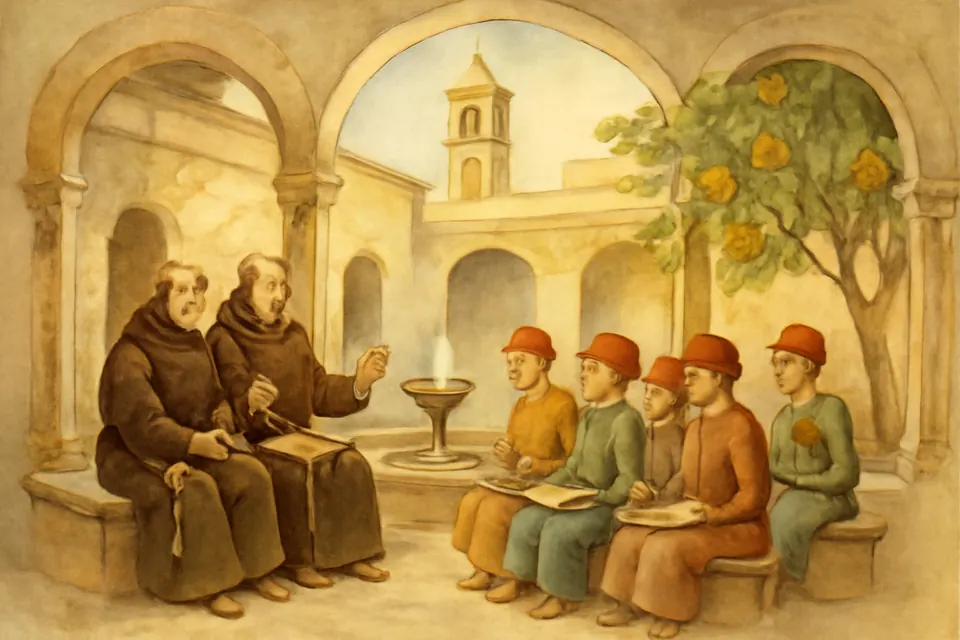
By 1860 Father Emmanuel was its guardian, respected for his prudence and his holiness. Living with him were five other priests and two lay brothers. The Vatican's profile of the martyrs describes them one by one: Carmelo Bolta, the parish priest, who taught Arabic; Engelbert Kolland, an Austrian, much loved by the people; Nicanor Ascanio, who often spoke of being ready for martyrdom; Nicolás Alberca and Pedro Soler, both young priests; Francisco Pinazo, the sacristan; and Juan Fernández, the cook. All of them but Engelbert came from Spain.
The night of July 9–10, 1860
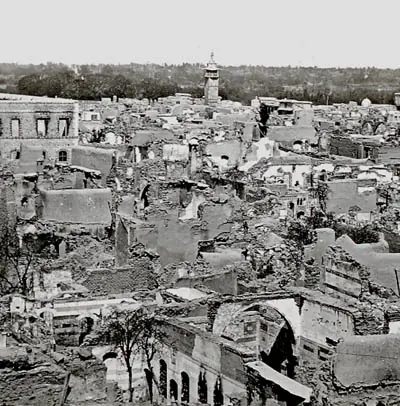
In the summer of 1860 violence against Christians spread from Mount Lebanon into Syria. On July 9 a mob poured into the Christian quarter of Damascus, and thousands of Christians were killed and their homes burned in a few days.
That night the attackers reached the friary. Warned of what was coming, the friars made their confessions. The Massabki brothers had stayed later than usual at the friary and were trapped there with them.
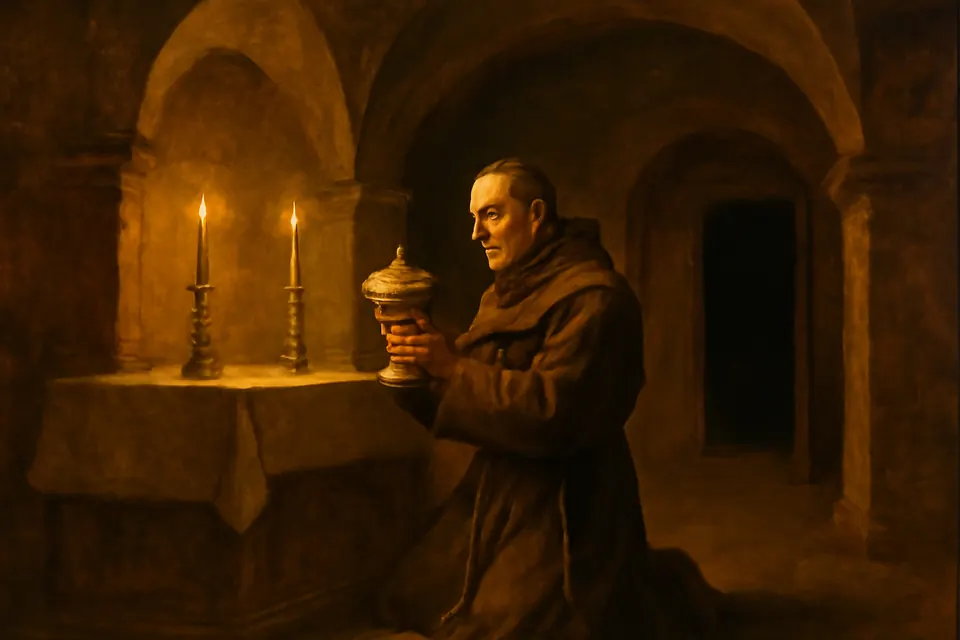
Father Emmanuel went to the church. His first thought was for Our Lord in the tabernacle. He took the ciborium and consumed the Hosts, so that the Body of Christ would not be thrown on the ground and trampled. An old Franciscan account quoted by Catholic World Report says he did it "lest he give up the heavenly members to rabid dogs."
The men found him there and ordered him to become a Muslim to save his life. The Custody of the Holy Land gives his answer: "I am a Christian and I will die as a Christian." He was killed at the foot of the altar, the Vatican's profile says, "as he was consuming the consecrated Hosts." His brothers and the three Massabki brothers died in the same raid, each refusing to deny Christ.
From beatification to canonization
The cause moved quickly by the standards of the time. Catholic World Report notes that the 1926 decree declared their martyrdom certain and set aside the usual requirement of miracles, as the Church may do for martyrs. Pope Pius XI beatified the eleven in St. Peter's Basilica on October 10, 1926.
Nearly a century later, Pope Francis canonized them in St. Peter's Square on October 20, 2024, together with three other new saints.
Miracles and signs
Like most martyrs, St. Emmanuel Ruiz is honored first for the witness of his death, not for wonders.
- Approved: none was required. The Church raised the Martyrs of Damascus to the altars on the strength of their martyrdom.
- Reported: we have found no documented miracle claim attributed to him that we can report with confidence.
Symbols of St. Emmanuel Ruiz in art
Pictures of the Martyrs of Damascus are mostly modern devotional paintings, so his symbols are simple.
- Franciscan habit and cord: the brown habit and white knotted cord of the Friars Minor, worn by all eight friars.
- Ciborium or Host: his own sign. It recalls that he died protecting the Blessed Sacrament.
- Altar: he is often placed beside or before an altar, where he was killed.
- Palm: the ancient sign of martyrdom, given to all eleven.
In group pictures he is usually the eldest friar at the center, sometimes holding the ciborium; the three Massabki brothers appear beside the friars in lay clothes.
Feast day and where he is honored
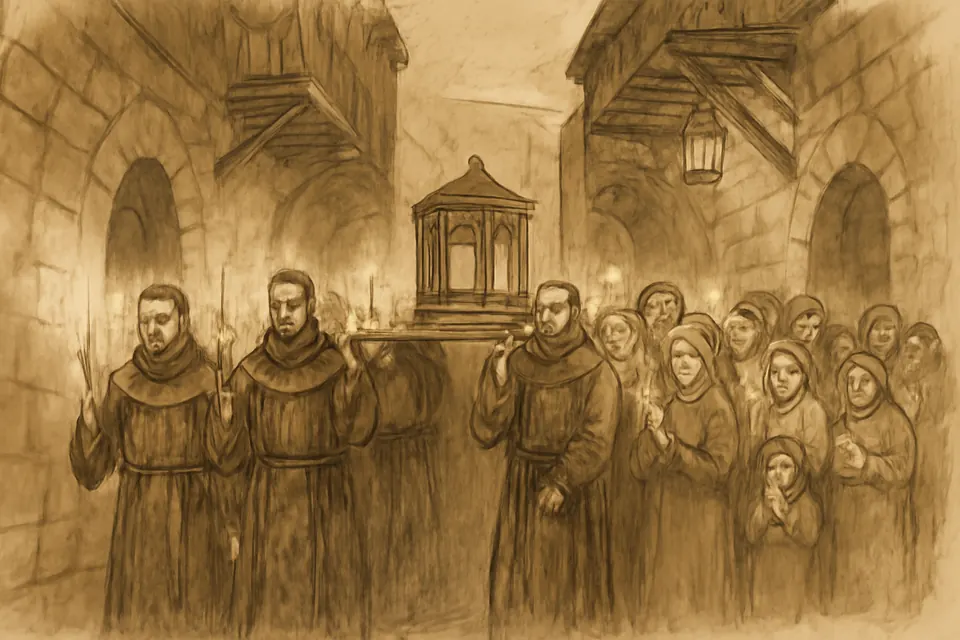
We keep the feast of St. Emmanuel Ruiz and his companions on July 10; see our feast day calendar. Their relics are kept at the Franciscan friary at Bab Touma, the very place of the martyrdom, and the Custody of the Holy Land says that every year on the evening of July 10 Damascus holds a Mass and a procession of the relics through the streets of the Christian quarter. The Maronites honor the Massabki brothers in a chapel of their church in the old city.
Prayer to St. Emmanuel Ruiz
There is no traditional English prayer to him. Let us ask his help in our own words, as the Church allows: St. Emmanuel Ruiz and companions, who loved the Eucharist more than life, pray for the Christians of Syria and the Middle East, and pray for us, that we may never be ashamed of Christ.
Frequently asked questions
Who was St. Emmanuel Ruiz?
A Spanish Franciscan friar and priest, born in 1804, who spent most of his life as a missionary of the Custody of the Holy Land and was guardian of the friary of St. Paul in Damascus when he was martyred in July 1860.
How did St. Emmanuel Ruiz die?
When a mob broke into the friary during the anti-Christian violence of 1860, he went to the church and consumed the consecrated Hosts so they could not be desecrated. Told to deny Christ, he refused and was killed at the foot of the altar.
When is the feast of St. Emmanuel Ruiz?
July 10, together with his companions, the Martyrs of Damascus.
When was St. Emmanuel Ruiz canonized?
Pope Pius XI beatified him and his ten companions on October 10, 1926, and Pope Francis canonized them in St. Peter's Square on October 20, 2024.
Keep exploring
Sources
- Holy See, Office of Liturgical Celebrations: booklet for the canonization of October 20, 2024 (PDF). Official biographical profile of Manuel Ruiz López and companions; beatification on October 10, 1926
- Custody of the Holy Land: The Martyrs of Damascus will be saints on 20 October. His words at the altar and the annual July 10 procession of the relics
- Irish Franciscans: The Martyrs of Damascus canonised. His voyage to the Holy Land in 1831 and the relics kept at the Bab Touma friary
- Franciscan Media: Blessed Emmanuel Ruiz and Companions. Gives his birthplace as Santander
- Catholic World Report: The Glorious Palms of Martyrs: On the Damascus Martyrs of 1860. His entry into the order in 1825 and the dispensation from miracles in the 1926 decree