St. Anthony of Kyiv (Anthony of the Caves), Father of Monks in Rus'

St. Anthony of Kyiv (983–1073), also called Anthony of the Caves, was a monk from Liubech who was tonsured on Mount Athos and came home to live in a cave above the Dnieper. The brothers who gathered around him became the Kyiv Caves Monastery (the Kyiv Pechersk Lavra), the mother house of monks in Rus', and with St. Theodosius he is honored as its founder. The Orthodox Church keeps his feast on July 10.
Who was St. Anthony of Kyiv?
St. Anthony of Kyiv, known in the East as Anthony of the Caves (Antoniy Pecherskyi), is the father of monastic life in Kyivan Rus'. A layman from the town of Liubech, he went as a pilgrim to Mount Athos, became a monk there, and came home to live alone in a cave dug into the hills above the Dnieper. Others came to share his life, and from that cave grew the Kyiv Caves Monastery, the Kyiv Pechersk Lavra, which sent monks, bishops and saints all over the lands of Rus'.
The Orthodox Church calls him venerable, and with his disciple St. Theodosius he is honored as the founder of the Lavra. Ukrainian Greek Catholics honor him too, as part of the shared inheritance of the Church of Kyiv.
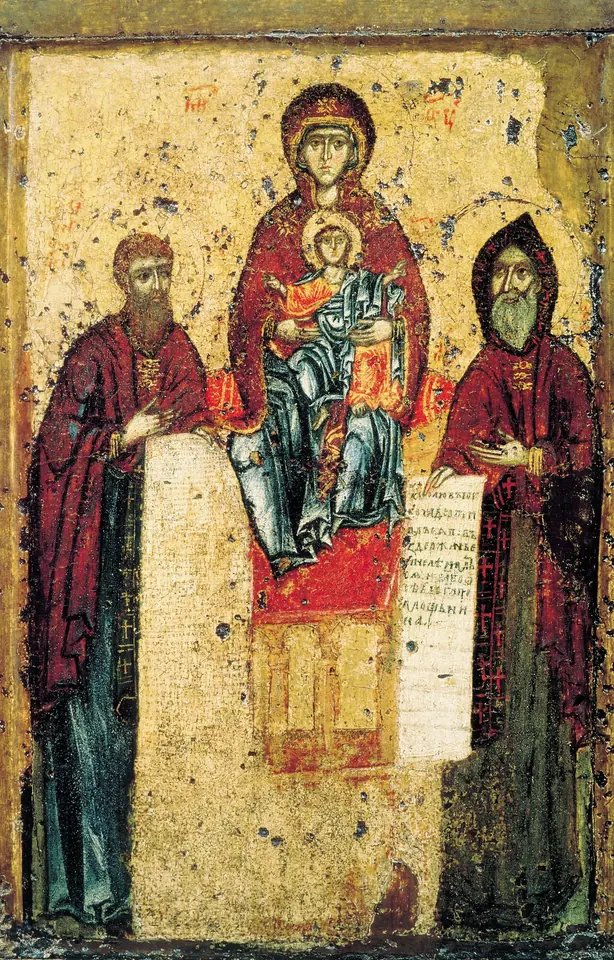
The life of St. Anthony of Kyiv
From Liubech to the Holy Mountain
He was born in 983 at Liubech, near Chernihiv, and baptized Antipas. The Russian Primary Chronicle, compiled by the monks of his own monastery, says God put into his heart the desire to go on pilgrimage. He traveled to Mount Athos, was charmed by the monks' life there, and begged the abbot of one of its monasteries to give him the habit. The abbot tonsured him and named him Anthony, after St. Anthony the Great, and then sent him back to Rus' with the blessing of the Holy Mountain, "that many other monks might spring from his example."

The cave above the Dnieper
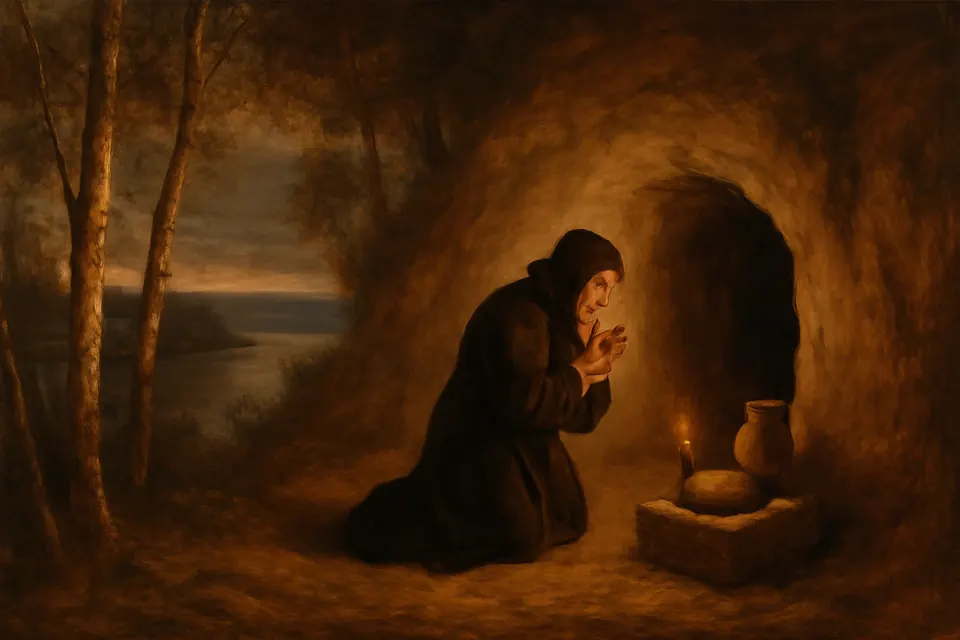
Back in Kyiv he visited the monasteries and found none to his liking. He wandered the hills until he came to a little cave that the priest Hilarion, later Metropolitan of Kyiv, had dug for his own prayer near the village of Berestovo. According to Azbyka, he settled there in 1051. The Chronicle gives his prayer amid tears:
Oh Lord, strengthen me in this place, and may there rest upon it the blessing of the Holy Mount and of the prior who tonsured me.
He lived there on dry bread and water, praying and digging out the cave, resting "neither day nor night." People began to bring him what he needed and to ask his blessing, and Prince Iziaslav came with his retinue to ask for his prayers.
The brothers gather
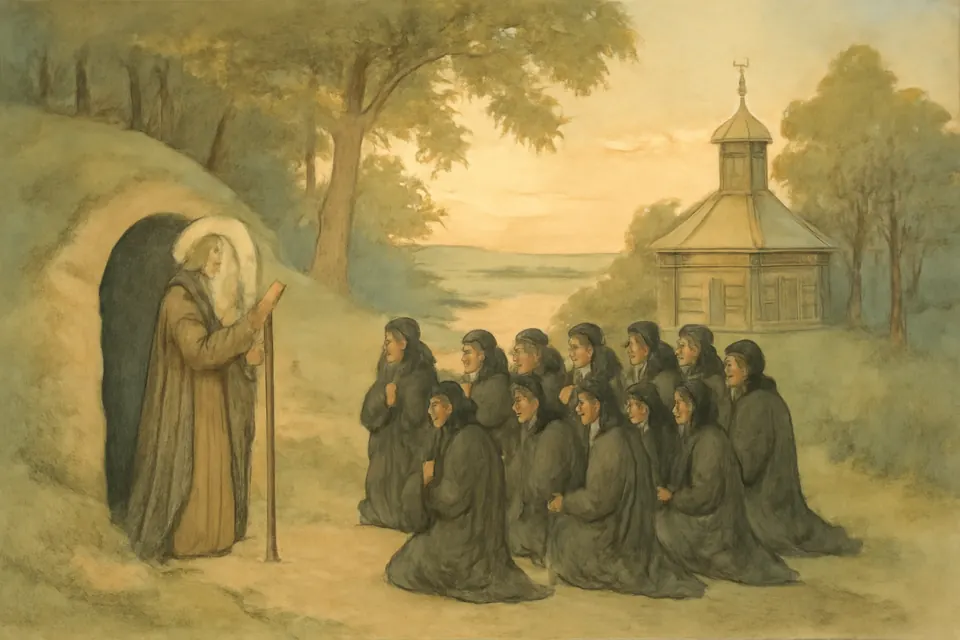
Disciples came, and he tonsured them. When there were twelve, they dug a large cave with a church and cells. Then Anthony, who loved solitude, appointed Barlaam as their abbot and withdrew to a neighboring hill to dig a new cave. The Chronicle says that he ended his life there, "for the space of forty years never issuing forth from the crypt." When Barlaam was called away to another monastery, the brothers asked Anthony to name a new abbot, and they chose Theodosius, who gave the community its rule of common life. At the monks' request Anthony asked Prince Iziaslav for the whole hill, and on it the monastery was built.
Flight to Chernihiv
Anthony was not spared the troubles of the princes. When Iziaslav returned from Poland, he was angry with Anthony on account of Prince Vseslav, and Prince Sviatoslav had the old monk escape by night to Chernihiv. There he dug another cave in the Boldyni hills, where, the Chronicle notes, a monastery of the Mother of God stood afterward. He later returned to Kyiv, and he died in his cave on July 10, 1073, at about ninety.
Miracles and traditions of St. Anthony
The Orthodox life of Anthony tells how he and Theodosius were carried in spirit to the church of Blachernae in Constantinople while remaining in their monastery, and how the Mother of God gave them gold for building the great church of the Dormition and foretold Anthony's death. This is a traditional account, found in the Kyiv Caves Paterikon. The same tradition holds that his relics remain hidden by God's providence.
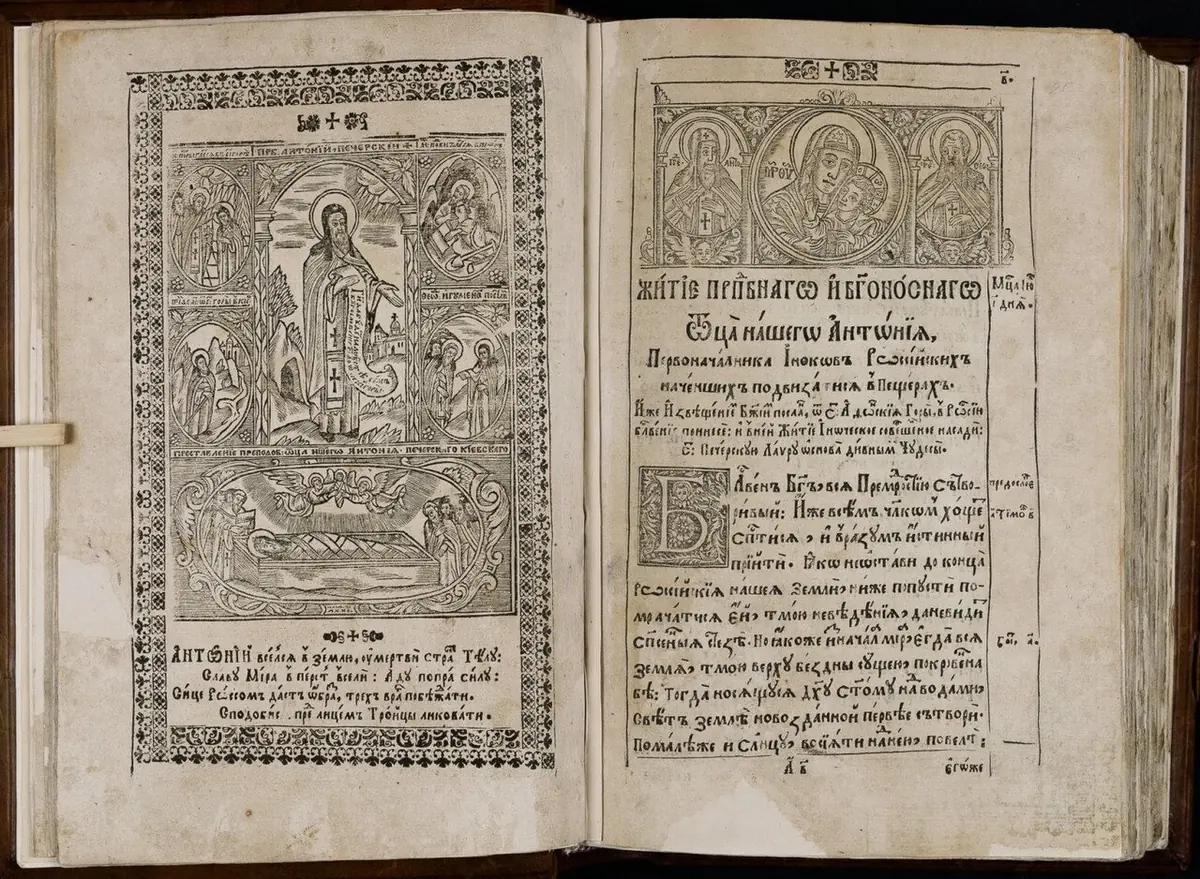
Symbols of St. Anthony of Kyiv in art
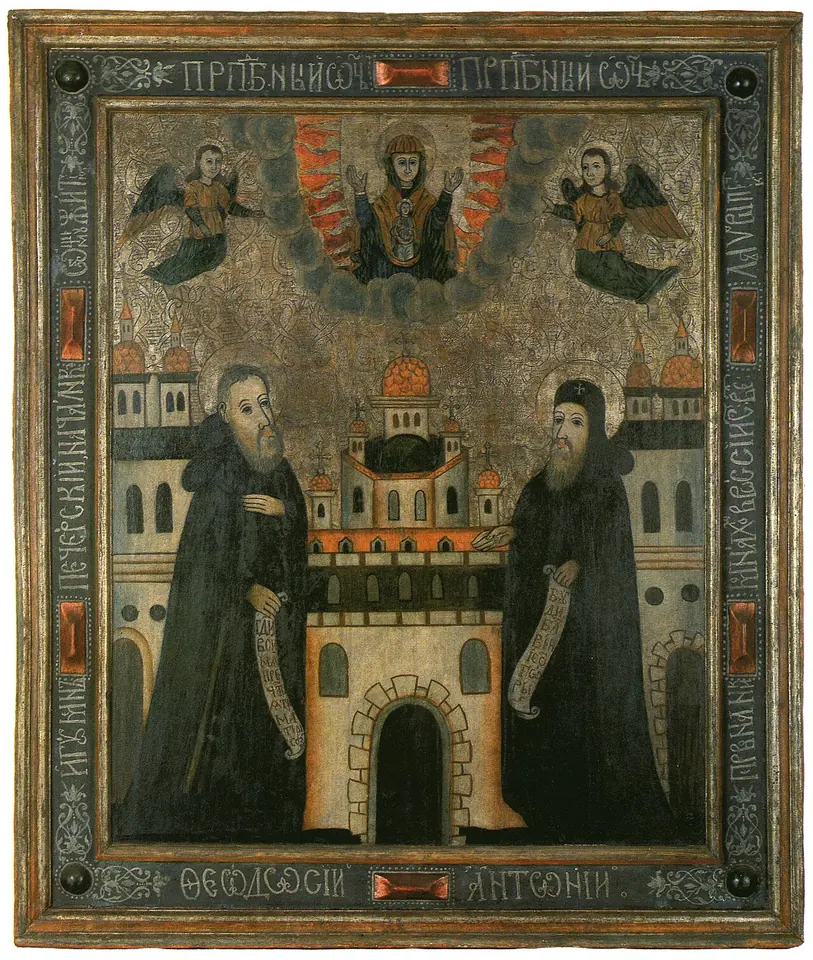
Icons show him as a very old monk with a long white beard in the dark monastic schema, holding an unrolled scroll with words of instruction to his monks. He usually stands with St. Theodosius on either side of the Mother of God of the Caves, or on either side of the Lavra and its domed church, as in the icons on this page. Some images show the cave in the hillside.
Feast day and where he is honored
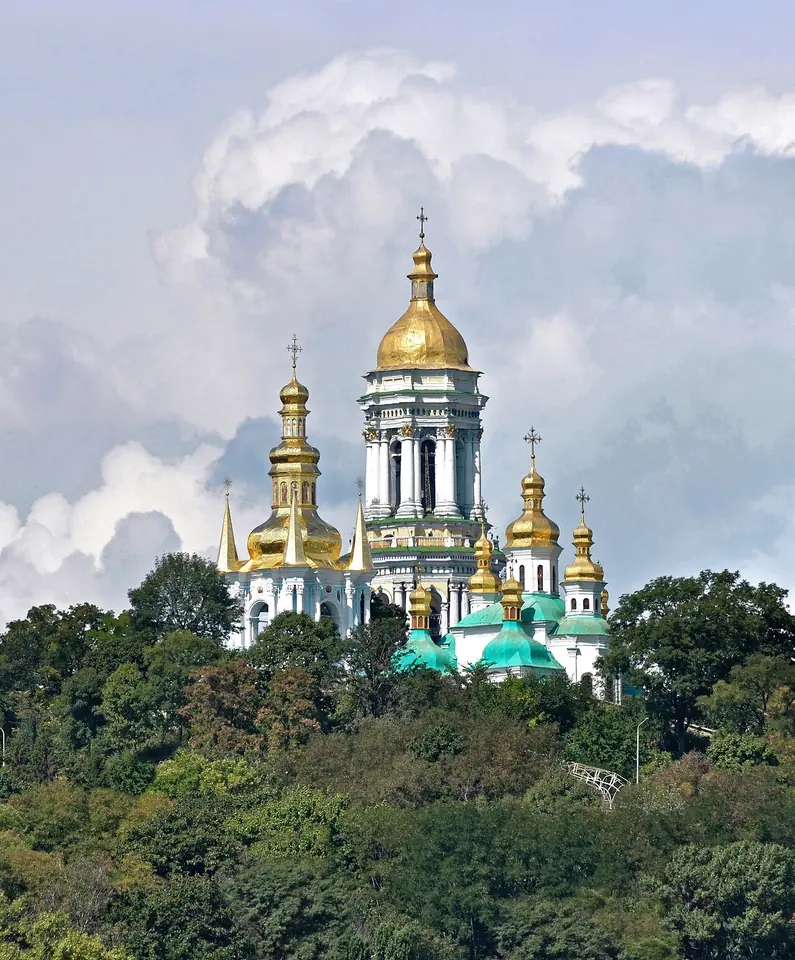
The Orthodox Church keeps his feast on July 10 (July 23 on the civil calendar for churches on the old reckoning). He is remembered again on May 7 with the Russian fathers of Mount Athos and with all the fathers of the Kyiv Caves. The Kyiv Pechersk Lavra still stands above the Dnieper, and its Near Caves are called St. Anthony's Caves; among the monks buried there is St. Moses the Hungarian. See more saints of July on our feast days page.
Praying with St. Anthony of Kyiv
The Church sings a troparion and kontakion to him, but we have no English translation we can cite. His own prayer at the cave is a good one to make ours: that God would strengthen us in the place where He has put us. Let us ask his help: holy Father Anthony, you left everything to seek God in silence and prayer; pray for monks and nuns, pray for the people of Kyiv and of all Ukraine, and pray for us, that we may persevere in prayer.
Frequently asked questions
Who was St. Anthony of Kyiv?
The founder, with St. Theodosius, of the Kyiv Caves Monastery. Born at Liubech in 983 and baptized Antipas, he became a monk on Mount Athos, returned to Kyiv, lived as a hermit in a cave on the Dnieper hills, and gathered the first community of monks there.
When is the feast of St. Anthony of Kyiv?
July 10 (July 23 on the civil calendar for churches on the old reckoning), the day of his repose in 1073. He is also remembered with the Russian fathers of Mount Athos on May 7 and with all the fathers of the Kyiv Caves.
Where is St. Anthony of Kyiv buried?
In the caves of the Kyiv Pechersk Lavra. The Near Caves are also called St. Anthony's Caves. The Primary Chronicle says his bones lay in the cave where he ended his life; Orthodox tradition holds that they remain hidden.
Why did St. Anthony flee to Chernihiv?
Prince Iziaslav returned to Kyiv angry with him over the affair of Prince Vseslav, and Prince Sviatoslav helped him escape by night to Chernihiv, where he dug another cave in the Boldyni hills.
Keep exploring
Sources
- Venerable Anthony of the Kiev Far Caves, Founder of Monasticism in Russia (Orthodox Church in America). His birth in 983, baptismal name Antipas, his repose on July 10, 1073, the Blachernae account and the hidden relics
- Samuel H. Cross, The Russian Primary Chronicle, Harvard Studies and Notes in Philology and Literature, vol. 12 (1930). The entries for 1051 and 1074 on Hilarion's cave, Anthony's tonsure on Athos, his prayer, the twelve brothers, his forty years in the cave and his flight to Chernihiv
- Преподобный Антоний Печерский (Azbyka.ru). His settling in Hilarion's cave in 1051 and his days of commemoration (in Russian)