St. John of Dukla, Franciscan Patron of Poland and Lviv
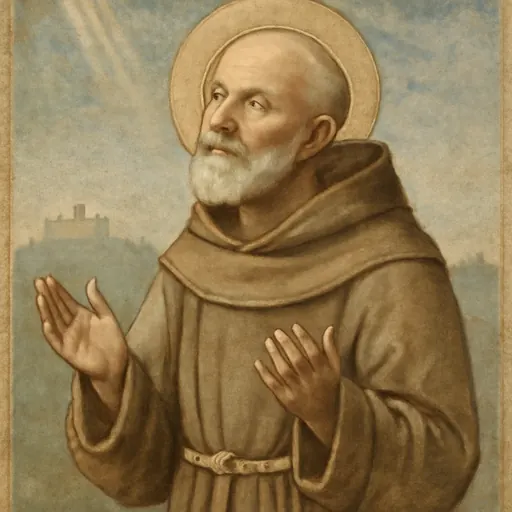
St. John of Dukla (about 1414–1484) was a Polish Franciscan friar who spent most of his life in Lviv and went on preaching and hearing confessions after he lost his sight. Pope Clement XII named him patron of Poland and Lithuania in 1739, and Pope John Paul II canonized him in 1997. Poland keeps his feast on July 8.
Who was St. John of Dukla?
St. John of Dukla was a Polish Franciscan who spent nearly fifty years in the friaries of Krosno and Lviv preaching, governing his brothers and hearing confessions, and who went on serving after he lost his sight. Lviv, where he died in 1484, has honored him ever since as its protector. Pope Clement XII proclaimed him patron of the Kingdom of Poland and the Grand Duchy of Lithuania in 1739, and Pope John Paul II canonized him on June 10, 1997, at Krosno, close to the town where he was born. In Poland we keep his feast on July 8.
The record of his life is thin. The Polish Liturgy of the Hours, our main guide here, is frank about it: of his parents we know only that they were townspeople, and nothing concrete can be said of his youth.
Dukla and the hermitage
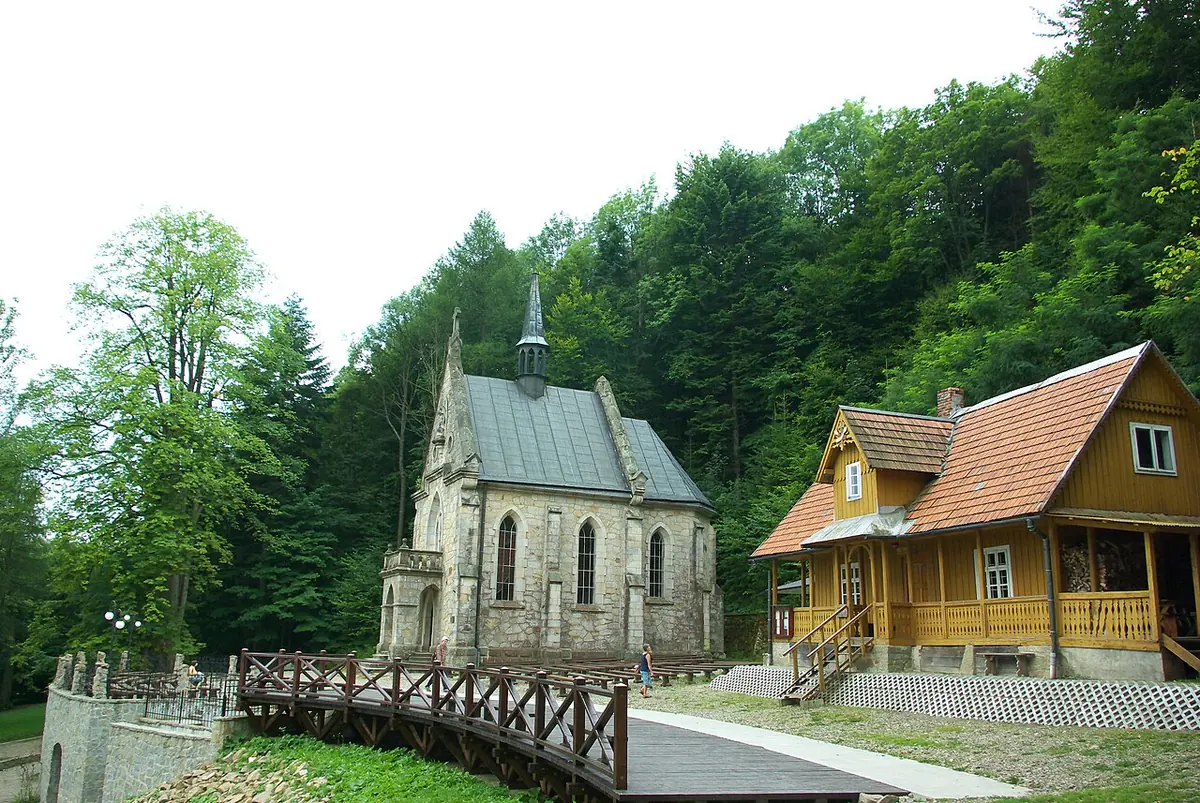
John was born at Dukla, a small town at the foot of Mount Cergowa in the Beskid hills, around 1414. A local tradition says that as a young man he lived as a hermit in the forests below Cergowa. A few miles from Dukla there is still a hermitage and a chapel dedicated to him on the spot where he is said to have lived alone with God. No historical source confirms the hermit years, so we tell them as traditional.
Friar, preacher and superior
Sometime between 1434 and 1440 he entered the Conventual Franciscans, probably at Krosno. After his novitiate and studies he was ordained a priest and made a preacher, an office the friars gave only to men of real gifts and inner formation. He served as guardian, or superior, of the friaries at Krosno and Lviv, and then as custos, in charge of all the Franciscan houses of the Lviv region. When his term ended he went back to preaching in Lviv.

A new beginning at fifty
In 1453 and 1454 St. John of Capistrano, the great reformer of Franciscan life, came to Poland and founded houses of the Observants, friars who kept the Rule of St. Francis more strictly. From their Kraków friary, dedicated to St. Bernardine of Siena, Polish Observants came to be called Bernardines, and in 1461 they founded a house in Lviv. John watched their way of life and decided to join them, which was no small thing for a senior friar; moving from one branch to the other was easily taken as desertion.
The story goes that when his provincial visited Lviv, John asked permission to go to the Observants. The provincial, thinking John meant to pay them a visit, readily agreed. When he realized his mistake he could no longer make him come back. That was probably in 1463.
He lived 21 more years as a Bernardine, after a short stay in Poznań, in Lviv, as preacher and confessor. Late in life he went blind. He wanted to learn the constitutions of his new order by heart, and when he could no longer read them he asked a young cleric to read them to him. His legs failed him too. His sermons, gathered over many years, have been lost.

He died in the Lviv friary on September 29, 1484, and was buried in the friars' choir behind the high altar.
The miracles and the siege of Lviv
People began to gather at his grave and ask for his prayers as soon as he died. In 1487 the Observants obtained permission from Pope Innocent VIII to raise his body, which amounted to permission for public veneration, though the translation itself took place only in 1521. A marble sarcophagus followed in 1608, moved behind the high altar in 1740. Many graces were reported at the tomb, and thank-offerings multiplied. Pilgrims came to it not only from among Catholics but also from the Orthodox and Armenian Christians of the city.
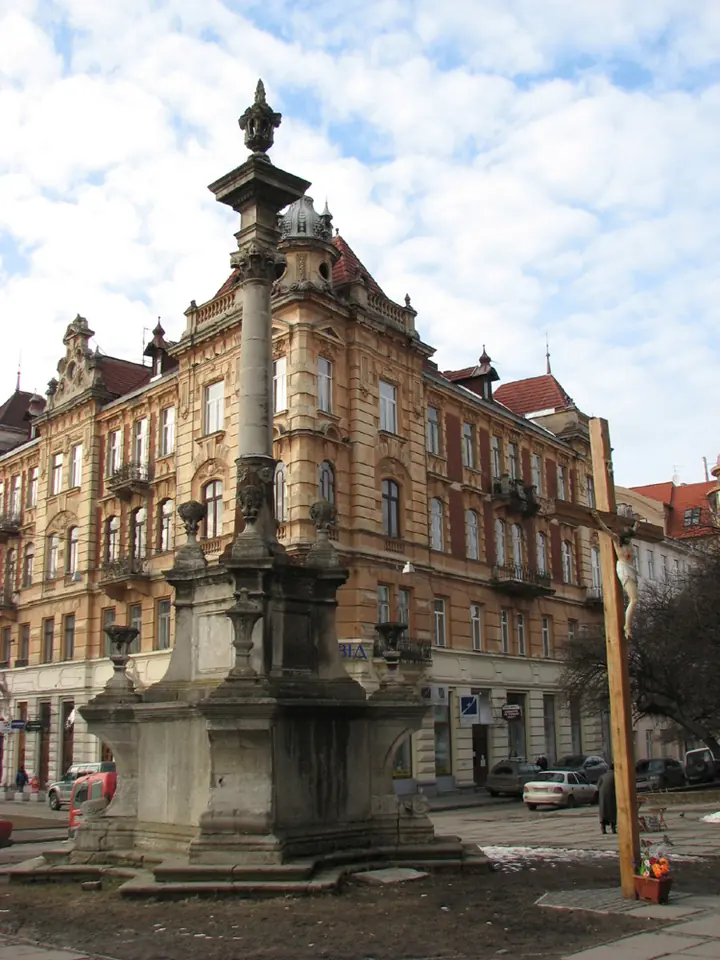
In 1648 the Cossack army of Bohdan Khmelnytsky and his Tatar allies besieged Lviv and then withdrew. The city credited its deliverance to John of Dukla's intercession, since it had prayed to him earnestly. A traditional story says the besiegers saw a friar kneeling in the evening clouds over the Bernardine church with his arms raised, and turned back in fear. Jan Matejko painted that scene in 1885, and a column with his statue still stands in front of the Bernardine church in Lviv.

Beatification, patronage and canonization
The formal process began in 1615 at the request of King Sigismund III and the Polish bishops. On the strength of the unbroken veneration of his memory, Pope Clement XII declared him blessed in 1733. In 1739, at the request of King Augustus III, the bishops and the city of Lviv, the same pope proclaimed him patron of the Crown of Poland and of Lithuania. Later kings asked for his canonization, but the partitions of Poland halted the cause. The Polish bishops took it up again in 1957, and Pope John Paul II canonized him at Krosno on June 10, 1997. In his homily the pope called him "the patron of the city of Lviv and of the whole surrounding area."
His relics stayed in Lviv until 1946. From 1946 to 1974 they were in the Bernardine church in Rzeszów, and today they rest in the Bernardine church at Dukla.

Symbols of St. John of Dukla in art
- The brown Franciscan habit with a white cord: his life as a friar, first Conventual and then Bernardine.
- Rays of light: his usual attribute in Polish art, the light of God given to a man who could no longer see.
- Blindness: he is sometimes shown as blind, with closed or upturned eyes.
- Arms raised over a city: the vision of 1648, the image Matejko painted and the statue on the Lviv column recalls.
Feast day and prayer
We keep his feast on July 8, and pilgrims come to his relics at Dukla and to the hermitage chapel in the forest nearby. We know of no traditional English prayer to him; in his homily at Krosno, John Paul II simply urged the faithful to follow in his footsteps and fix their gaze on his life.
Let us ask St. John of Dukla to pray for preachers and confessors, for the blind and the elderly who can no longer do what they once did, and for peace in Poland, Lithuania and Ukraine. St. John of Dukla, pray for us.
Frequently asked questions
Who was St. John of Dukla?
A Franciscan friar born in the small town of Dukla, in southeastern Poland, around 1414. He was a preacher, guardian of the friaries at Krosno and Lviv and custos of the Lviv region, then joined the Observant Franciscans (Bernardines) about 1463 and spent his last 21 years in Lviv as a preacher and confessor. He died on September 29, 1484.
What is St. John of Dukla the patron saint of?
Pope Clement XII proclaimed him patron of the Kingdom of Poland and the Grand Duchy of Lithuania in 1739. Pope John Paul II called him the patron of the city of Lviv and the whole surrounding area.
When is the feast day of St. John of Dukla?
July 8 in Poland. It was moved to that date after his canonization in 1997; before that it was October 3, and the first feast assigned in 1733 was July 19. He died on September 29.
Where are the relics of St. John of Dukla?
In the Bernardine church at Dukla, his birthplace. They lay in Lviv until 1946 and at the Bernardine church in Rzeszów from 1946 to 1974.
Keep exploring
Sources
- Internetowa Liturgia Godzin (brewiarz.pl): Święty Jan z Dukli, prezbiter (Polish). His life, the move to the Observants, blindness, burial and translations of 1521, 1608 and 1740, the 1648 siege, beatification in 1733, the 1739 patronage, the movements of the relics, the changes of feast date and his iconography
- John Paul II, homily at the canonization of Blessed John of Dukla, Krosno, June 10, 1997. The canonization and his patronage of Lviv