St. John Wang Rui, Seminarian and Martyr of China
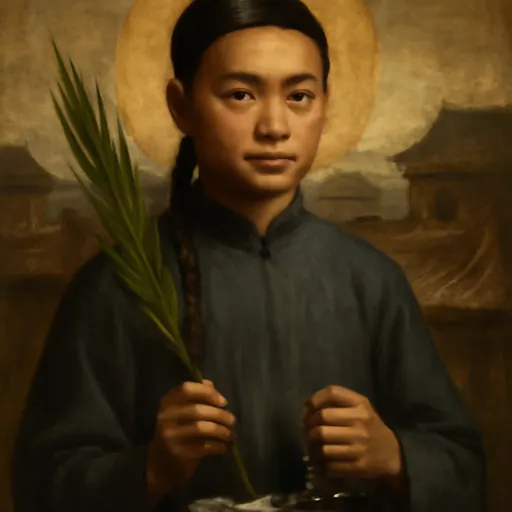
St. John Wang Rui (1885–1900) was a Chinese seminarian and Secular Franciscan from Shanxi who was put to death at Taiyuan at the age of fifteen in the Boxer persecution, together with his bishops Gregory Grassi and Francis Fogolla. Told to flee, he is remembered as saying, "I shall be a martyr for God." He was canonized in 2000 with the Martyrs of China, and we keep his feast on July 9.
Who was St. John Wang Rui?
St. John Wang Rui was a fifteen-year-old Chinese seminarian who gave his life for Christ at Taiyuan, the capital of Shanxi province, on July 9, 1900. He died in the Boxer persecution together with his two Franciscan bishops, St. Gregory Grassi and Francis Fogolla, with priests, sisters, fellow seminarians and Chinese lay Christians. He was a Secular Franciscan, a member of the Third Order. Pope Pius XII beatified him in 1946, and St. John Paul II canonized him on October 1, 2000, among the 120 Martyrs of China. We keep his feast with theirs on July 9.
Very little was written about him as a person. What we have comes mostly from the profiles gathered for the canonization by the Chinese Regional Bishops' Conference, which Paul Hattaway quotes in China's Book of Martyrs. They are short, but they show a boy with a firm faith and a lovely voice.
A boy from Wenshui
He was born on February 26, 1885, in Xinli village in Wenshui County, southwest of Taiyuan, to a Catholic family, and was baptized with the name John. He showed a firm faith from an early age. At the minor seminary he became known for his singing; his teachers and fellow students often asked him to sing for them.
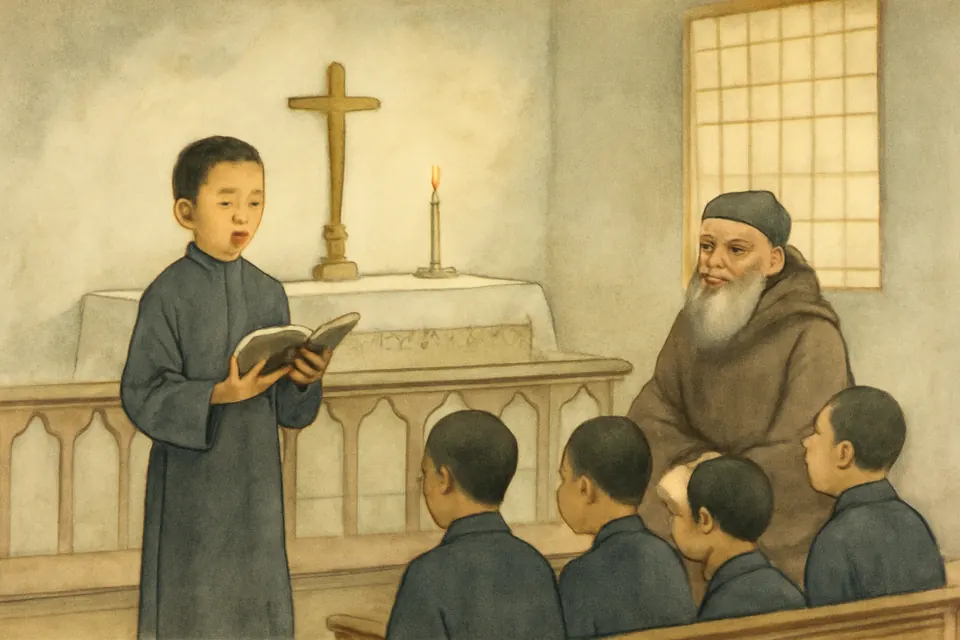
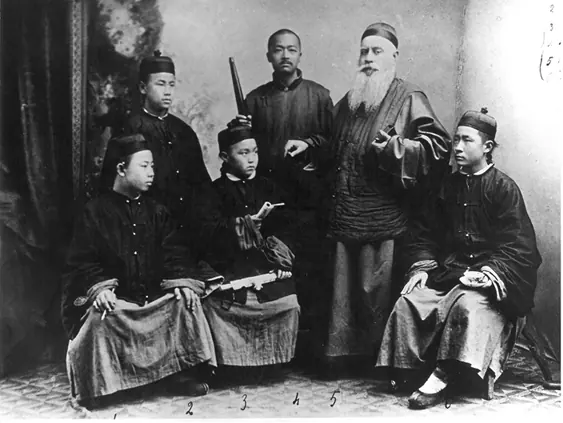
Between 1897 and 1899 he was one of several Chinese students chosen to travel through Europe with Bishop Francis Fogolla, the coadjutor of the vicariate. For a village boy from Shanxi it must have been an astonishing journey. On his return he entered the major seminary at Taiyuan to study for the priesthood.
The storm of 1900
The Boxer movement swept across northern China in 1900 with a hatred of foreigners and of Chinese Christians alike. On July 1 an imperial edict declared that the missionaries were to be sent home and the Christians forced to renounce their faith on pain of death. In Shanxi the new governor, Yu Xian, was a fierce supporter of the Boxers.
As the danger grew, the seminarians at Taiyuan were advised to go home. According to the profile quoted by Hattaway, John was urged to flee and answered:
I shall be a martyr for God.
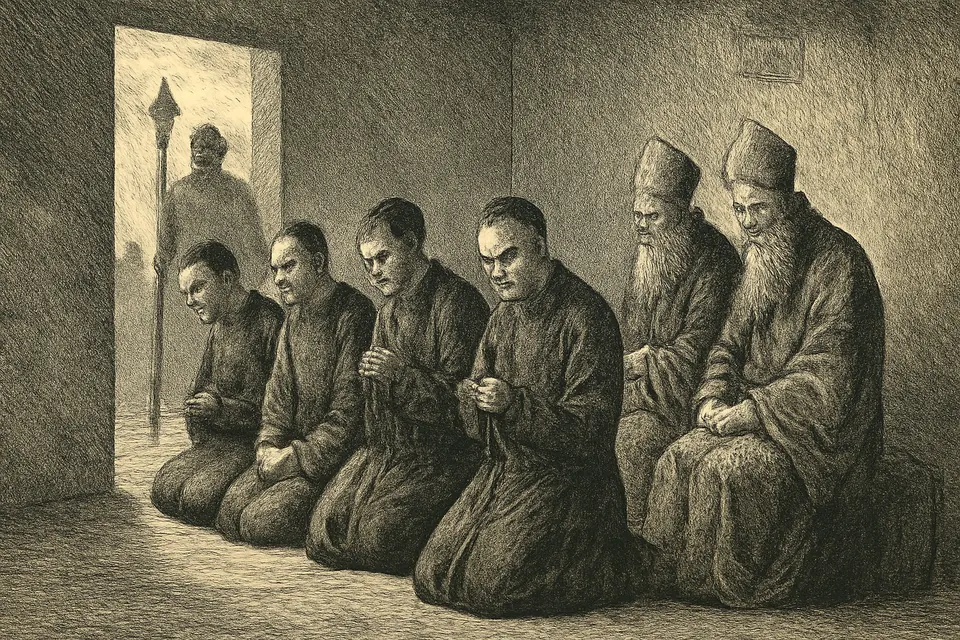
He stayed. On July 5 the governor had the bishops, priests, sisters and the Chinese who served the mission arrested and held under guard. Several seminarians were taken with them. One of the missionaries, Father Elias Facchini, noticed another of the boys, John Zhang Jingguang, playing in the prison yard as if he were going home on vacation; when Facchini reminded him that this was no time for games, the youth asked whether, if they were put to death, they would not go to heaven.
His martyrdom
On July 9, 1900, the prisoners were brought before the governor at Taiyuan. Bishop Fogolla told Yu Xian, as St. John Paul II recalled at the canonization, "We never wronged anyone. On the contrary, we have done good to many." The foreigners were killed first and then the Chinese Christians. Hattaway counts twenty-six Catholics put to death at Taiyuan that day: two bishops, three priests, seven sisters, five seminarians and nine servants. John Wang Rui was one of the five seminarians. He was fifteen.
The other four seminarians were John Zhang Huan, Patrick Dong Bodi, Philip Zhang Zhihe and John Zhang Jingguang. All five are named in the Vatican's list of the Martyrs of China as Secular Franciscans.
Beatification and canonization
After peace returned, a Franciscan, Father John Ricci, was sent through the mission to gather the facts about the killings, and the causes of the Shanxi martyrs went to Rome. Pope Pius XII beatified Gregory Grassi and his companions, twenty-nine martyrs in all, on November 24, 1946. St. John Paul II canonized them with the other Martyrs of China on October 1, 2000. As martyrs, killed out of hatred for the faith, they did not need an approved miracle.
Symbols of St. John Wang Rui in art
There is no well-known individual image of St. John Wang Rui. He appears in group pictures of the Martyrs of China, and modern images of him draw on a few simple signs:
- The martyr's palm: the sign of victory through martyrdom, which every one of the 120 carries.
- A long dark gown: the ordinary dress of a Chinese seminarian in the 1890s, which marks him as a student for the priesthood.
- The cord of St. Francis: his membership in the Franciscan Third Order, shared with the four other seminarians killed with him.
- Youth: he is shown as a boy, which sets him beside St. Anna Wang and the other young martyrs of 1900.
Look for him in group icons and paintings of the Martyrs of China, usually among the Chinese students near the Franciscan bishops of Shanxi.
Feast day and prayer
We keep his feast on July 9, the optional memorial of St. Augustine Zhao Rong and Companions on the General Roman Calendar, when the whole Church remembers the Martyrs of China. See the feast day calendar for other saints of July.
We know of no traditional prayer written to St. John Wang Rui alone, so we do not print one. The Church prays for him and with him in the Mass of the Martyrs of China on July 9. Let us ask St. John Wang Rui, who stayed when he could have fled, to pray for seminarians and for young people who are afraid to stand up for Christ, and for the Church in China today. St. John Wang Rui, pray for us.
Frequently asked questions
Who was St. John Wang Rui?
A Chinese seminarian born in 1885 in Xinli village, Wenshui County, Shanxi. He studied at the minor seminary, traveled through Europe with Bishop Francis Fogolla in 1897–1899, and was a student at the Taiyuan seminary when the Boxer persecution broke out. He was killed at Taiyuan on July 9, 1900, at fifteen.
When is the feast of St. John Wang Rui?
July 9, the memorial of St. Augustine Zhao Rong and Companions, the 120 Martyrs of China. It is also the day he died.
How old was St. John Wang Rui when he died?
Fifteen. He was born on February 26, 1885, and died on July 9, 1900.
Was St. John Wang Rui a Franciscan?
He was a Secular Franciscan, a member of the Third Order. The Vatican's biography of the Martyrs of China lists him among eleven Chinese Secular Franciscans of the Franciscan family who died in the persecution.
Keep exploring
Sources
- Augustine Zhao Rong and 119 Companions, Martyrs in China: biography (Vatican, October 1, 2000). Lists him as a seminarian among the eleven Chinese Secular Franciscans; the Shanxi martyrs killed on July 9, 1900
- John Paul II, Homily at the canonization of Augustine Zhao Rong and 119 companions, October 1, 2000. Bishop Fogolla's words to the governor
- Paul Hattaway, "1900 – Catholic Martyrs in Shanxi," from China's Book of Martyrs (Asia Harvest). His birth date and village, his voice, the journey with Bishop Fogolla, his words before death (citing The Newly Canonized Martyr-Saints of China, p. 38); the number killed at Taiyuan
- Beatifications in the Pontificate of Pope Pius XII (GCatholic). The beatification of the 29 Martyrs of China on November 24, 1946
- Saint Gregory Grassi and Companions (Franciscan Media). The arrests ordered by the governor Yu Xian and the beatification in 1946