St. Peter Sanz, Bishop and Martyr in China

St. Peter Sanz (1680–1747) was a Catalan Dominican missionary who served in Fujian, China, for some thirty years, later as bishop. He gave himself up to spare his people and was beheaded at Fuzhou on May 26, 1747. He was canonized in 2000 among the 120 Martyr Saints of China, whose memorial we keep on July 9.
Who was St. Peter Sanz?
St. Peter Sanz was a Dominican friar from Catalonia who gave thirty years of his life to the Christians of Fujian, on China's southeast coast, and died for them there. In Catalan his name is Pere Sans i Jordà; Spanish books call him Pedro Sanz y Jordá, and the Holy See's biography of the Martyrs of China spells it Peter Sans i Yordà. He was a missionary, then the leader of his Dominican brothers in Fujian, then a bishop. When the Christians who sheltered him began to suffer for it, he gave himself up. He was beheaded at Fuzhou on May 26, 1747.
The Holy See's biography of the Martyrs of China names him first among the five Spanish Dominicans killed in the persecution of the 1740s. Pope Leo XIII beatified him with four Dominican companions in 1893, and Pope St. John Paul II canonized him on October 1, 2000, among the 120 Martyr Saints of China. We honor them together on July 9.
His life
From Ascó to Manila
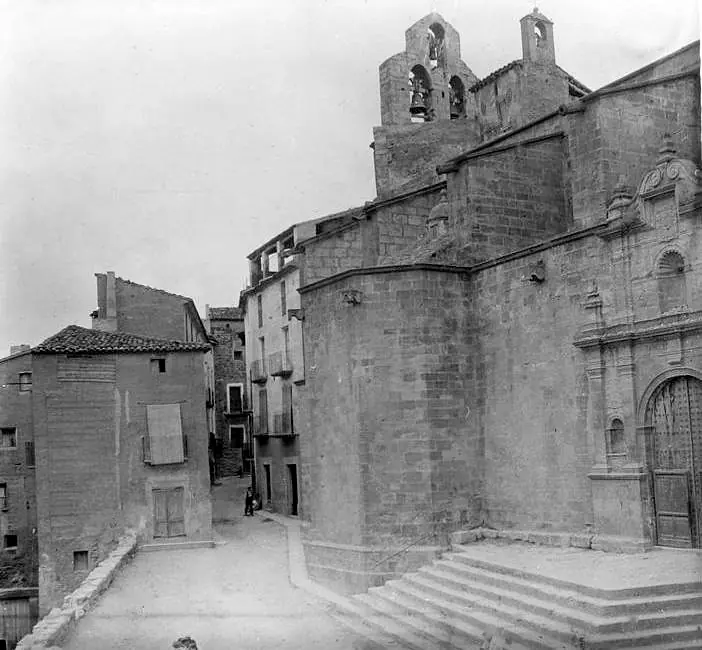
Peter was born in 1680 at Ascó, a village on the Ebro in the diocese of Tortosa. An uncle who was a chaplain at the cathedral of Lleida took charge of his education. As a young man Peter entered the Dominican convent at Lleida, made his profession on July 6, 1698, and was ordained a priest on September 20, 1704. Wanting a stricter life, he asked to move to the convent of San Ildefonso in Zaragoza.
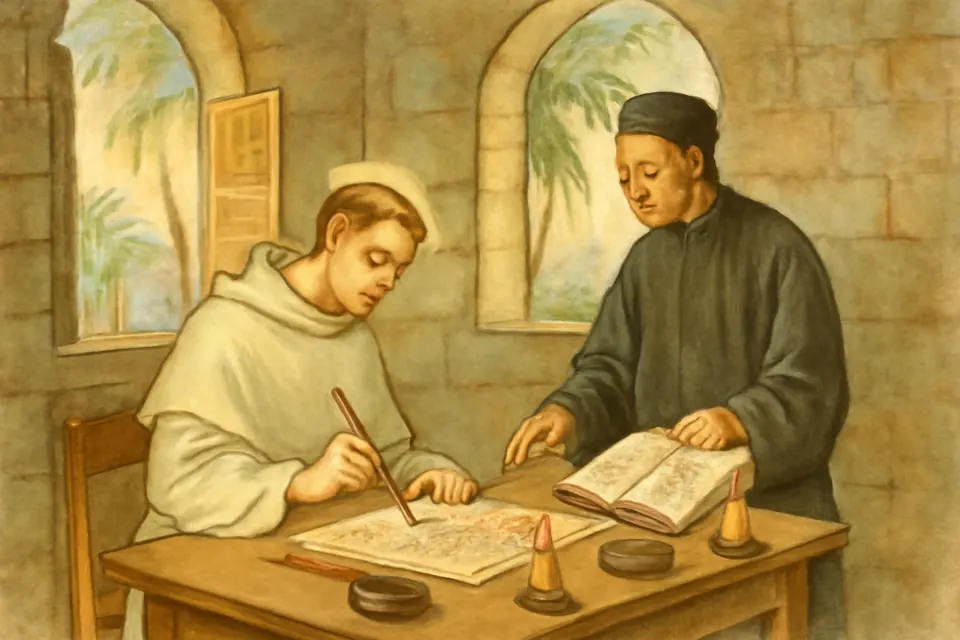
At thirty-two he asked to be sent to the missions of the Far East. He left Spain in 1712 and, after long stops in Mexico and the Mariana Islands, reached Manila at the end of August 1713. For two years he served there and learned Chinese, because China was where he meant to go.
Thirty years in Fujian
Peter reached Fujian in June 1715. A year later he was made vicar provincial of the Dominican mission, an office he held for fourteen years. The work bore fruit, even as persecution returned to Fujian and neighboring Zhejiang, the most Christian provinces of the empire.
Hunted from place to place, he took refuge in Canton, the one city where European missionaries were still tolerated. There he learned he had been named titular bishop of Mauricastro, and he was consecrated on February 24, 1730. Because he kept preaching in Canton, he was exiled to Macau in 1732. He waited almost six years for a way back. On May 9, 1739, he returned to Fujian, where he went on preaching, teaching, caring for the poor and the sick and strengthening persecuted Christians, all while staying hidden.
The good shepherd
In 1746 the persecution grew worse, and the people who hid their bishop suffered for it. To spare them, he left his hiding place in the village of Moc-Yong and let himself be taken on June 30, 1746.

He was taken to Fuzhou, the provincial capital, where he was questioned again and again and badly treated. After a long trial he was condemned to beheading on December 18, 1746. The sentence had to be confirmed by the emperor, and it was carried out on May 26, 1747.
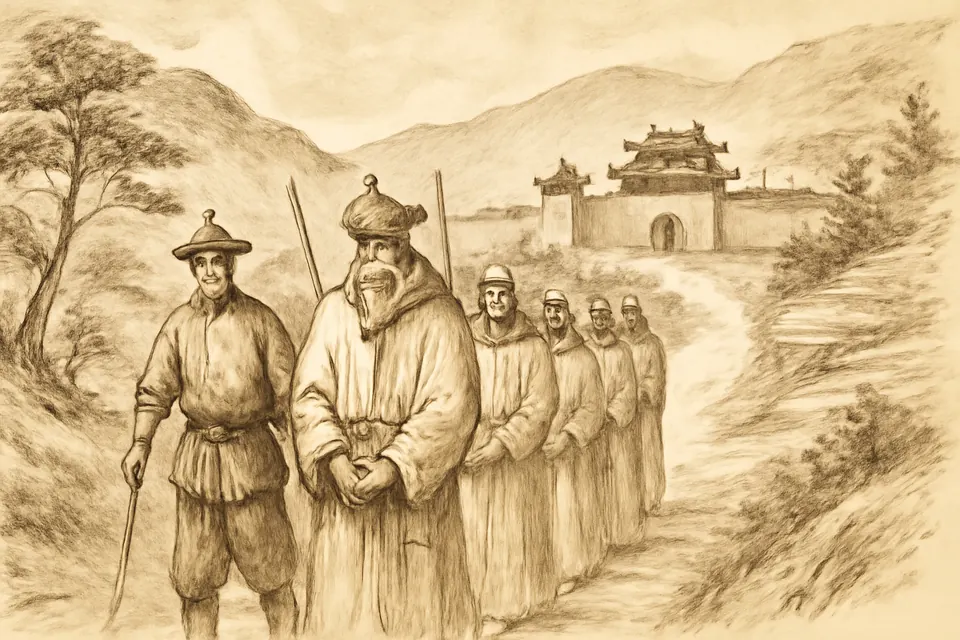
The Roman Martyrology tells his death in one sentence: arrested with other priests, he was brought in chains along a long road to the tribunal, and when he came to the place of execution he knelt, finished his prayer and calmly offered his head to the axe.
His companions
Four Dominican priests shared his prison: Francis Serrano, who had been named his coadjutor bishop but was never consecrated, Joachim Royo, John Alcober and Francis Díaz. They were strangled in prison at Fuzhou on October 28, 1748. All five were beatified together and canonized together.
Martyrdom and the Church's judgment
There are no miracles attached to St. Peter Sanz's story, and none was needed: the Church declares a martyr a saint because of the death itself, freely accepted for Christ. Santi e Beati records that the faithful gathered the martyrs' relics after their deaths and that they were venerated in the Dominican church of Santo Domingo in Manila. That church, in the walled city of Intramuros, was destroyed in December 1941, and we have not been able to confirm where the relics are today.
At the canonization in 2000, Pope John Paul II spoke of the thirty-three missionaries among the 120 martyrs: "Their tombs are there as if to signify their definitive belonging to China, which they deeply loved, although with their human limitations, and for which they spent all their energies."

Symbols of St. Peter Sanz in art
St. Peter Sanz is shown as a Dominican bishop: the white habit and black cape of the Order of Preachers, with a crozier and a pectoral cross. Santi e Beati gives the crozier and the palm of martyrdom as his emblems. Some pictures add chains, for the long road to Fuzhou in irons. In group images of the Martyrs of China, look for an elderly bearded bishop in a Dominican habit among the missionaries.
Feast day and where he is honored
We keep his memorial with all the Martyr Saints of China on July 9, and the Roman Martyrology names him on May 26, the anniversary of his death. He is remembered in his home village of Ascó and by the Order of Preachers, whose missionaries he led. See the feast day calendar and our pages on other martyrs of China, such as St. Joseph Zhang Dapeng and St. Peter Wu Guosheng.

Prayer to St. Peter Sanz
We know of no traditional prayer to St. Peter Sanz in English. The Church prays to the Martyrs of China in the Mass of July 9. We can ask his prayers for bishops and pastors, that they may lay down their lives for their flocks, and for the Church in China: St. Peter Sanz and all you holy Martyrs of China, pray for us.
Frequently asked questions
Who was St. Peter Sanz?
A Dominican friar from Ascó in Catalonia who went as a missionary to China in 1715, became titular bishop of Mauricastro in 1730 and led the Church in Fujian through years of persecution. He was beheaded at Fuzhou in 1747.
Why did St. Peter Sanz give himself up?
The Christians who hid him were suffering for it. Santi e Beati says he left his hiding place in the village of Moc-Yong on June 30, 1746, to spare the faithful further harm.
When is the feast of St. Peter Sanz?
He is honored on July 9 with the 120 Martyr Saints of China, and the Roman Martyrology remembers him on May 26, the day of his death.
Who were St. Peter Sanz's companions?
Four Dominican priests arrested in the same persecution, Sts. Francis Serrano, Joachim Royo, John Alcober and Francis Díaz. They were strangled in prison at Fuzhou on October 28, 1748.
Keep exploring
Sources
- San Pietro Sans i Jordá, Vescovo domenicano, martire (Santi e Beati), with the Roman Martyrology entry. Life by Antonio Borrelli; dates of profession, ordination, episcopal consecration, return to Fujian, surrender and sentence
- Augustine Zhao Rong and 119 Companions, Martyrs in China: biography (Holy See)
- Homily of Pope John Paul II at the canonization of the Martyrs of China, October 1, 2000 (Holy See)