St. Gregory Grassi
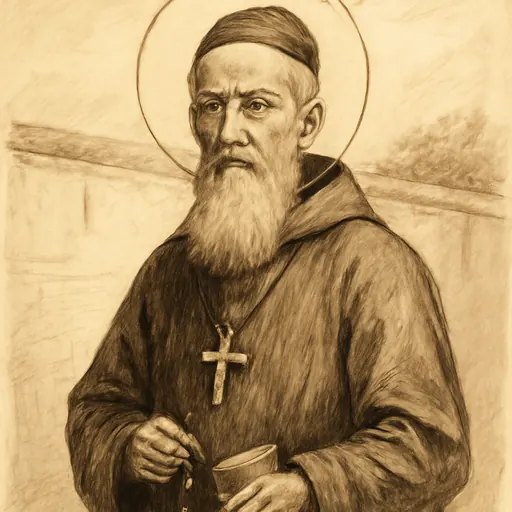
St. Gregory Grassi (1833–1900) was an Italian Franciscan who served for almost forty years as a missionary and bishop in Shanxi, northern China. During the Boxer persecution he refused to leave his people and was killed at Taiyuan on July 9, 1900. He was canonized in 2000 with the Martyrs of China, and we keep his feast on July 9.
Who was St. Gregory Grassi?
St. Gregory Grassi was an Italian Franciscan friar who gave almost forty years to the Church in Shanxi, a mountain province of northern China, first as a missionary priest and then as its bishop. When the Boxer persecution broke out in 1900, he would not abandon his people. On July 9, 1900, he was put to death at Taiyuan together with his fellow bishop Francis Fogolla, Franciscan priests and a brother, seven Franciscan sisters, and Chinese seminarians and lay Christians. He was canonized with the Martyrs of China in 2000, and we keep his feast on July 9.
A Franciscan from Piedmont
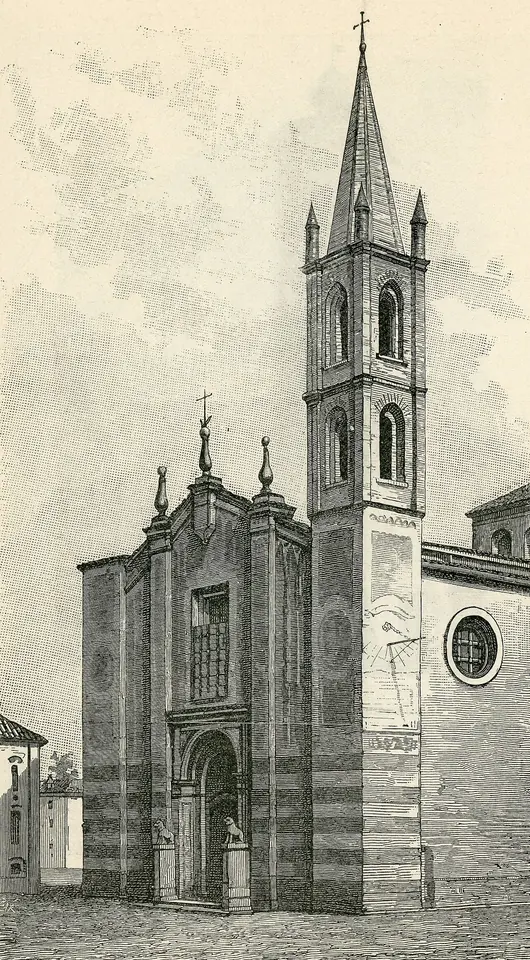
Gregory was born on December 13, 1833, at Castellazzo Bormida, near Alessandria in Piedmont, one of nine children of Giovanni Battista Grassi and Paola Francesca Moccagatta. Santi e Beati records that his vocation grew as an altar boy at the town's shrine of Our Lady of Grace.
In 1848, at fifteen, he joined the Friars Minor, made his novitiate at Montiano, near Cesena, and took the name Gregory. He made his profession on December 14, 1849, studied in Bologna and Carpi, and was ordained a priest in August 1856 or 1857 (the sources differ). He then trained for two years at the Franciscan missionary college in Rome.
Missionary in Shanxi
He left Italy in 1860, spent some months in the Holy Land, and reached China in the fall of 1861. There he was welcomed by a distant relative from his own town, the vicar apostolic Luigi Moccagatta, and sent on to Shanxi. He became rector of the seminary at Taiyuan, confessor to a large orphanage for girls, and a teacher of chant. Santi e Beati notes how much he loved singing, and how Chinese melodies carried the prayers of his people.

Bishop through famine and plague
On November 19, 1876, he was consecrated bishop in the cathedral of Taiyuan, as coadjutor with the right of succession. Two years later a terrible famine struck the province, followed by plague. Santi e Beati records that Grassi caught the disease while caring for the sick and lay sixteen days between life and death.
When Moccagatta died in 1891, Grassi became vicar apostolic. He opened schools, strengthened the seminary for Chinese priests, and in 1891 founded a Franciscan novitiate for Chinese candidates. A synod he held in 1896 ordered the clergy to fight opium use. Over his years in China he built, repaired or beautified about sixty churches and oratories, and he cared for more than two hundred orphan girls, entrusting them in 1898 to the Franciscan Missionaries of Mary. A contemporary remembered him as thin, stern, with a venerable beard; he wore the long robe of a Chinese missionary, and his pectoral cross was plain brass.
Martyrdom at Taiyuan
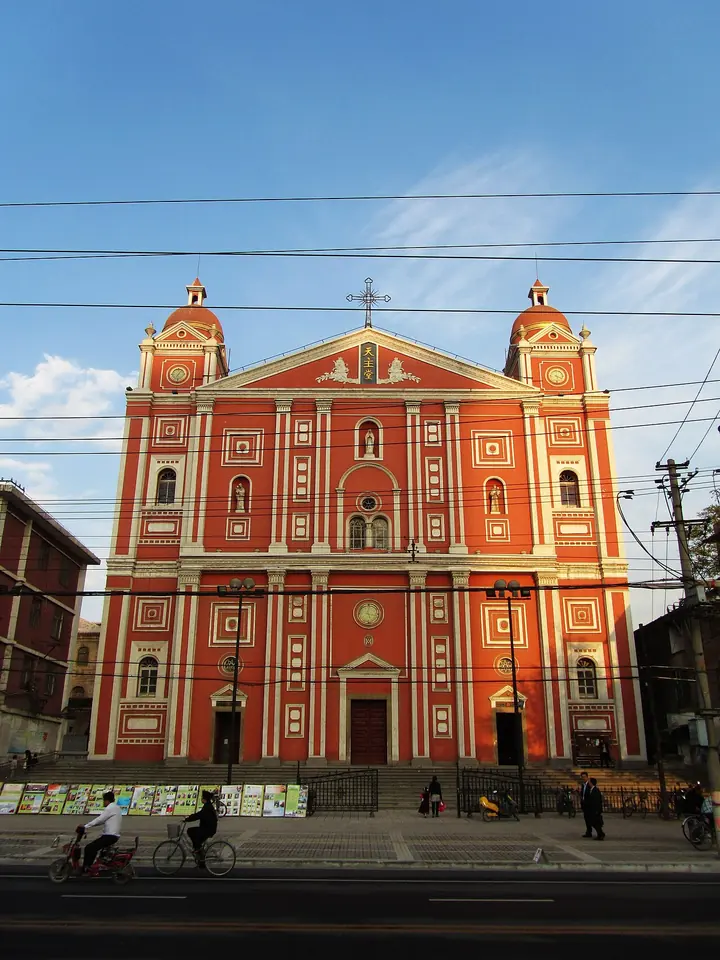
In March 1900 a new governor, Yu Xian, a supporter of the Boxers, took charge of Shanxi. Grassi and Fogolla tried without success to win him over. The bishops did not flee. On the night of July 5 they were arrested with the priests, sisters, seminarians and servants of the mission and held in an inn under guard.

On the afternoon of July 9 they were led into the courtyard of the tribunal at Taiyuan and killed in the presence of the governor. As the governor prepared to strike him with his sword, Bishop Fogolla answered with words Pope John Paul II recalled at the canonization: "We never wronged anyone." Santi e Beati records that the martyrs' bodies were thrown into a common grave near the city's east gate and later buried outside the walls; in January 1901 they were exhumed and given an honorable burial.
There is no approved miracle tied to St. Gregory Grassi. The Church beatified and canonized him as a martyr, for whom no miracle is required for beatification.
Beatification and canonization
Pope Pius XII beatified Gregory Grassi and his companions in November 1946. Pope John Paul II canonized them on October 1, 2000, with St. Augustine Zhao Rong and the other Martyrs of China, among them the young St. Anna Wang and the missionary St. Alberic Crescitelli.
Symbols of St. Gregory Grassi in art
St. Gregory Grassi lived in the age of photography, and the images of him that circulate are mostly old photographs and modern devotional pictures. Look for:
- The brown Franciscan habit or the long robe of a China missionary: his order and his mission.
- The pectoral cross: his office as bishop.
- The martyr's palm: his death for the faith.
- A group of martyrs: he often appears with Fogolla, the Franciscan sisters and the Chinese martyrs of Shanxi.
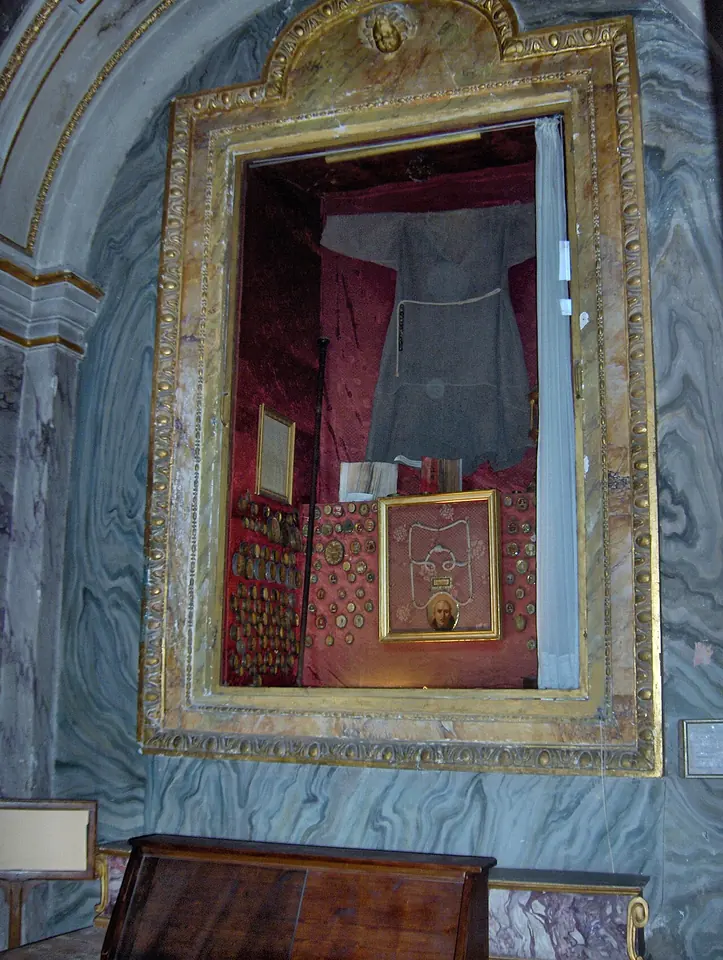
In Assisi, the Chiesa Nuova keeps his small breviary among other Franciscan relics.
Feast day and prayer
We keep the feast of St. Gregory Grassi on July 9, the memorial of St. Augustine Zhao Rong and Companions, Martyrs of China. Franciscans celebrate him and his companions on July 8. See the feast day calendar for the other saints of July.
There is no traditional prayer to St. Gregory Grassi that we know of. Let us ask him to pray for the Church in China, for missionaries, and for all Christians who suffer for their faith: St. Gregory Grassi and companions, pray for us.
Frequently asked questions
Who was St. Gregory Grassi?
An Italian Franciscan friar, born at Castellazzo Bormida in 1833, who went to China in 1861, became coadjutor bishop in 1876 and then vicar apostolic in Shanxi. He was martyred at Taiyuan on July 9, 1900, during the Boxer persecution.
Who were St. Gregory Grassi's companions?
The Taiyuan group included Bishop Francis Fogolla, Franciscan priests and a lay brother, seven Franciscan Missionaries of Mary led by Mother Hermine Grivot, Chinese seminarians who were Secular Franciscans, and Chinese lay Christians. The Irish Franciscans count twenty-six of the group killed on July 9.
When is the feast of St. Gregory Grassi?
July 9, with St. Augustine Zhao Rong and the Martyrs of China. Franciscans keep the memory of Grassi and his companions on July 8.
When was Gregory Grassi canonized?
On October 1, 2000, by Pope John Paul II, with 119 other Martyrs of China. Pope Pius XII had beatified him in November 1946.
Keep exploring
Sources
- Giuseppe Croce, "Gregorio Grassi, santo," Dizionario Biografico degli Italiani, vol. 59 (2002). His family, Franciscan formation, arrival in China in 1861, consecration on November 19, 1876, the 1896 synod against opium, his arrest and death, beatification
- Antonio Borrelli, San Gregorio Maria (Pier Luigi) Grassi, Santi e Beati. The famine and plague of 1878, his churches and orphanages, the last days at Taiyuan and the burial of the martyrs
- Vatican: Augustine Zhao Rong and 119 companions, martyrs in China (1648–1930). The Shanxi martyrs killed on July 9, 1900
- John Paul II, Homily for the canonization of 120 Martyrs of China (October 1, 2000). Bishop Fogolla's words to the governor
- Irish Franciscans: Ss. Gregory Grassi, Hermine Grivot (Virgin) and Companions. The make-up of the group and the Franciscan feast on July 8